


Add us as your preferred source on Google to see more of our content in Search.
 Add to Preferred Sources
With four years until 2030, only 36% of the Sustainable Development Goals (SDGs) adopted in 2015 by the UN General Assembly are on track or making moderate progress, according to the latest SDG report released by the UN in July 2026. Continuous geopolitical tensions and military conflicts, massive aid cuts, growing financial gaps, and climate change are the key factors that hinder the progress and the hopes of the SDGs’ implementation. In the context of burning debates and discussions for a post-2030 framework beginning, the report also calls for renewed international cooperation, setting new priorities in this fast-changing international landscape. We have discussed the findings of the report with international experts and asked them to share their views on the biggest barriers, lessons learned, and potential plans to bring the SDGs back on track. We publish their opinions in the following article.
Key Takeaways:
- According to the UN report, of the 139 SDG targets, only 15% are on track, and 21% show moderate progress. Nearly half are advancing only marginally or not at all, and 15% have slipped below their 2015 baseline.
- Key barriers cited by experts include financing gaps, climate change, weak implementation infrastructure, and growing geopolitical fragmentation.
- Lessons learnt highlight the need to adapt development policies to national and local contexts rather than relying on one-size-fits-all approaches.
- The private sector, academia, local communities, and citizens each hold indispensable roles—from deploying capital through public-private partnerships, to translating research into policy, to ensuring community ownership of infrastructure.
Developmentaid: With four years remaining until 2030, what are the biggest barriers preventing countries from achieving the SDGs, and where should governments and international organizations be involved to accelerate progress?

Portfolio Management Unit, Climate Change and Sustainable Urban Development Cluster, GIZ Bangladesh
“The greatest barriers to achieving the SDGs are the widening gap between political commitments and effective implementation. Climate change, geopolitical conflicts, rising debt burdens, shrinking development assistance, and limited institutional capacity continue to slow progress, particularly in low- and middle-income countries. These challenges have widened inequalities and reduced governments’ ability to invest in sustainable development. To accelerate progress, governments and international organizations should prioritize strengthening public institutions, expanding climate-resilient infrastructure, mobilizing innovative financing, improving data systems, and supporting locally led development initiatives. Greater international cooperation and policy coherence are also essential to ensure that financial and technical support reaches the communities most vulnerable to climate, economic, and social shocks.”
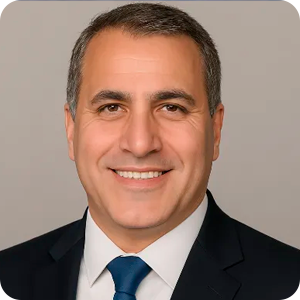
“In my view, and consistent with the findings of the Sustainable Development Report 2026, the world is no longer facing a crisis of ambition but a crisis of implementation. While the SDGs have established a shared global vision, progress has been undermined by overlapping challenges, including armed conflicts, climate change, rising debt burdens, widening inequalities, shrinking development assistance, and persistent financing gaps. These pressures have disproportionately affected low- and middle-income countries, reducing their ability to invest in long-term development while simultaneously responding to immediate crises. Governments and international organizations should now shift from fragmented interventions toward integrated, system-wide solutions. Strengthening public institutions, improving governance, enhancing transparency, and building implementation capacity are fundamental to restoring public trust and delivering measurable results. Closing the SDG financing gap will require innovative financing mechanisms, stronger public-private partnerships, and more effective mobilization of domestic resources. Another strategic priority is accelerating responsible digital transformation. Artificial intelligence and digital technologies can improve public service delivery, optimize resource allocation, strengthen disaster preparedness, and enhance monitoring of development outcomes. However, these technologies must be accompanied by ethical governance, digital inclusion, and sustained investment in human capital. Achieving the SDGs by 2030 will ultimately depend on coordinated leadership, resilient institutions, and partnerships capable of translating global commitments into tangible local impact.”

“The biggest barriers to SDG achievement remain financing gaps, weak implementation infrastructure, and growing geopolitical fragmentation. According to the Sustainable Development Report 2026, only about 36% of SDG targets are on track or making moderate progress globally, nearly half show only marginal movement, and 15% have actively regressed since 2015. From my work across the education sector, the labour market reform, and social inclusion in the Western Balkans, the barriers I see most consistently are not technical — they are structural and political. The financing gap remains the most crippling constraint. Unmet financing commitments risk putting many SDG targets entirely beyond reach, and this is not an abstract concern — it translates directly into countries unable to sustain programmes that are already working. Debt pressures in low- and middle-income countries mean that even where political will exists, fiscal space does not. Alongside this, geopolitical fragmentation is actively undermining multilateral cooperation — meaning collaboration between many countries through shared international institutions — that SDG implementation depends on. The United States declared open opposition to the SDGs in 2025 and withdrew from more than 60 international organizations in January 2026—a significant blow to the global architecture that underpins development finance and norm setting. Where should we accelerate? The SDR (Sustainable Development Report) 2026 is clear: implementation should be organised around “six major transformations,” supported by “long-term investment plans,” “strengthened regional and local cooperation,” “new global taxes to finance global public goods,” and “governance frameworks for emerging technologies including AI (Artificial Intelligence).” To this, I would add: stop treating SDG implementation as a reporting exercise and start treating it as a delivery management challenge. We have enough plans. What too many countries lack is the institutional capacity to execute them at pace and at scale.
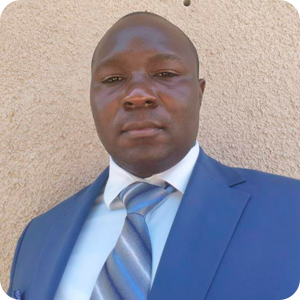
“The most considerable barriers to SDG achievement are structural—chronic underinvestment in energy, transport, water, and digital infrastructure, compounded by debt burdens, geopolitical fragmentation, and weakened multilateral financing. Governments must prioritize infrastructure as the cross-cutting enabler it truly is, while moving blended finance instruments from pilot to mainstream and modernising procurement frameworks to unlock bankable project pipelines.
DevelopmentAid: As discussions on the post-2030 development agenda begin, what lessons should be learned from the implementation of the SDGs over the past decade?
Portfolio Management Unit, Climate Change and Sustainable Urban Development Cluster, GIZ Bangladesh
“The implementation of the SDGs has demonstrated that ambitious global goals alone are insufficient without effective governance, accountability, and adequate financing. One of the most important lessons is that development policies must be adapted to national and local contexts rather than relying on one-size-fits-all approaches. Reliable data, evidence-informed policymaking, and meaningful participation of local communities are critical for measuring progress and ensuring inclusive development. The post-2030 agenda should therefore place greater emphasis on resilience, equity, climate adaptation, institutional capacity, and stronger partnerships across sectors. Future global frameworks should be more flexible, locally driven, and better equipped to respond to emerging challenges while ensuring that no one is left behind.
“In my opinion, the most important lesson from the past decade is that global ambition alone does not guarantee local impact. The SDGs successfully established a universal vision for sustainable development, yet implementation has frequently lagged because of weak institutional capacity, fragmented governance, inconsistent political commitment, and insufficient financing. Future development frameworks should therefore place equal emphasis on implementation capability as they do on setting ambitious global targets. A second lesson is that resilience must become a defining principle of the post-2030 agenda. The COVID-19 pandemic, climate-related disasters, armed conflicts, and economic shocks have demonstrated that sustainable development cannot be achieved without institutions capable of adapting to rapidly changing global conditions. Countries should therefore prioritize stronger governance systems, crisis preparedness, resilient infrastructure, and investments in education and human capital. The next global development framework should also embrace responsible digital transformation as a catalyst for inclusive growth. Artificial intelligence, data analytics, and digital public services offer significant opportunities to improve decision-making, productivity, and accountability, provided they are governed ethically and remain accessible to all. Ultimately, the post-2030 agenda should move beyond measuring outputs and instead focus on delivering sustainable, equitable, and locally owned outcomes that improve people’s lives.”
“Having worked inside development programmes funded by the UNDP (United Nations Development Programme), the World Bank, and the EU (European Union), I can say honestly: the SDG framework gave us something invaluable — a shared language and a common accountability architecture. However, implementation has exposed gaps that a successor framework must address head-on. Eight lessons stand out from the decade since the goals were adopted, pointing to priorities including “ending ongoing conflicts,” “establishing ambitious implementation timelines,” “introducing new global taxes,” and “strengthening continental, regional, and local cooperation and investment.” The lesson I find most consequential — and most consistently overlooked — is the gap between goal-setting and delivery infrastructure. Countries endorsed the SDGs but many never built the institutional systems, data capacities, or coordination mechanisms needed to actually pursue them. A post-2030 framework needs to front-load the how, not just articulate the what. Survey respondents across 127 countries expressed broad support for maintaining the SDG framework beyond 2030, with particular emphasis on the need for “stronger implementation mechanisms”: “adequate financing,” “effective governance frameworks at all levels,” and “better use of science and data.” This resonates deeply with my experience. Policy coherence — making sure that education, labour market, social protection, and fiscal policies actually reinforce each other — has been the missing link in most countries I have worked in. The next framework must build coherence in by design, not treat it as an aspiration.”
“The SDG decade has equally demonstrated that ambition without implementation architecture is insufficient: the post-2030 agenda must embed tiered accountability, stronger domestic resource mobilisation, and explicit recognition that climate resilience and infrastructure investment are inseparable from poverty reduction. National statistical capacity must also be resourced adequately so countries can track their own progress.”

“The most persistent barrier I observed in my own fieldwork is the gap between formal coverage and practical access. In Nigeria – Tudun Wada, Jos, households were officially counted as served by multiple water systems simultaneously, yet spent hours daily navigating unreliable supply, managing queues, and absorbing coordination burdens that a functioning system would not impose. Coverage statistics cannot capture this. Similarly, in Bolivia, my team and I found that expanded school enrolment under national reform did not translate into meaningful learning outcomes. In both cases, the policy assumed that access was a condition to be established through infrastructure or legislation, rather than a process continuously produced through social relations, labour, and power. The post-2030 agenda must reckon with this honestly. The SDGs measure outputs but struggle to measure who bears the cost of delivering them. During my fieldwork in Nigeria, I regularly observed women placing empty jerry cans in queues at dawn and walking away, leaving containers as placeholders for afternoon water distribution hours later. Development frameworks that cannot recognize the daily coordination burden as evidence of systemic failure cannot design effective responses to it.”
DevelopmentAid: Beyond governments and international development organizations, how can citizens, the private sector, academia, and local communities contribute to SDG achievements?
Portfolio Management Unit, Climate Change and Sustainable Urban Development Cluster, GIZ Bangladesh
“Achieving the SDGs requires collective action beyond governments and international organizations. Citizens can contribute by adopting sustainable lifestyles, promoting civic engagement, and holding institutions accountable. The private sector should integrate environmental, social, and governance (ESG) principles into business operations while investing in sustainable innovation and job creation. Academia plays a vital role by producing evidence-based research, supporting policy development, and fostering innovation to address complex development challenges. Local communities possess valuable knowledge and experience that should guide the design and implementation of development initiatives. Strong collaboration among these stakeholders can generate practical, locally relevant solutions and accelerate progress toward a more inclusive, resilient, and sustainable future.”
“One of the most valuable lessons from the SDGs is that sustainable development cannot be achieved by governments and international organizations alone. The SDGs were intentionally designed as a shared global agenda, and their success depends on meaningful collaboration among businesses, universities, civil society, local communities, and individual citizens. Each stakeholder possesses unique capabilities that can accelerate progress when aligned around common objectives. The private sector should move beyond traditional corporate social responsibility by embedding sustainability into business strategies, investing in green technologies, creating decent employment, promoting responsible supply chains, and driving innovation. Academia plays an equally important role by generating evidence-based research, developing practical solutions, and preparing future leaders with the skills required for an increasingly digital and sustainable economy. Civil society and local communities contribute with invaluable local knowledge, strengthen accountability, and ensure that development initiatives reflect real community needs rather than top-down assumptions. Citizens also have a critical role through responsible consumption, volunteering, civic engagement, and holding institutions accountable. Digital technologies and artificial intelligence can further amplify these collective efforts by expanding access to education, healthcare, financial services, and transparent public administration. Ultimately, sustainable development is not merely a policy agenda—it is a shared commitment that requires responsible leadership, innovation, trust, and partnerships. The success of the post-2030 agenda will depend on empowering people and institutions to become active drivers of sustainable and inclusive change.”
“Governments and international organizations can set frameworks and mobilize finance, but they cannot change behaviour at the scale the SDGs require. That is where broader society becomes decisive. Citizens are not merely beneficiaries — they are the accountability mechanism. In my experience facilitating community consultations and stakeholder workshops, the moments when SDG implementation actually shifts are when local people understand what the goals mean for their own lives and hold their governments to account for delivering. “Public trust in national governments is waning” — fewer than 40% of citizens in countries like France, Germany, and the United Kingdom trust their governments, which is both a warning sign and an opportunity: when institutions are not trusted, communities and civil society must step in as alternative drivers of change. The private sector has an irreplaceable role in innovation and financing — but it needs the right incentives. Voluntary commitments are insufficient. What works is alignment of business models with SDG outcomes through regulation, procurement standards, and blended finance mechanisms — instruments that combine public and private funding to reduce investment risk — that make sustainable investment the commercially rational choice. Academia brings something neither governments nor markets can easily generate: independent evidence, long-term thinking, and the training of the next generation of practitioners. The SDR itself — produced by SDSN (Sustainable Development Solutions Network), a university-based network — is a good example of what science-policy interfaces can achieve when they are properly resourced and trusted. And the local communities? They are where implementation either happens or fails. A growing number of regional and local authorities are now taking part in Voluntary Local Reviews (VLRs), translating global goals into place-based action plans. This is exactly right. The SDGs will not be delivered in New York or Geneva. They will be delivered—or not—in municipalities, schools, health centres, and farms. Resourcing and empowering local actors is not a complement to the global agenda. It is the agenda.”
“SDG delivery cannot rest on governments alone. The private sector, academia, local communities, and citizens each hold indispensable roles—from deploying capital through public-private partnerships, to translating research into policy, to ensuring community ownership of infrastructure. The post-2030 framework must institutionalize these contributions, not treat them as optional.”
“Citizens and communities are not secondary actors waiting for policy to reach them. In Tudun Wada (Nigeria), community-governed water points filled governance gaps the state could not, hosting elections, resolving disputes, and sustaining provision through locally assembled authority. This works, but it also distributes accountability deficits downward onto the people least able to challenge them. The post-2030 agenda should build on community capacity without mistaking its existence for an excuse to withdraw public responsibility.”
See also: Are climate aid cuts the next global security risk? | Experts’ Opinions
The fact that most of the SDGs are behind schedule proves the tremendous work that still needs to be done in international development, in all sectors. For professionals looking to make a change, a first step would be to start a career in this field, and one of the easiest ways is to have access to all openings in a single place. Luckily, with DevelopmentAid’s Individual Professional Membership, members can check thousands of positions, look for tenders or grants for individuals, or even get the chance of being recruited by having increased exposure for their profile.