
Nepal and WFP launch reports highlighting school meals as a driver of sustainable development | Report
Add us as your preferred source on Google to see more of our content in Search.
 Add to Preferred Sources
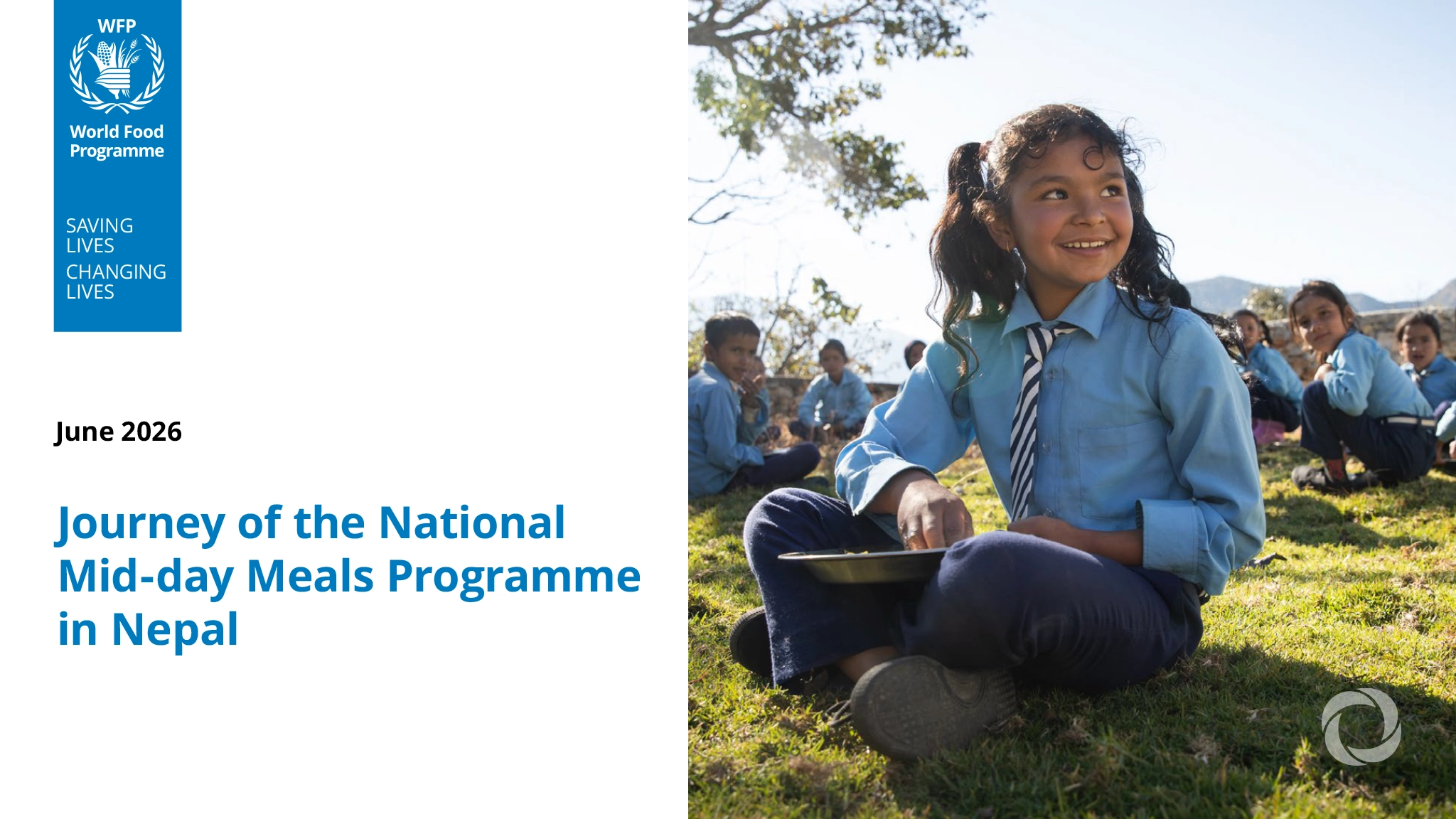
The Government of Nepal and the World Food Programme (WFP) launched two reports in Kathmandu on 28 July 2026 that outline progress in food security, nutrition, education, climate resilience, and social protection, according to a press release by WFP. The publications document Nepal’s shift from partner-supported interventions to nationally owned systems benefiting millions of people. The reports launched are the Journey of the National Mid-Day Meals Programme and WFP’s Annual Country Report 2025. Together, they show how sustained investments, partnerships, and government leadership have advanced Sustainable Development Goals. The launch underscored school meals as a cornerstone of Nepal’s development strategy.
The National Mid-Day Meals Programme began in 1967 as a small initiative to address classroom hunger in Nepal. Over more than five decades, it has evolved into one of the country’s largest social protection programmes. It now reaches nearly three million children across all 77 districts of Nepal. In 2025, the programme became fully financed by the Government of Nepal. This transition marks a significant milestone in national ownership of development interventions.
The report highlights the programme’s contribution to improved school enrollment, attendance, retention, and nutrition outcomes. It also strengthens local food systems through the Home-Grown School Feeding approach, which connects schools with local smallholder farmers through cooperatives. Nepal plans to expand the programme up to grade eight in the coming years. Coverage is set to grow to as many as 4.5 million children. This expansion reinforces school meals as a pillar of Nepal’s human capital development agenda.
“The achievements celebrated today reflect the power of partnership,” said Riaz Lodhi, WFP Representative and Country Director in Nepal. He noted that WFP, together with the Government of Nepal, development partners, and communities, has helped advance solutions strengthening food security, nutrition, resilience, and human capital. Hon. Dr. Gunakar Bhatta, Vice Chair of the National Planning Commission, described investing in children as a national priority. Hon. Mr. Bel Bahadur Rana Magar, Minister of Social Development, Sudurpaschim Province, said the nationalization of the programme reflects strong government leadership. Finland and the U.S. Department of Agriculture have also supported the initiative.
The Annual Country Report 2025 highlights WFP’s support to more than 438,000 people in Nepal. Programmes covered emergency preparedness and response, school meals, nutrition, climate resilience, sustainable livelihoods, and food systems transformation. The Home-Grown School Feeding approach benefited more than 208,000 students across Nepal. It also strengthened links between schools, farmers, and local markets. The reports affirm Nepal’s commitment to building resilient systems for children, communities, and future generations.