
Add us as your preferred source on Google to see more of our content in Search.
 Add to Preferred Sources
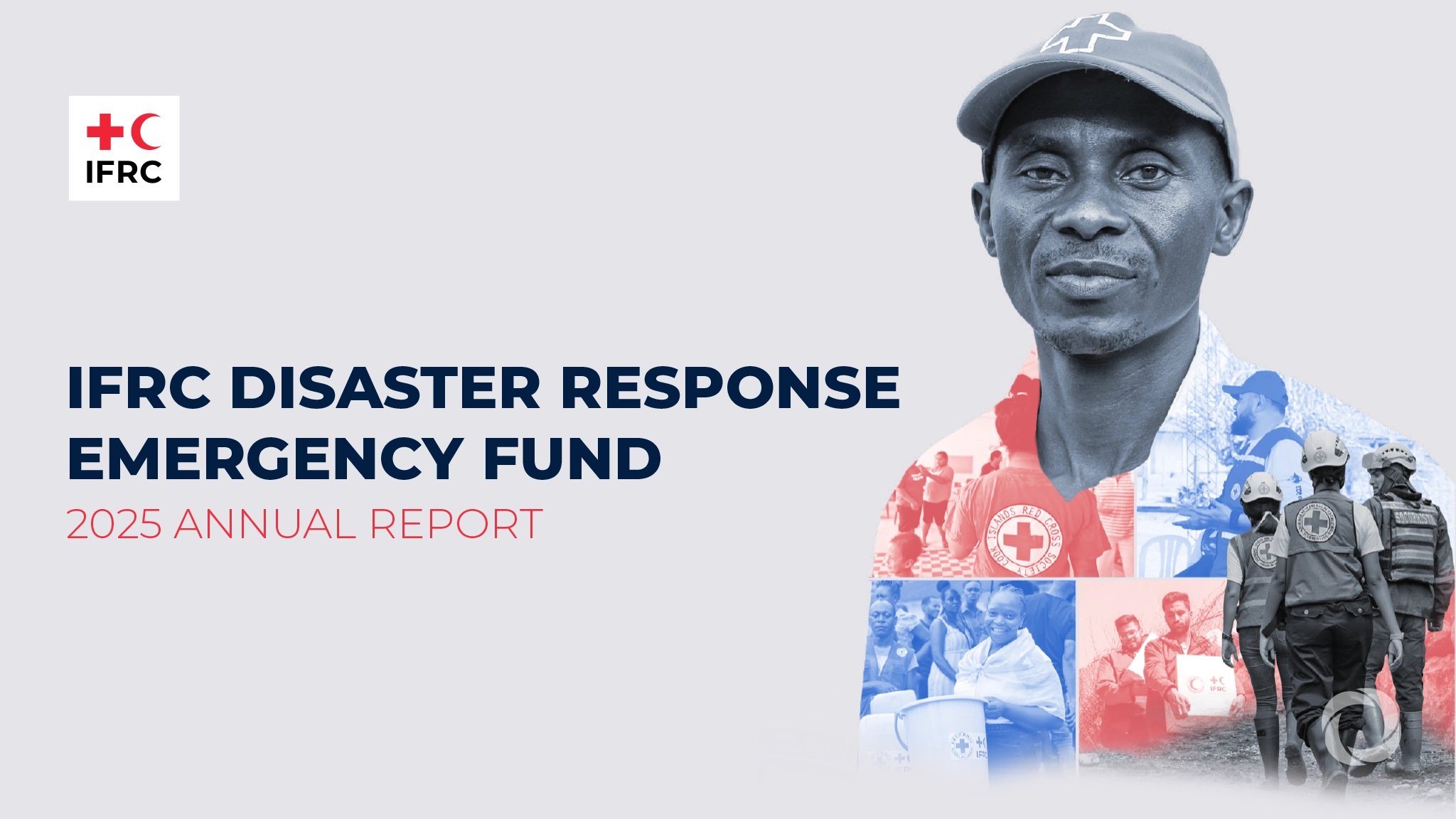
The International Federation of Red Cross and Red Crescent Societies (IFRC) allocated 77.4 million Swiss francs through its Disaster Response Emergency Fund (IFRC-DREF) in 2025, supporting 83 Red Cross and Red Crescent National Societies across all five regions, according to a press release. The fund financed 170 operations combining anticipatory action and emergency response, delivering life-saving assistance to nearly 15 million people. IFRC-DREF transferred 78.5 per cent of its funds directly to National Societies, reinforcing localization as a core principle. The report highlights faster access, expanded anticipatory action, and stronger accountability. The year also marked the conclusion of the 2021–2025 Strategic Ambition.
IFRC-DREF is one of the world’s oldest humanitarian pooled funds for small to medium-scale emergencies. It is open to all 191 National Societies, with requests approved within 24 hours and disbursed in less than 72 hours. The fund operates through two pillars: a Response Pillar for small and medium disasters, and an Anticipatory Pillar releasing pre-agreed resources once a predetermined trigger is reached. In 2022, the IFRC-DREF Council was established to enhance governance and provide strategic guidance. IFRC also launched an insurance policy with Aon and the Centre for Disaster Protection to protect the fund from funding gaps.
Compared with 2021, operations increased by 27 per cent in 2025, reflecting growing humanitarian needs. Medium-scale emergencies represented 51 per cent of allocations, small-scale disasters 42.3 per cent, and large-scale emergencies 6.7 per cent. Nearly 60 per cent of funding addressed floods, population movement, and epidemics, with more than 23 million Swiss francs allocated to floods and over 12 million to people on the move. Epidemic-related allocations reached almost 12 million, followed by 6.5 million for earthquakes and 5.8 million for cyclones. Anticipatory action reached 12 million Swiss francs, or 16 per cent of total allocations.
Africa remained the largest recipient region, managing 104 allocations totaling 38.1 million Swiss francs, or 52 per cent of global funding. Disaster-to-approval time in Africa dropped from 12.4 days in 2024 to 3.2 days in 2025, and the first global epidemic and population movement Early Action Protocols were approved. Asia-Pacific received 16.4 million Swiss francs across 28 allocations, while the Americas managed 11.3 million across 36 allocations.
“When floods devastate villages, when earthquakes level cities, when epidemics threaten lives – the DREF releases funds within hours,” said IFRC Secretary General Jagan Chapagain. He added that the fund “transforms despair into action, chaos into coordination, and fear into hope.”
Toward the end of 2025, IFRC doubled the fund’s financial ambitions, targeting 200 million Swiss francs by the end of the decade. The 2025 Pledging Conference secured nearly 110 million Swiss francs in multi-year commitments from more than 100 participants across 52 organizations. IFRC-DREF supported operations in 6 of CARE’s 10 most under-reported humanitarian crises during the year. Funding grew from 23.5 million Swiss francs in 2020 to approximately 83 million in 2025, inclusive of insurance capacity. The fund remains aligned with the IFRC Renewal process and its 2026–2030 strategy.