

Add us as your preferred source on Google to see more of our content in Search.
 Add to Preferred Sources
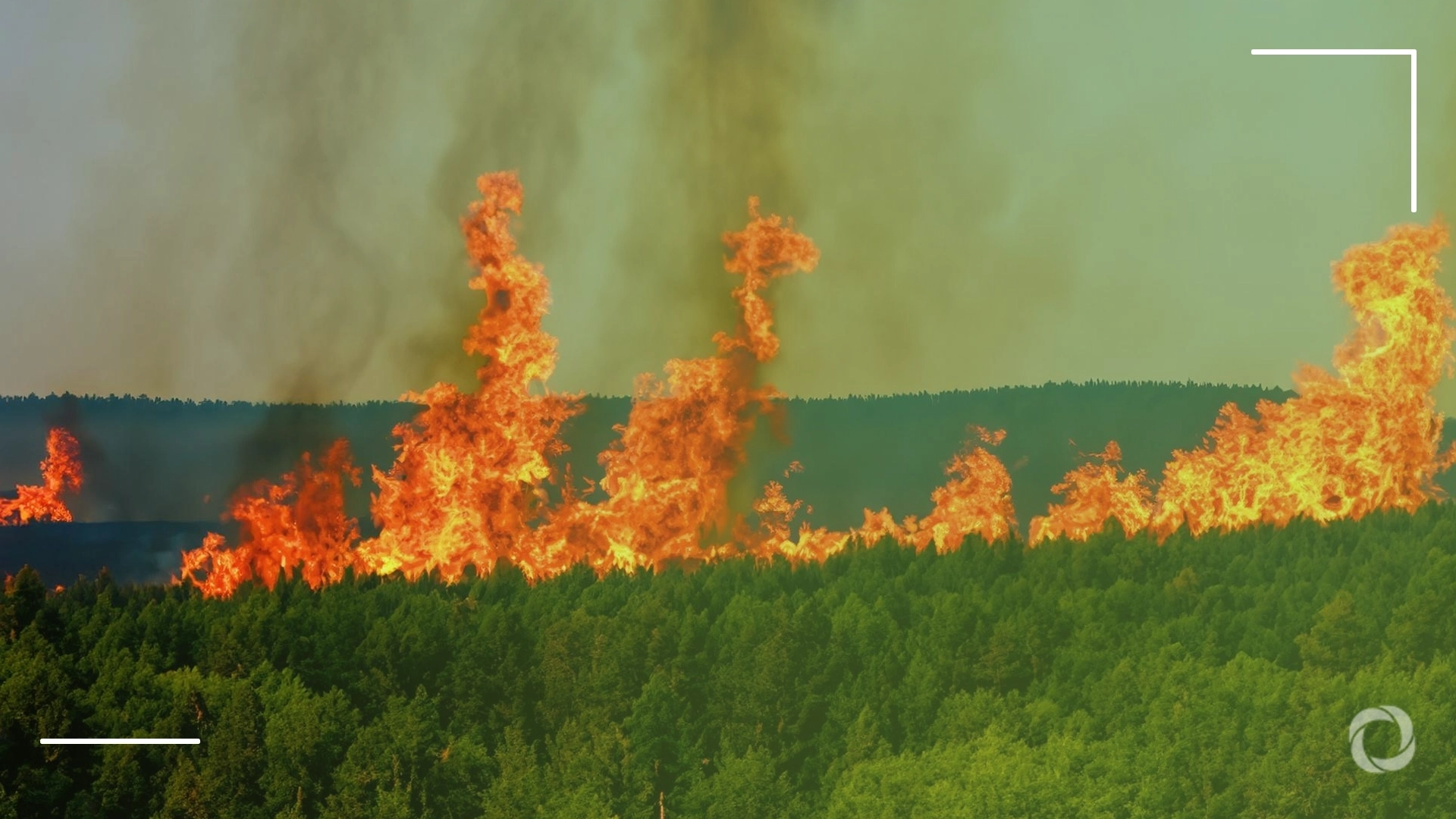
In July 2026, France faced massive wildfires. At one point, over 200,000 people had to be evacuated from the affected areas. Besides looking at the key drivers and the devastating short- and long-term consequences of the recent wildfires in France, in this article we explain why wildfire risk needs to be managed with more than fire combat.
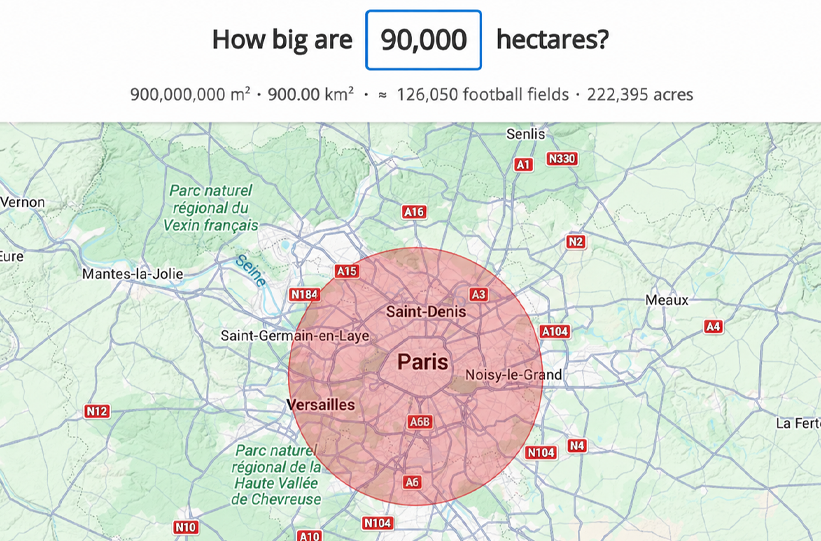
In 2026, France already registered 341 wildfires — the highest number on record and 12 times more than what the country was used to experiencing ten years ago. And this increase is also reflected in the burnt area. So far this year, over 90,000 hectares were lost to wildfires, which is about nine times more than the area burned in 2016.
And the consequences have been devastating. During its peak, over 200,000 people were evacuated from their homes in southwest France, about 231 firefighters required medical assistance, and four lost their lives.
Since we are still in the middle of the summer, when climatic conditions are more favorable for wildfire ignition and spread, these numbers are likely to rise.
In this article, we look at the reasons behind the escalation of this threat in France, we explore the long-term consequences of these wildfires, and explain why firefighting alone is no longer sufficient to ensure the protection of people and infrastructure.
Figure 1: Number of fires and burned area in France between 2006 and 2026.
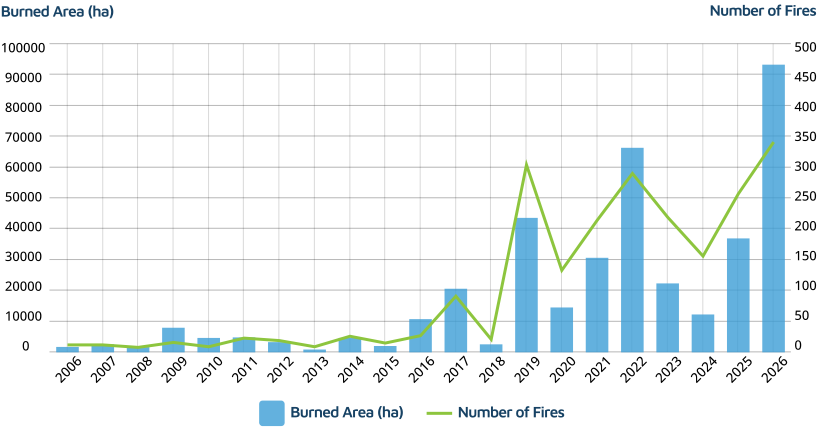
Disclaimers: (1) only fires with an approximate area of 30 hectares or larger are included in this dataset; (2) fires reported might include some set intentionally for vegetation management purposes. Data and graphic by European Forest Fire Information System (CC BY 4.0).
The highest Weekly Severity Rating on record
During the week of July 15, France hit the highest Weekly Severity Rating ( WSR) on record for the country. This rating reflects how hard it would be to control a wildfire, considering the severity of the weather conditions at the time: a cocktail of high temperatures, strong winds, no precipitation, and relatively low humidity. And it was in that same week that the wildfire situation significantly worsened, burning down nearly 43,000 hectares — approximately 50% of the total burnt area so far in 2026.
But why did the weather conditions worsen so drastically? In previous studies performed in European regions, climate experts asserted that climate change was a key driver behind this extreme, fire-prone weather.
Figure 2: Weekly Severity Rating in France during 2026 compared to historical values.
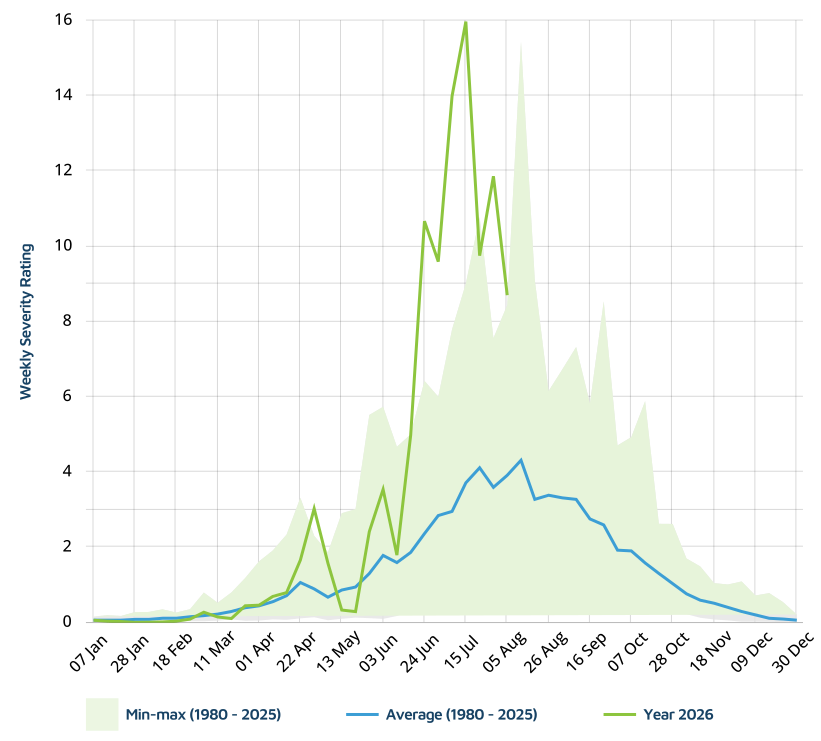
Data and graphic by European Forest Fire Information System (CC BY 4.0).
Figure 3: Area burned by wildfires in France, per week, in 2026 compared to historical data.
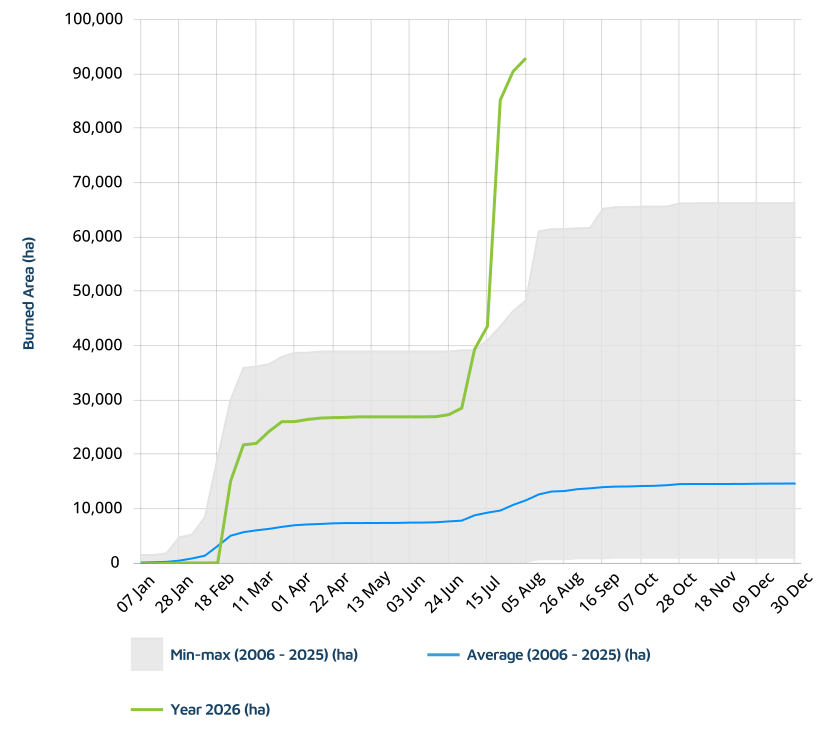
Disclaimers: (1) only fires with an approximate area of 30 hectares or larger are included in this dataset; (2) fires reported might include some set intentionally for vegetation management purposes. Data and graphic by European Forest Fire Information System (CC BY 4.0).
Climate change will make things worse
The wildfire situation is expected to worsen in the future. On one hand, climate change is predicted to increase the frequency of fire-prone weather conditions. In France specifically, the number of days with meteorological conditions favorable to fire ignition and spread is projected to increase by 63% by 2070. On the other hand, historical data shows the trend is for large wildfires to occur with less extreme weather conditions.
Read also: Wildfires took a toll on Portugal: how do we prevent this from repeating in 2026?
The damage lasts far longer than the flames
The immediate impact felt by the southwest French population was of extreme concern; e.g., once the worst had passed, more than 270 buildings were destroyed. And the wilderness was deeply affected too. The French government affirmed it was expecting significant wildlife losses. Many animals were killed directly by the flames and, with thousands of hectares of forest habitat gone, even the ones that survived the flames and smoke will struggle to find shelter and food.
But the impact does not end there. After such a severe wave of wildfires, soil loses its capacity to absorb and retain water, further exposing the region to flash flooding during the winter — which again poses a great risk for both people and infrastructure.
With the vegetation gone, the decaying roots can no longer hold the soil the same way on slopes, making landslides more likely. And once the vegetation starts to return, invasive species often outcompete native plants, completely changing the ecosystem dynamics. Water quality in streams can also be negatively affected by the ash and debris dragged by runoff.
And there is another mid-term consequence that never gets the spotlight: the exacerbation of climate change and fire-prone conditions. In only two weeks, the fires in France emitted approximately 10 megatons of carbon dioxide (CO2). If you have a hard time picturing the relevance of this number, bear in mind this is the approximate equivalent of the CO2 emitted by 2 million passenger cars during one year, considering that a typical vehicle emits about 4.6 metric tons of CO2 per year, according to the U.S. Environmental Protection Agency (EPA).
Combating the flames is not enough
The control of the Gironde Fire — the one that led to the evacuation of thousands of residents and tourists — involved 18 aircraft and nearly 6,000 people, including personnel from the firefighter service, military, police, and civil protection associations.
Despite this massive deployment of resources, it was still not possible to quickly control the flames. According to Helena Freitas, Professor of Forestry and Ecology at the University of Coimbra (Portugal), “wildfire’s scale, propagation speed and intensity have changed deeply”, and even countries with strong response means cannot properly address them.
With this threat escalating, combating the fire is no longer sufficient. European countries must place a stronger emphasis on prevention, which implies working towards making rural landscapes more resilient. Promoting agroforestry, reducing the fuel load, and creating firebreak corridors are only a few of the measures that can help in wildfire prevention.
Climate change mitigation must also be a priority in order to stall the progression of weather severity. All these actions need to be backed up with proper funding and policies. Only then can we effectively protect the people, the infrastructure, and the wildlife from the devastating fires we are witnessing today.