
Add us as your preferred source on Google to see more of our content in Search.
 Add to Preferred Sources
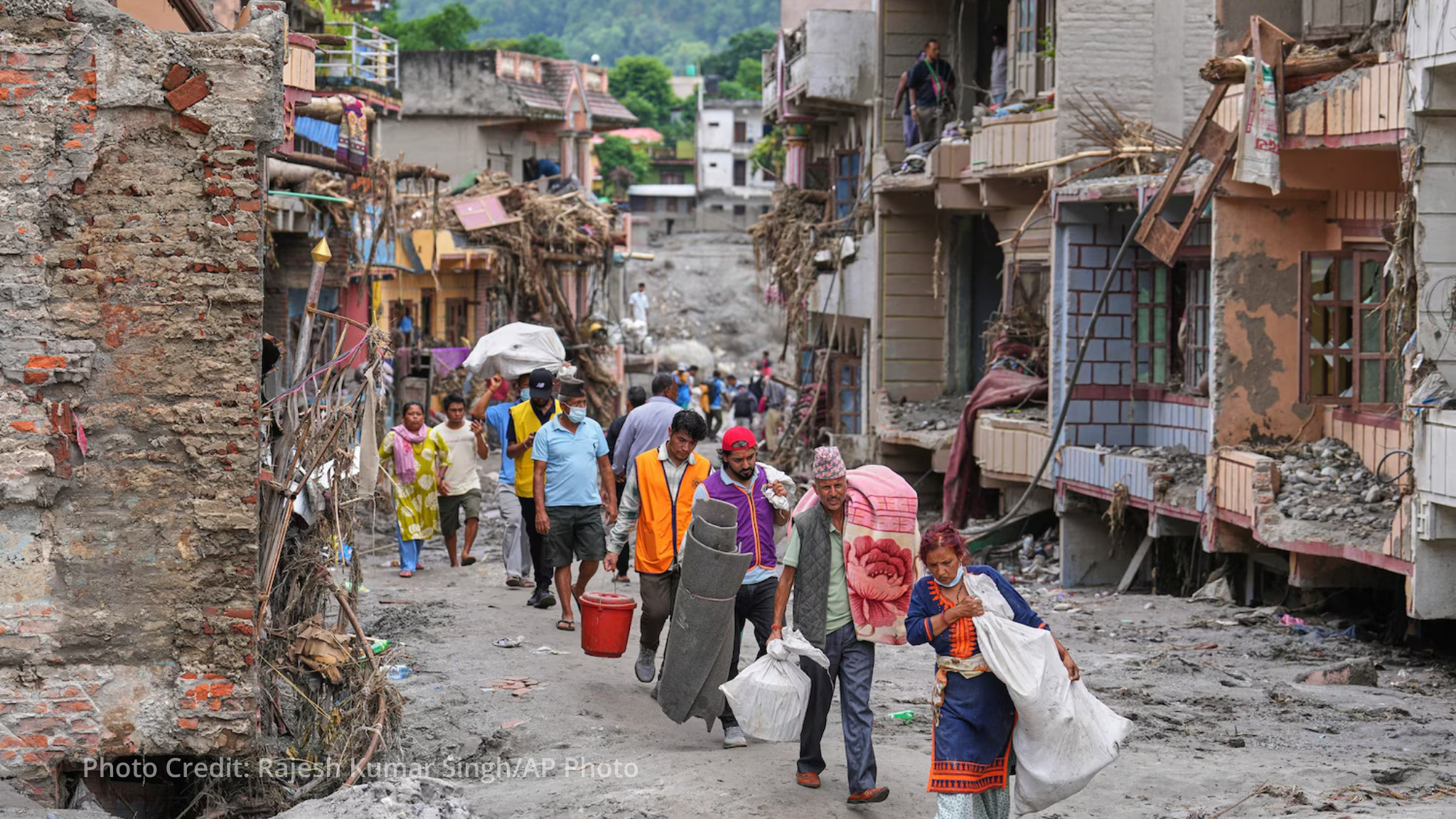
Five days after flash floods and debris flows tore through the border region of northern Nepal, emergency responders are pressing on with search and rescue operations, including efforts to reach several hundred workers believed trapped in underground tunnels near hydropower projects. The death toll climbed to 950 on Monday, with more than 4,400 people still missing, according to a press release by Direct Relief. Access to affected communities remains severely restricted, and monsoonal rains threaten further flooding. Roughly 10,000 households require immediate relief, per Nepal’s National Disaster Risk Reduction and Management Authority. As rescue operations continue, aid partners warn that disease outbreaks are emerging as the next critical emergency.
Infrastructure damage has left many areas cut off, with 32 bridges and 25 miles of road destroyed. Some locations are only reachable by helicopter. Direct Relief-supported organizations have deployed to the disaster zone with equipment and medications that were pre-positioned before the floods began. Partner Dhulikhel Hospital has emergency medical staff on the ground, with a team based in Dhunche, about 12 miles southwest of the main border-crossing impact zone. The hospital has deployed doctors and surgeons via Nepal Army helicopters to reinforce Rasuwa Hospital and to reach Syabrubesi and Galgung.
Transition to secondary health emergencies
With life-saving operations still active, attention is shifting to restoring basic health services for thousands of displaced people. These include primary care, medication for diabetes and high blood pressure, care for pregnant women and new mothers, and clean water and hygiene, said Gordon Willcock, Direct Relief’s Asia Pacific Regional Director. “The concern our partners raise most urgently is disease,” he said. “When people are displaced into crowded conditions without safe water or sanitation, in an environment where human and animal remains have not been recovered, outbreaks become the second emergency.” Requests are focused on IV fluids, antibiotics, protective equipment, rapid diagnostic tests, and water treatment supplies.
Medical shipment and long-term partnerships
Direct Relief is preparing a 21-ton shipment of medical aid and medications for multiple organizations in Nepal, including Dhulikhel Hospital and Mountain Heart Nepal. The delivery covers diabetes management medications and supplies, respiratory health medicines, essential medications, trauma and wound care supplies, solar chargers and lights, emergency health kits, field medic packs, and hygiene products. Direct Relief has also shared its available medical inventory with Nepal’s Ministry of Health and other in-country partners. Financial support is being provided to the Shanti Foundation, led by Shanti Tamang, for hygiene supplies, child-friendly spaces in displacement centers, and psychosocial support. The foundation is focusing its response on affected women and children.
Direct Relief’s engagement in Nepal dates to 1985 and has provided more than $119 million in medical aid across 48 partner organizations, 206 shipments, 638,000 lbs. of aid, and 34.9 million defined daily doses of medicine. This includes a $287,000 shipment of diabetes and cancer medications delivered this month, before the flood. The organization has issued an emergency operating grant to Mountain Heart Nepal, whose teams are using pre-positioned field medic packs to reach communities in Rasuwa and Nuwakot districts. Response priorities are expected to shift from trauma care toward safe water, infectious disease prevention, mental-health support, and continuity of care for chronic conditions and maternal health. Direct Relief has established a designated Nepal flood response fund for donations restricted to activities in the country.