

Add us as your preferred source on Google to see more of our content in Search.
 Add to Preferred Sources
Key reasons to read this article
- The Philippines has reached a milestone, but is it sufficient to actually change lives?
- Why could the 9.7% poverty figure tell only part of the story?
- Millions have crossed the poverty line, but how secure is their escape?
- Why might staying out of poverty prove harder than escaping it?
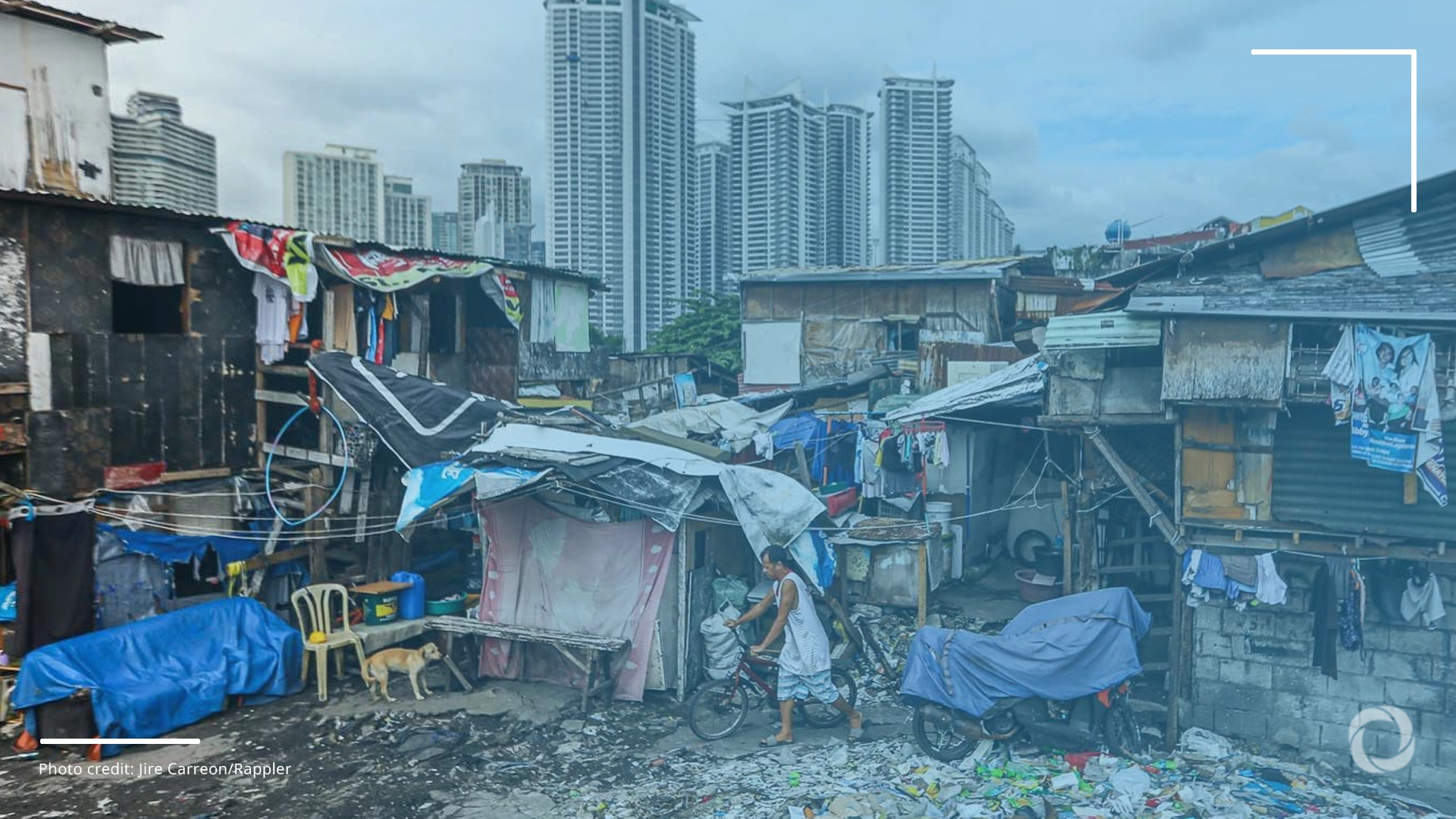
For the first time, fewer than one in 10 Filipinos are officially living in poverty. The Philippines has also moved into the World Bank’s upper-middle-income category. Yet, almost half of Filipino families still describe themselves as poor. For these households, a lost job, unexpected medical expense or climate shock can quickly turn a statistical escape from poverty into a complete reversal.
The milestones
Philippine Statistics Authority data shows poverty incidence fell to 9.7% in 2025, representing 11.08 million Filipinos, down from 15.5% in 2023.
The national poverty threshold is now US$237 per month for a family of five, or US$7.90 per day, to cover food, shelter, healthcare, education, clothing, utilities, and transport. This result puts the country three years ahead of its Philippine Development Plan 2028 target.
In August, the World Bank upgraded the Philippines to upper-middle-income status after Gross National Income per capita reached US$4,850, surpassing the US$4,636 threshold.
Official sources state that this improvement was driven by economic growth and lower inflation between 2023 and 2025. Gross Domestic Product grew by 4.4%, inflation averaged 1.7%, and unemployment held at 4.2%. Nominal incomes rose by about 22% across all groups, outpacing inflation.
Arsenio M. Balisacan, Secretary of the Department of Economy, Planning, and Development, commented that the economy had remained resilient due to inclusive growth and strengthened fundamentals despite global and domestic shocks.
The striking paradox of poverty
Despite these figures, Social Weather Stations surveys show almost 49% of Filipino families still perceive themselves to be poor, revealing a gap between the macro gains and everyday financial security.
According to the World Bank, about 28% of Filipinos live just above the poverty line and faced food inflation at 6.2% in July, high living costs, and rising healthcare bills. Furthermore, most households have no insurance despite 61% being at high risk from climate disasters. This means that millions are just one crisis away from falling back into poverty.
Income is also very uneven, with the World Bank pointing out that the top 1% earn about 17% of national income, while the bottom 50% receive only 14%.
ING Asia-Pacific Head of Research, Deepali Bhargava, explained that the shift away from export-driven, high-productivity sectors is slowing income growth leading to consumption being less durable. Household consumption in the Philippines has recovered more slowly than in other Asia-Pacific economies, and remittances grew by only 2.8%.
Cautious optimism, criticism and government promises
This news has drawn mixed reactions from international and local communities.
Oxfam Pilipinas Executive Director, Lot Felizco, said the figures prove that the Philippines “can achieve growth” but she noted that the reported progress needs to manifest itself in actual discernible improvements, particularly “cutting inequality so every Filipino can live free of poverty and discrimination, face crises with dignity, and benefit fairly from national progress”.
Meanwhile, former Finance Secretary Gary Teves noted that growth alone does not guarantee that the benefits of it will reach the poorest households, particularly now that many Filipinos continue to describe themselves as poor. Comparing the economy to a rice cake, or bibingka, he said the government was seeking to make it increasingly bigger so that the poorest can also benefit from it but he noted, “the first ones to eat from that bibingka, however, are the wealthy”.
Executive Secretary Ralph Recto has given assurances that the government will protect the 6.5 million Filipinos who have recently moved out of poverty. The plan centers on creating more jobs and easing living costs through tax relief. Raising the personal income tax exemption to US$5,673 would put up to US$284 back in each worker’s pocket yearly, boosting household spending.
But putting more money into households will not determine whether the country’s poverty gains will endure.
“Progress in the Philippines is real, but many families sit just above the poverty line, and a single shock can push them back,” explained Liliana D. Sousa, Senior Economist at the World Bank, commenting that the next challenge is to combine faster income growth with better job prospects and stronger protection against shocks.
For the Philippines, that could prove more significant than crossing the 10% poverty threshold. The durability of the country’s progress will ultimately depend not on how many can escape poverty, but on how many can stay above the line when the next crisis comes.