
Add us as your preferred source on Google to see more of our content in Search.
 Add to Preferred Sources
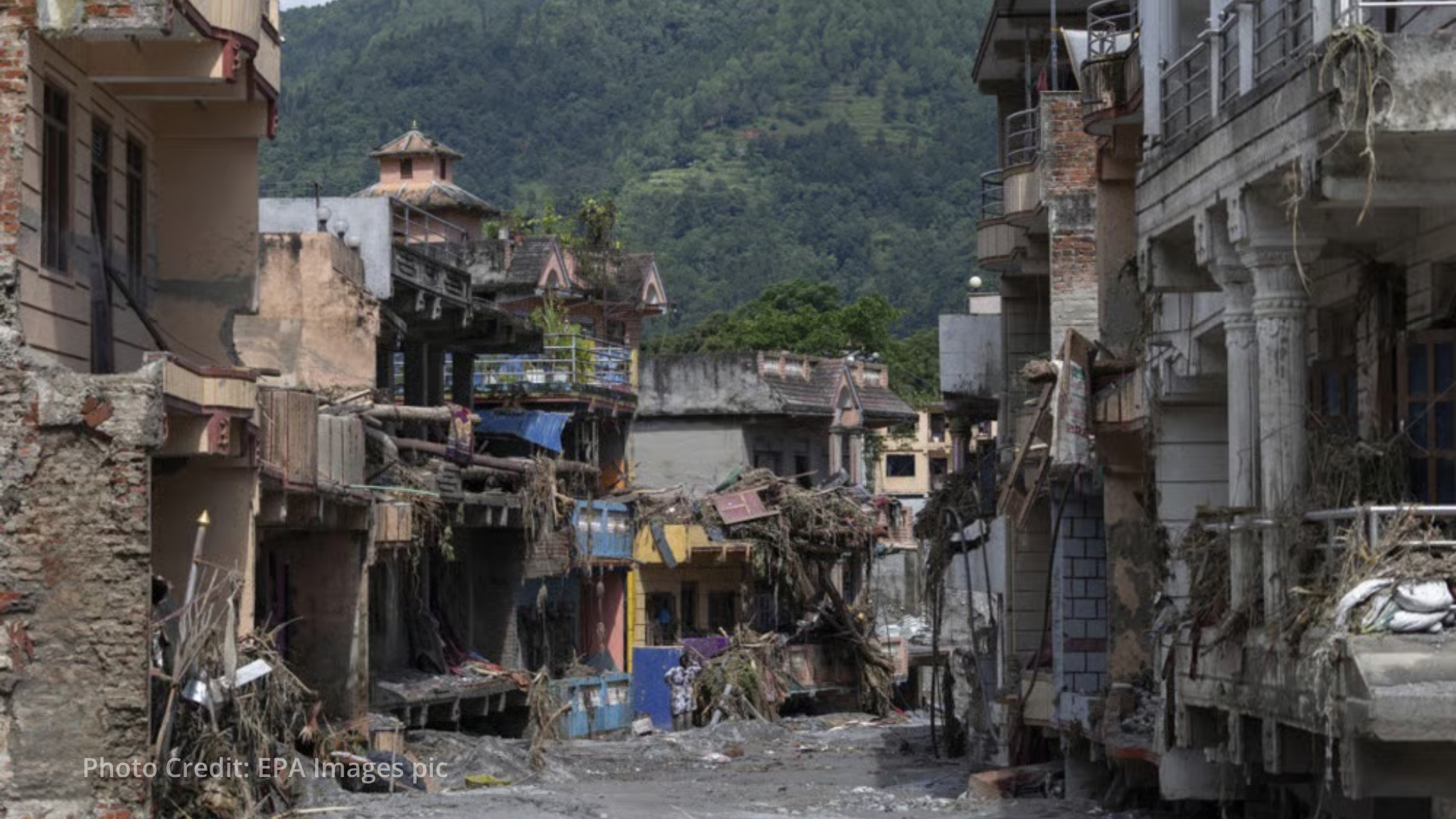
Severe flooding has struck the Trishuli River Valley in Nepal’s Nuwakot and Rasuwa districts, killing approximately 273 people and leaving nearly a thousand others missing, according to a press release by Action Against Hunger. The organization has been implementing reconstruction and water access programs in the region since the 2015 earthquake. As the death toll continues to rise, entire communities are mourning and many families remain uncertain about the fate of their loved ones. The disaster has caused major human and material consequences across the Himalayan valley. Preliminary information from local authorities indicates nearly 8,700 households, representing more than 39,000 people, have been directly affected.
For nearly ten years, Action Against Hunger and its partners have supported communities in this Himalayan valley in rehabilitating drinking water and sanitation infrastructure. The systems rebuilt along both banks of the Trishuli River enabled thousands of people to regain sustainable access to safe drinking water following the 2015 earthquake. The current floods are linked to a Glacial Lake Outburst Flood, which occurs when a glacier’s moraine dam suddenly collapses after water accumulates at the base of the glacier in the upper reaches of the river in Tibet. Accelerated glacier melt due to climate change, combined with high-altitude rainfall, contributes to this buildup of water. When pressure becomes too great, the moraine gives way, triggering the sudden release of the glacial lake.
The town of Bidur, where Action Against Hunger teams coordinated their operations in the Trishuli Valley, was completely destroyed and swept away by the floodwaters. Essential infrastructure has also been severely affected across the region. Water supply systems and agricultural land have sustained extensive damage, compromising access to safe drinking water and threatening the livelihoods of many families. These sudden floods leave communities with very little time to react and are extremely difficult to predict in these remote Himalayan regions. The catastrophe comes in the middle of the harvest season, raising fears of a major food security crisis for riverside communities whose crops and farmland have been severely impacted.
“This flash flood is particularly devastating because immense volumes of water surge through a narrow, steep Himalayan valley. They carry with them the material accumulated by the glacier: mud, boulders, sediment, and ice. It is a veritable liquid avalanche moving at extremely high speed through the rugged terrain of the Trishuli Valley, whose waters originate in Tibet before flowing into Nepal,” explained Julien Eyrard, Water, Sanitation and Hygiene (WASH) Coordinator at Action Against Hunger.
Eyrard oversaw the reconstruction of water networks in Nepal between 2015 and 2025. He noted that while such events are becoming increasingly likely due to global warming, they remain extremely difficult to predict.
Eyrard added that certain glacial lakes in Europe are subject to enhanced monitoring, particularly in the Mont Blanc massif, but not all high-risk areas in Asia benefit from equivalent monitoring and early warning systems. Action Against Hunger teams, in coordination with local authorities and partners, are currently mobilized to assess the full extent of the damage and identify priority needs. Initial assessments indicate significant needs in access to safe water, sanitation services, and food security support across the affected areas. The organization continues to work alongside communities that have depended on rebuilt water infrastructure since the 2015 earthquake. Response efforts remain ongoing as the scale of the disaster unfolds.