

Add us as your preferred source on Google to see more of our content in Search.
 Add to Preferred Sources
Key reasons to read this article:
- Sudan needs to rebuild, but the war is making recovery harder to finance.
- The EU is still funding humanitarian relief, but can its emerging investment model also support recovery?
- What happens when a country needs investment before it is ready for investors?
- Can the EU’s humanitarian-development-peace model deliver in a country at war?
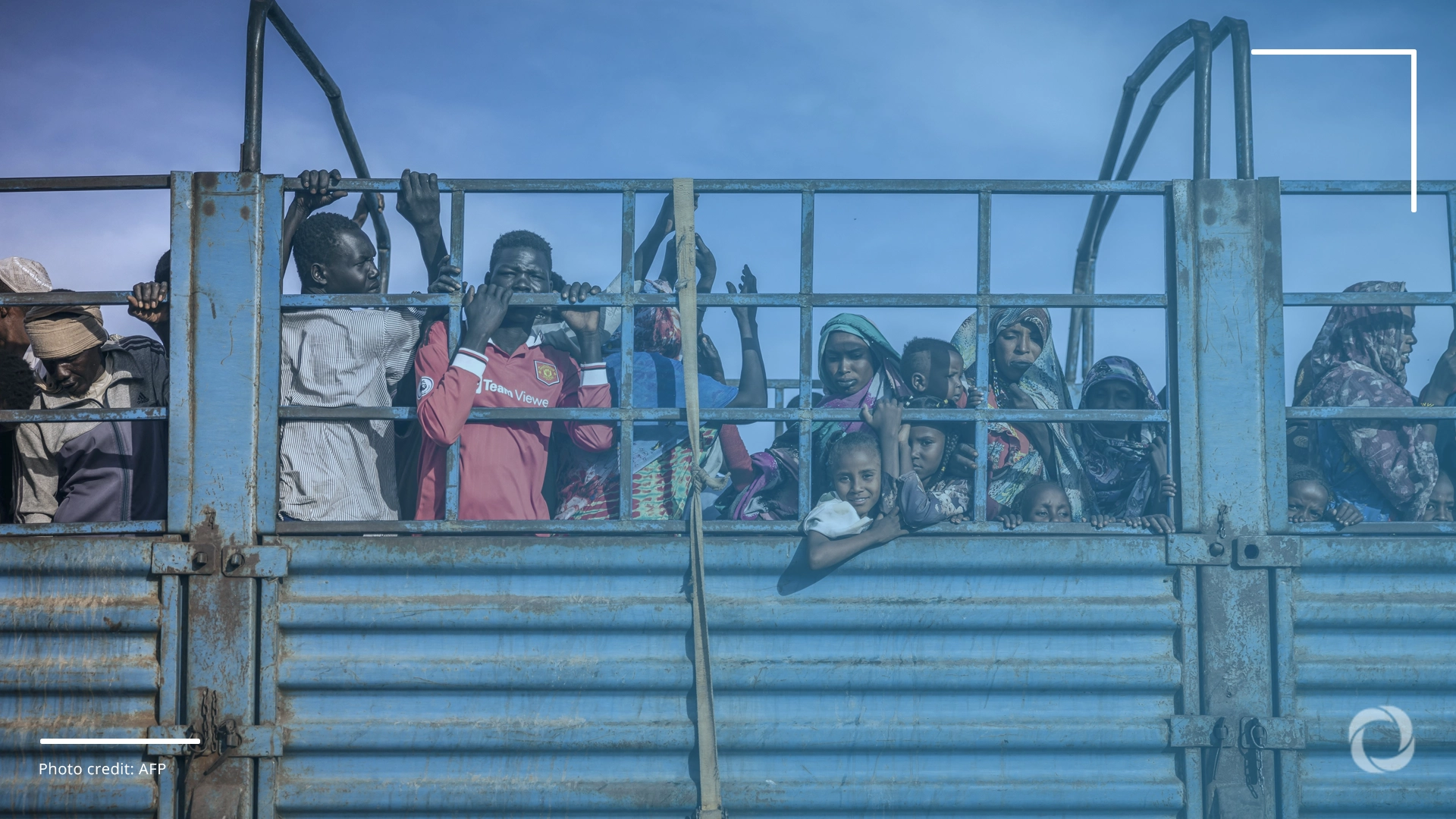
The humanitarian crisis in war-torn Sudan is growing faster than the country’s ability to recover from it. In 2026, 33.7 million people now need humanitarian assistance, up by 3.3 million compared to 2025, while 19.5 million people face a crisis level of acute food insecurity. Over 11.3 million people have been forcibly displaced, health services have been devastated and Sudan’s agricultural and economic systems have been significantly disrupted.
At the same time, global official development assistance (ODA) in 2025 fell by 23.1% compared to the year before, putting additional pressure on longer-term financing. Despite this reduction, EU institutions and member states remain Sudan’s biggest humanitarian donors. But as the converging crises of war, displacement, and famine continue, humanitarian assistance alone cannot rebuild agricultural systems, restore water infrastructure, strengthen health services or revive the livelihoods destroyed by war.
This creates a difficult financing question. With the EU shifting towards a more investment-oriented approach to external financing, can its future model provide the kind of long-term support that fragile countries such as Sudan will need to rebuild their development foundations? Can it ensure a balanced humanitarian-development-peace nexus for countries affected by prolonged conflicts?
The nexus: from survival to resilience
As defined by the United Nations Development Programme, the humanitarian-development-peace (HDP) nexus brings humanitarian, development, and peacebuilding efforts together to “address underlying causes … and consequences of crises.”
This distinction matters because ending a war through a peace treaty, limiting a famine through food aid, or accommodating the displaced will not automatically address the structural conditions that produced or prolonged those crises.
For Sudan, the UN’s definition is critical. Humanitarian assistance can provide food, clean water, healthcare, shelter and cash support to those people affected by the conflict. But it cannot, in itself, restore the systems that will make communities more resilient. Food aid can address immediate hunger, whereas restoring agricultural production, markets and rural livelihoods could reduce long-term dependence on assistance. The same applies to water, health and education, where emergency services need to be complemented by investments in functioning systems, infrastructure and local capacity.
This is the central challenge for the HDP nexus in Sudan: connecting the money spent on immediate responses with investments in systems that could make that assistance less necessary.
Can the EU finance both survival and recovery?
Since the civil war erupted in Sudan, the EU has provided humanitarian aid. From 2023 to 2026, it funded about €975 million. In April 2026, the European Commission and member states pledged more than €812 million for Sudan and neighboring countries that host refugees.
The EU continues to recognize longer-term development and resilience as part of its approach to Sudan, but the war has pushed the needle toward humanitarian assistance, peace efforts and crisis response. In the European Council’s own formulation, the rehabilitation of essential systems depends on political conditions that will allow these to resume or expand.
This creates a difficult financing dilemma. Sudan needs humanitarian assistance to survive the war, but it also needs investments in the systems and productive capacity that will enable it to reduce its dependence on emergency aid and also support the country’s recovery.
That issue is particularly relevant now that the EU is preparing its next Multiannual Financial Framework (MFF) for 2028-2034. The proposed €200 billion Global Europe Instrument puts development cooperation and other external action tools in a single financing framework and marks the EU’s shift towards a more investment-oriented external financing model. Global Gateway, the EU’s strategy for sustainable infrastructure, is also investment-oriented.
This shift means Sudan will be an important test of how the EU’s external financing model can support countries where the immediate priority does not attract investment, but rebuilding the foundations that can make sustainable development and investment possible are the focus.
What does Global Gateway tell us about the future of EU funding?
The Global Gateway (GG) is not currently a significant financing channel for Sudan and the €812 million pledge is not a Global Gateway package. It is nevertheless relevant as it illustrates the broader direction in which the EU’s external financing is heading.
Launched in 2021, the strategy seeks to support sustainable development while also creating opportunities for European businesses. However, its focus on mobilizing investment has attracted criticism from the development community.
The International Crisis Group has raised concerns about the way the strategy could redirect resources from “traditional” development aid to more policy-directed choices involving the funding of high-visibility projects.
The European Network on Debt and Development (Eurodad) has raised similar concerns. María José Romero, its Policy and Advocacy Manager for Development Finance, told DevelopmentAid that 70% of GG is directed toward climate, energy and transport projects, arguing that business opportunities could therefore be prioritized over development objectives.
Borja Arrue Astrain, Senior Policy and Advocacy Adviser for the European Confederation of NGOs working on sustainable development and international cooperation (CONCORD), highlights the risk that “bankability and industrial interests can outweigh the priorities and needs of partner countries”.
Eurodad and Oxfam have also argued that the strategy could link development funding to EU interests such as migration management or access to raw materials. Researchers highlight that this risks development funding losing its credibility and failing to reach the places where it is most needed. The humanitarian-development-peace nexus might be there in theory, but it is likely to be built on political rather than humanitarian grounds.
The role of development organizations
Development organizations are now pressing the EU to ensure that its shift towards a more investment-oriented external financing model does not weaken the development objectives of its aid. Their concerns are relevant to the negotiations over the 2028-2034 MFF, which are expected to determine how development funding is structured and what objectives are attached to it.
Eurodad has called on the EU to decouple its foreign policy and economic interests from ODA in future budgets, arguing that these should not come at the expense of poverty reduction, inequality and human rights.
Eurodad has also raised concerns about the availability of the information needed to assess the impact of implemented projects. María José Romero points out that the plans can only work if the EU can “demonstrate the development impact of their investments and align their financing with equitable and locally beneficial development outcomes”.
Jaimie Just, Senior Policy and Advocacy Adviser at CONCORD, has raised similar concerns. “There is insufficient evidence for the delivery of GG’s many promises. Success is not measured in terms of lives improved, communities strengthened – it is measured in terms of euros mobilized. And even in those terms, the picture is not clear, with little detail publicly available,” she explained to DevelopmentAid.
CONCORD and its members have also been advocating for an explicit reference to, and alignment with, Article 208 of the Treaty on the Functioning of the European Union (TFEU), which states that EU funding should focus on poverty reduction and other goals aligned with UN humanitarian development.
A test for the humanitarian-development-peace nexus
Sudan illustrates the difficulty of applying the HDP nexus in a prolonged conflict, where humanitarian needs continue to grow, while meanwhile the institutions and infrastructure needed for recovery are weakened.
For now, there is no clear answer as to whether the EU’s new financing model can deliver the balance that Sudan needs. The 2028-2034 financing framework is still being negotiated, while the conditions for large-scale development investments remain constrained by the war. The EU itself has linked deeper engagement to progress towards a ceasefire and civilian-led governance.
Sudan therefore remains an unresolved test of the EU’s new approach: the country needs long-term investment to move beyond dependence on humanitarian aid, but the conflict is limiting the scope for such investments. Whether the new financing model can bridge that gap is likely to depend on both how the EU ultimately structures its funding and whether conditions in Sudan will allow development financing to expand.