
Add us as your preferred source on Google to see more of our content in Search.
 Add to Preferred Sources
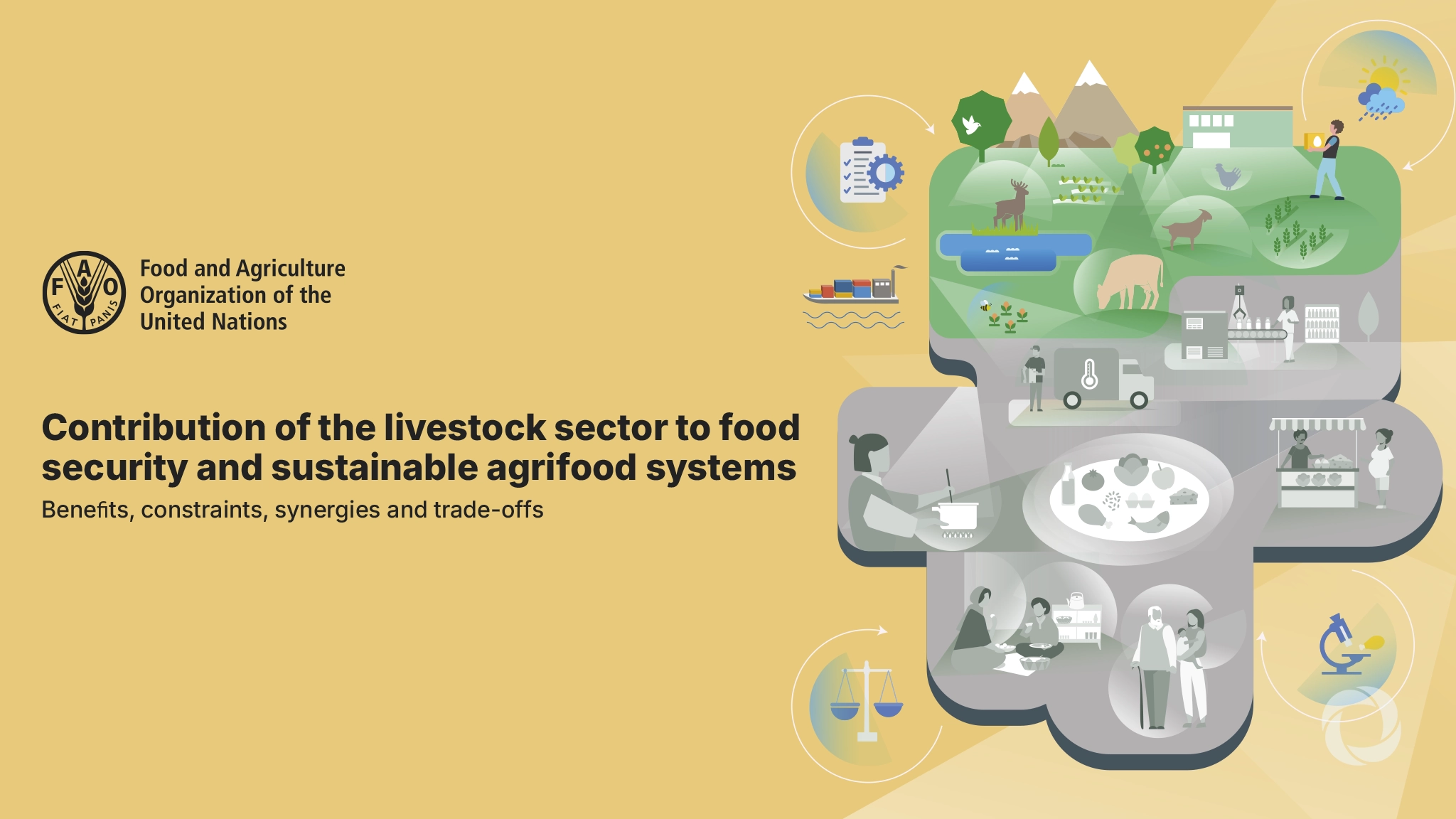
Livestock production systems supply one-third of the world’s total protein and are undergoing profound changes, according to a new press release issued in Rome on 22 September 2026 by the Food and Agriculture Organization (FAO). The report surveys how different production systems contribute to social, economic, and environmental sustainability. Most protein comes from mixed crop-livestock and poultry systems. Only 15 percent of meat, 12 percent of milk and dairy products, and 3 percent of eggs are traded across international borders. The bulk of livestock’s role in food security is grounded in national and local marketing.
The publication is the third in a series prepared in response to a request from FAO Members for a science-based global assessment of the sector’s contribution to food security, sustainable agrifood systems, nutrition, and healthy diets. It reviews scientific literature, policies, and legal frameworks, focusing on livestock production system typologies. Terrestrial animal source food (TASF) production has increased more than fivefold since 1961. Investment in the sector has grown since 2000, albeit from a low base. Public investment prioritizes disease control, husbandry, nutrition, genetics, and research infrastructure.
Mixed crop–livestock and poultry systems each account for about 30 percent of the global protein supply from livestock, while grazing systems contribute 12 percent, pig systems 19 percent, and feedlots just 3 percent. Ruminants provide 26 percent of global annual meat production, and monogastrics such as chicken provide 74 percent. Cattle deliver 81 percent of global milk output. TASF averages 33 percent of protein supply worldwide, exceeding 50 percent in Northern America, South America, most of Europe, Australia, and New Zealand, but falling below 18 percent in Africa. The sector accounts for 40 percent of global agricultural GDP, an estimated $1.8 trillion.
Livestock production systems generate 12 percent of anthropogenic greenhouse gas (GHG) emissions, with cattle contributing the largest share and enteric methane an important source. Low-external-input systems with low stocking rates emit less GHG per unit of surface area, while high-external-input systems generally show lower emission intensities per kilogram of production.
“The many breeds and species of livestock on our planet can thrive in a wide range of environments, particularly in areas less suited or unsuitable for crop production, and contribute to a wide variety of healthy diets,” FAO Director-General QU Dongyu wrote in the foreword.
He noted that the sector must address deforestation, land and water use, GHG emissions, food-feed competition, productivity gaps, animal welfare, antimicrobial resistance, and zoonotic disease risk. Losses during production and processing remain high in low- and middle-income countries, especially in sub-Saharan Africa.
Increasing TASF demand is driving intensification of mixed crop–livestock systems and a shift toward monogastric production due to economic efficiency and lower land use. Feed–food competition for land is prompting greater use of agroindustrial by-products, less conventional feed sources, grasslands, and marginal lands. Livestock can support the bioeconomy by converting non-human-edible resources into feed and generating products for organic fertilizer, bioenergy, and biomaterials. Current trends point to a stronger future focus on livestock value chains and market access. The report concludes that optimizing the sector’s contribution requires balancing benefits, constraints, synergies, and trade-offs across production systems.