

Add us as your preferred source on Google to see more of our content in Search.
 Add to Preferred Sources
Key reasons to read this article:
- Floods are not only about rain. Understand how the way in which cities grow can determine whether floodwater can escape.
- What happens when nature’s infrastructure disappears? Wetlands and floodplains quietly perform the jobs cities now need to replace.
- Can concrete solve a problem that concrete helped to create?
- Learn what cities are doing to allow nature to share the burden of managing stormwater and reducing flood risk.
As cities expand, natural systems that once absorbed, stored, and slowed rainwater are increasingly being replaced by roads, buildings, and other impermeable surfaces. Wetlands are being filled, vegetation is being cleared, floodplains are being developed, and natural drainage pathways are being altered.
Climate change is increasing the pressure on already vulnerable urban systems, with floods remaining the most frequently reported extreme-weather hazard in Africa. In 2025 alone, extreme weather and climate-related events affected at least 13 million people across the continent, while floods accounted for more than half of the reported events.
That makes it tempting to treat climate change as the central explanation for increasingly frequent floods. But rainfall is only part of the story.
Cities affected by urbanisation
The other issue is urbanisation: where cities grow, what they build over, which natural systems they preserve, and whether infrastructure and planning can keep pace with that growth.
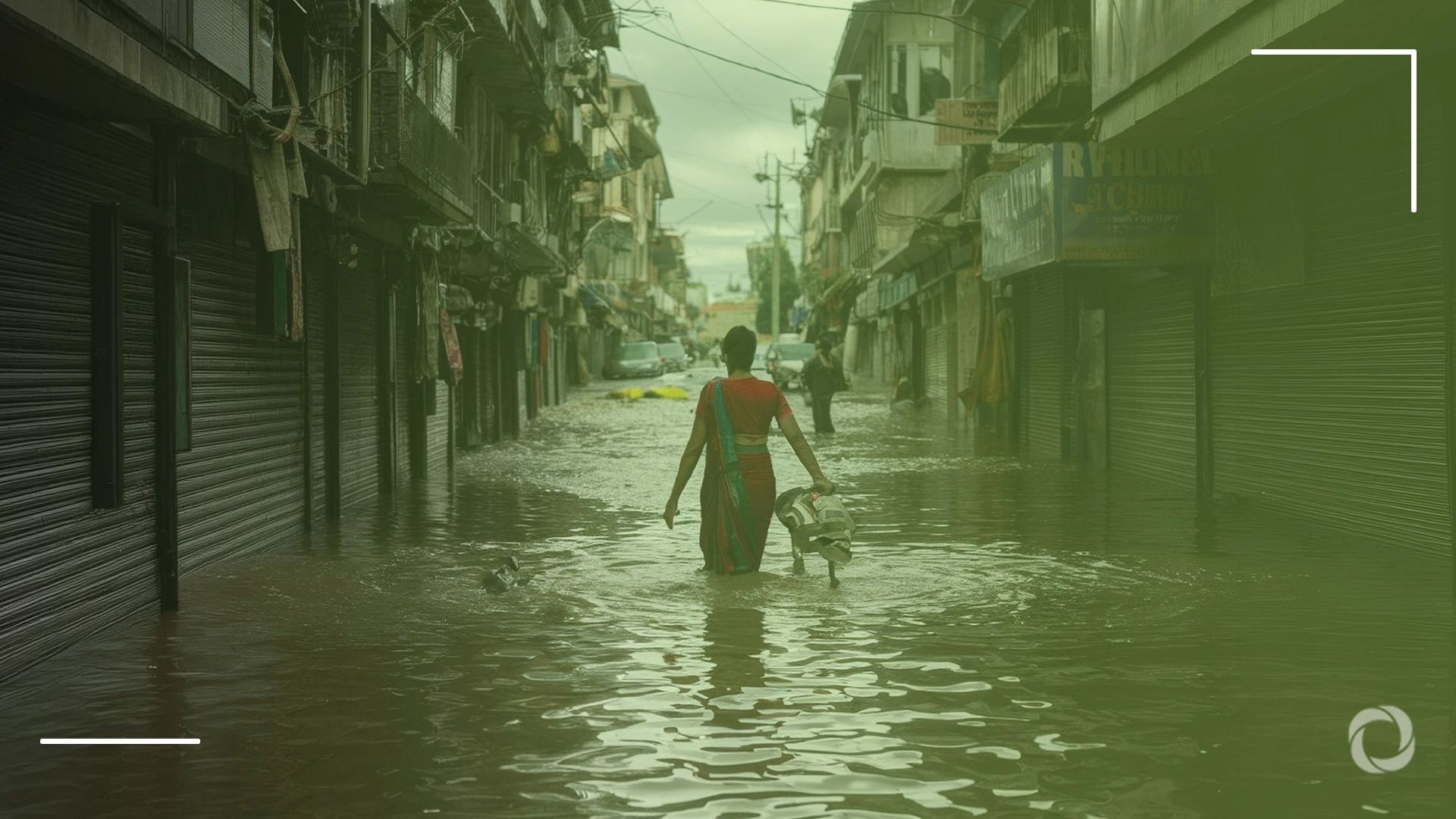
In August 2026, streets in Abuja, Nigeria’s planned capital, turned into rivers of mud and debris. Floodwater swept away cars and flooded homes and affected parts of Wuse, Asokoro, Gwarinpa, and other neighborhoods where development has surged.
A 2026 study of the Federal Capital City found that built-up areas have expanded from 56.9 square kilometres to 247.8 square kilometres, a 335% increase. Over the same period, forest and grassland declined by more than 86%.
Another study also found that the share of surface runoff generated by built-up areas increased from 13.2% to 41.6%, while 44.3% of the city’s districts were assessed as having a high or very high risk of runoff accumulation. The researchers concluded that urbanisation on hydrologically sensitive land was amplifying the flood risk.
Not every flood is a result of construction, or simply the effects of heavy rainfall. Instead, the impact of rainfall depends partly on the landscape receiving it.
A coalition of landlords and investors have warned that “encroachment on green areas, parks, drainage corridors, canals and waterways originally designed to support flood control and groundwater recharge” has become rampant.
Accra clearly illustrates the wider problem. In June 2026, rains dropped a record 169 mm in a few hours, turning Accra’s streets into rivers. Disaster agencies blamed not just the extraordinary level of rain but inadequate and obstructed development near and on natural waterways and wetlands.
The United Nations Development Programme explains that Accra’s lowlands previously featured mangroves, lagoons and floodplains that quietly absorbed deluges. Those landscapes absorb rainfall, slow runoff, and store excess water before it reaches communities.
“When these ecosystems are degraded or paved over, natural drainage is disrupted, and floodwater has nowhere to go but into homes, facilities and roads,” UNDP notes.
The Tse-Addo neighbourhood in Ghana, which sits within the Kpeshie Lagoon coastal plain wetlands, has suffered badly, illustrating this point. With each wetland or green space wiped out, the valuable ecosystem services are lost, and the need for investment in engineered infrastructure, relief and recovery shoots up. Simply put, nature’s old flood defences have been sold off, and now Ghana’s government must urgently rebuild drains and deploy emergency crews.
The same story plays out in East Africa’s capitals. In Nairobi’s informal settlements, a WRI study has found that floods were exacerbated not just by heavier rains but by lost wetlands and compacted soils. Many of the hardest-hit neighborhoods sit in old floodplains along the Nairobi, Ngong, and Mathare rivers where urban gardens and fields once acted like natural sponges. Now they are concrete shanties.
In March 2026, Kenya’s Director of water storage and flood control also pointed to rapid urbanisation, ageing drainage systems, and increasingly intense rainfall as the factors behind the city’s growing flood problem. Every paved parking lot or filled-in streambed adds to the deluge, channeling water straight into communities that have nowhere else to run.
In short, the city ends up solving one development problem while creating another. Paving an extra parking lot or approving a block of apartments might seem like growth. But this quietly removes some of the natural systems that help to manage water.
So what now?
The conversation is shifting, and the question is not whether African cities should grow. The question is how they grow. Cities from Addis Ababa to Kigali are rethinking what counts as infrastructure. No one says concrete pipelines and pumps are not needed, but there is increasing recognition that nature-based solutions – restored wetlands, green roofs, floodplain parks – can share the burden.
In Ghana’s Sekondi-Takoradi, a new plan combines wider drains with wetland restoration and urban gardens, and economic models show every dollar spent on this hybrid approach could pay off many times in avoided flood damage.
These steps may sound logical, but implementation is the hurdle. Many African master plans are decades out of date or overlook climate change. Upgrading these means political will and new funding, plus communities pushing back on lucrative development. However, the cost of ignoring nature is becoming impossible to ignore. As Dr. Onoja of the NCF warns: The cost of protecting ecosystems today is far lower than the cost of rebuilding cities tomorrow.
In the end, who does nature’s work if cities do not? Often, no one, and that means flooding disasters do the job, at high human and economic cost. If African cities continue to plan only for growth, they risk solving today’s problems by inviting tomorrow’s. But if they plan for resilience, respecting the role of wetlands, parks and rivers, then they can allow nature to share the load. As one expert puts it, protecting nature is not a luxury; it is an invisible infrastructure protecting cities from collapse.