
Add us as your preferred source on Google to see more of our content in Search.
 Add to Preferred Sources
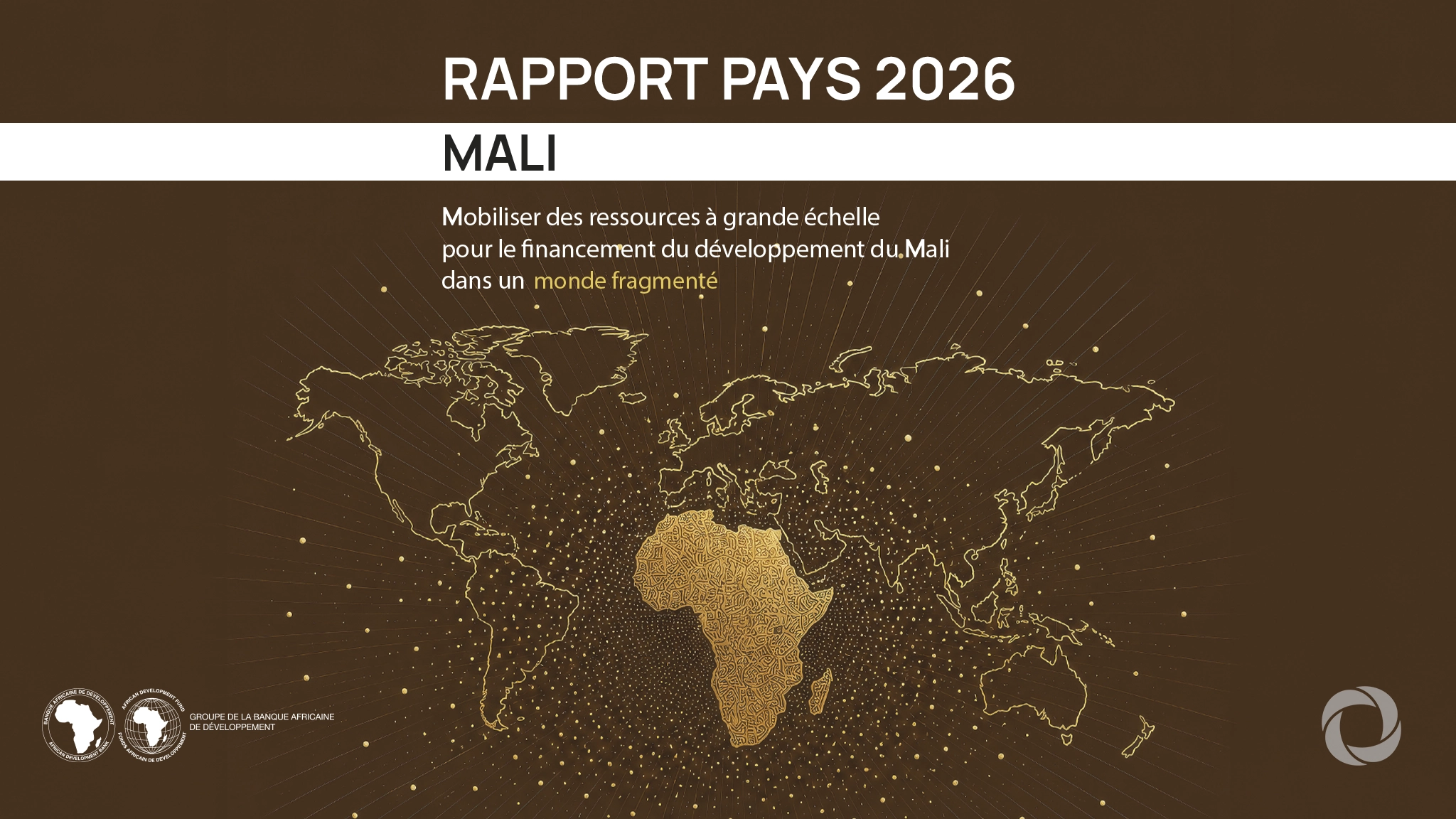
Mali has significant levers at its disposal to finance its development and accelerate its economic transformation in an increasingly fragmented global environment, according to the African Development Bank’s (AfDB) 2026 Country Focus Report. The report was presented on 10 September at a workshop held by the Bank’s Mali Country Office in Bamako. Titled “Mobilising Large-Scale Resources to Finance the Development of the Republic of Mali in a Fragmented World,” it identifies several sources of financing to help meet growing development needs. It was presented by Antoine-Marie Tioyé Sié, the Bank’s Principal Country Economist in Mali. The report argues that strengthening financial autonomy is central to the country’s development path.
The document analyzes Mali’s recent macroeconomic performance, its financing needs, and proposes reforms to strengthen national financial systems. Despite persistent security, humanitarian, and climate-related challenges, Mali recorded economic growth of 5.6% in 2025. According to the report, this performance gives the Sahelian country a solid foundation to mobilize additional resources. It also positions Mali to drive stronger, more sustainable, and inclusive growth. The findings frame these dynamics against a backdrop of global fragmentation.
Among the key levers identified are improved domestic revenue mobilization, national savings, and diaspora remittances. The report also points to deepening of the regional financial market and the development of private capital. Further levers include the gradual formalization of the informal sector and stronger institutional capacity within financial administrations. It highlights opportunities offered by the New African Financial Architecture for Development (NAFAD), a central pillar of Bank Group President Dr. Sidi Ould Tah’s strategic vision known as the “Four Cardinal Directions.” The report calls for coordinated action across public authorities, the private sector, institutional investors, development partners, financial institutions, and civil society.
In his opening remarks, Cédric Mbeng Mezui, the Bank’s Country Manager for Mali, stressed the need for a change in approach to development financing.
“We must no longer wait for financing to build projects, but rather build bankable projects to attract financing,” he said.
He added that the mobilization of domestic resources would become even more important with the expected decline in external aid. Workshop attendees emphasized strengthening regional financial integration and developing the WAEMU capital market. They also underscored the importance of mobilizing the private sector and fully accounting for the informal sector’s contribution to Mali’s economy.
Discussions also highlighted the value of initiatives such as the Local Development Mining Fund. Participants noted that it can increase resources available to local governments and enhance the extractive sector’s contribution to community development. The report concludes that large-scale mobilization of natural, human, entrepreneurial, and financial levers, combined with appropriate reforms, will strengthen Mali’s competitiveness. It also states that these measures will help attract greater investment. According to the African Development Bank, they will accelerate Mali’s economic transformation in the decades ahead.