
Add us as your preferred source on Google to see more of our content in Search.
 Add to Preferred Sources
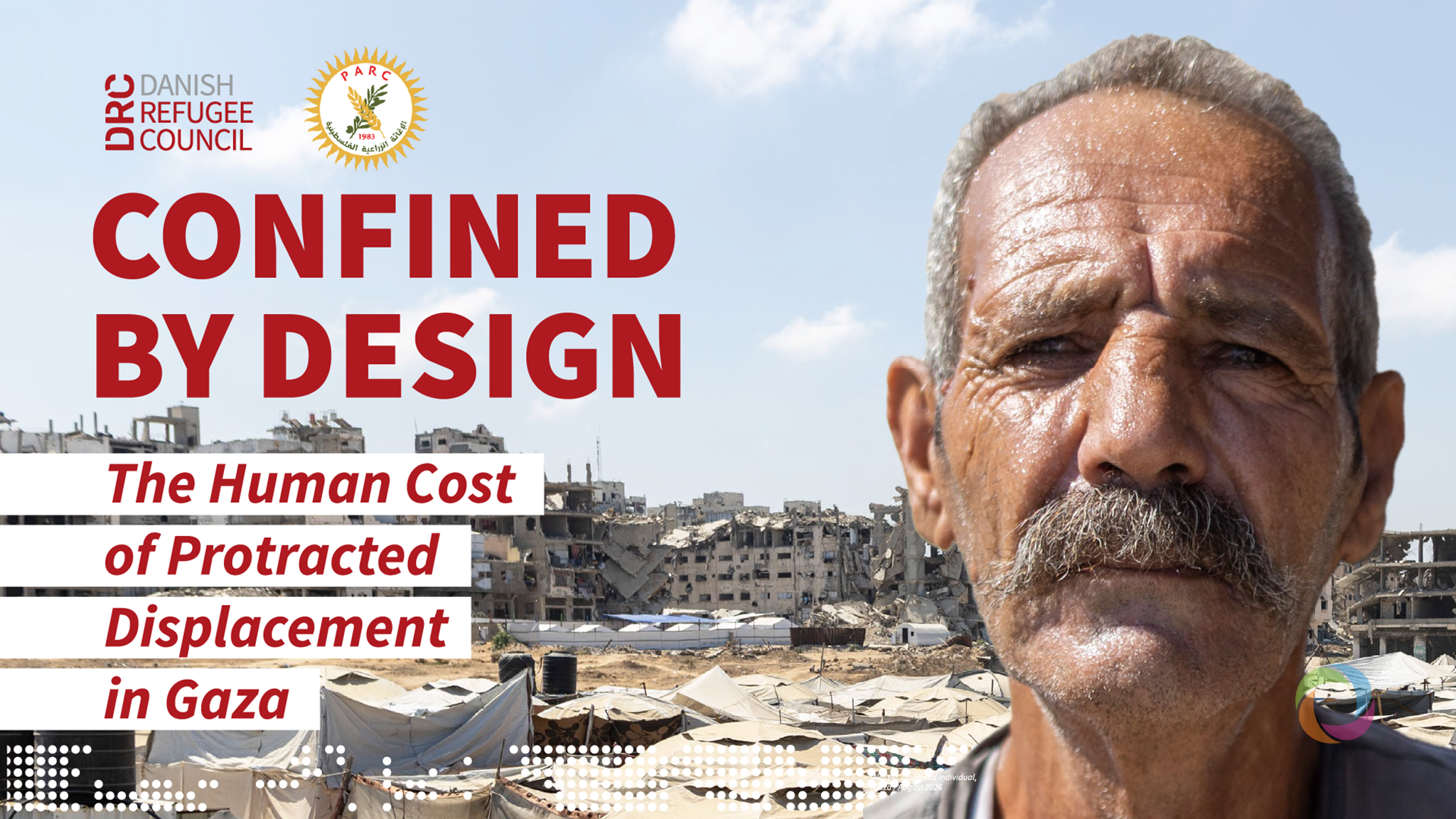
About 1.8 million Palestinians in Gaza are living in protracted displacement and inhumane conditions one year after a ceasefire took effect, unable to return home as Israel expands its demarcation line and blocks life-saving aid, according to a press release issued on 1 October 2026 by the Danish Refugee Council (DRC) and the Agricultural Development Association (PARC). The figure represents 86% of Gaza’s population, now confined to 1,739 displacement sites. More than 1,400 people have been killed since the 10 October ceasefire. The findings are detailed in a new report, Confined by Design: The Human Cost of Protracted Displacement in Gaza. The report documents how forced displacement during the conflict’s first two years has evolved into a policy of protracted displacement.
Following the ceasefire, hundreds of thousands moved from south to north Gaza, only to find destroyed homes, no basic services, and unexploded weapons beneath the rubble. Attempts to resettle in areas of origin also failed because of the demarcation line known as the Yellow Line. This line has become an internal boundary splitting Gaza, forcing people to remain to its west. At the start of the ceasefire, the area east of the line represented 58% of Gaza’s territory. By May 2026, Israeli authorities’ own disclosures put the figure at 60%, while Israel’s Prime Minister instructed the army to expand its control to 70%.
The report draws on detailed interviews with 195 people in displacement sites across Gaza. It describes extreme overcrowding, unsafe water and sanitation, and widespread rodent infestation. Severe psychological distress runs through the sites. “I want to poison myself because I can’t feed my children,” said Hiba, a 26-year-old widow. Among those interviewed, 50 said they lived near the Yellow Line and feared returning to their family home due to the army’s presence and fear of being shot at.
In northern Rafah, DRC witnessed the line expand in increments of between 300 and 500 meters during events of 12–14 July, when five Israeli tanks crossed the Yellow Line and advanced on a displacement site. The report estimates that at least 13,000 people remain at risk of forced displacement in that area.
“There is no homecoming for Palestinians in Gaza, and there is no end to suffering. What is in place right now is a ceasefire in name only,” said DRC oPt Country Director Alan Moseley.
He added that the Yellow Line continues expanding westward, “effectively squeezing families into 30% of Gaza’s territory.” Aid groups are unable to operate within several kilometers of the line due to access constraints or security concerns.
DRC is calling on the international community, donor governments, and parties to the conflict to take urgent action. The organization urges them to:
- End the expansion of military zones through the westward movement of the Yellow Line, and allow safe, voluntary, and dignified returns of people to their place of origin.
- Remove humanitarian obstruction and restrictions on essential goods, including shelter, water, and sanitation supplies.
Hani Al Ramlawi, Director of Development and Strategic Partnerships at PARC, described conditions as “unsafe and inhumane,” with collapsing sewage systems and rats biting children at night. The report underscores that the cycle of displacement must end for Palestinians in Gaza to recover.