
Add us as your preferred source on Google to see more of our content in Search.
 Add to Preferred Sources
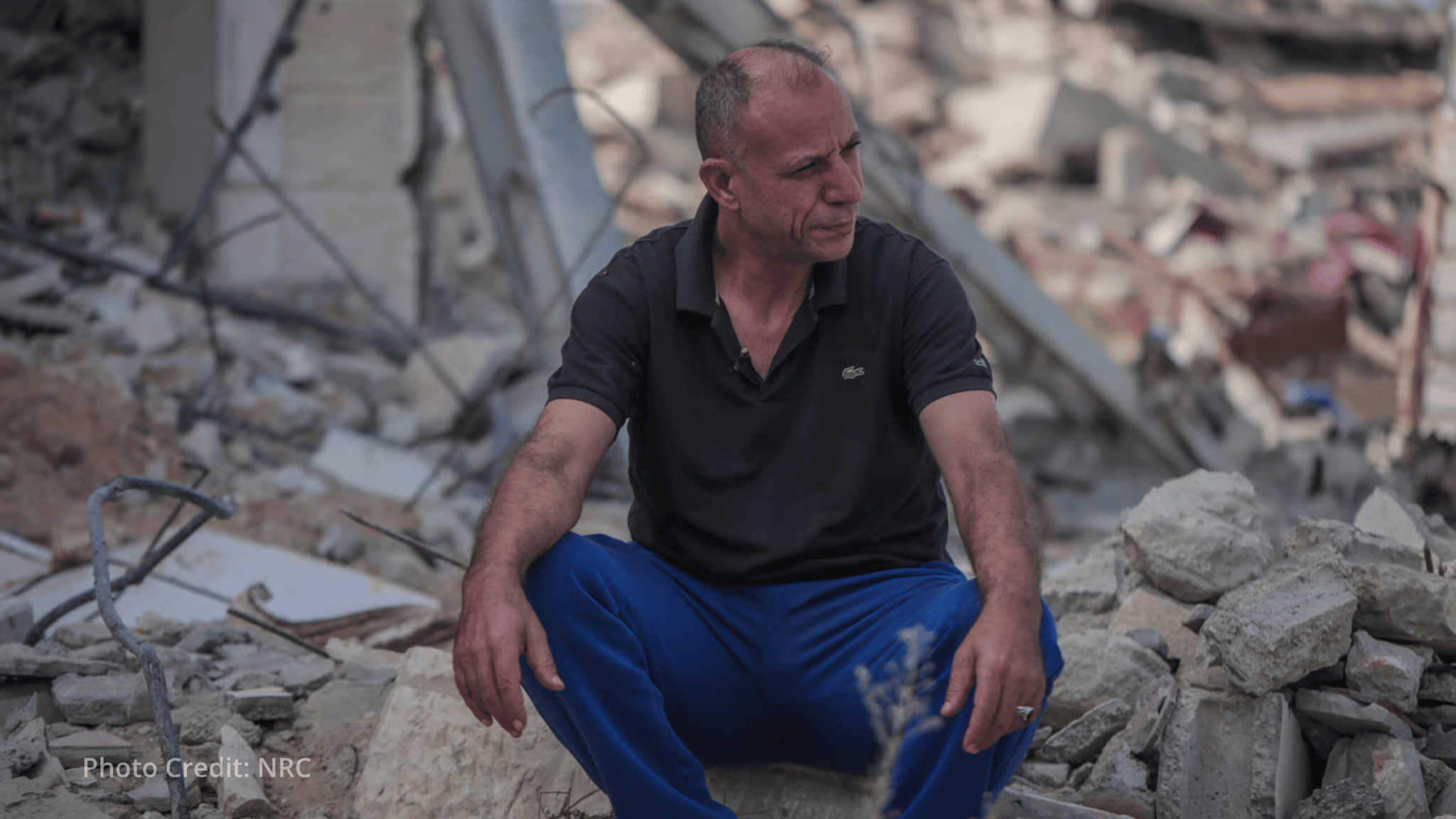
One year after the Gaza ceasefire agreement, 1.65 million people in Gaza will be forced to spend a fourth winter in worn-out tents and war-damaged buildings exposed to rain and cold, due to ongoing Israeli restrictions and funding shortfalls, according to a press release by the Norwegian Refugee Council (NRC) published on October 5, 2026. Israeli authorities currently allow only 15 trucks carrying items they designate as “dual-use” to enter Gaza from Jordan each week, across all humanitarian sectors. These items, including tents and tarpaulins, can only be offloaded at Kerem Shalom, the sole open crossing for aid, one day per week. A minimum of 500 truckloads of shelter items are in the pipeline. At the current pace, bringing in these materials would take more than seven months under the best possible conditions.
Israeli authorities classify core shelter and household items as “dual-use,” including tents, tarpaulins, timber, cement and metal sheeting needed to make repairs and build more resilient shelter. Two-thirds of Gaza’s population is living in tents and makeshift shelters made of materials that deteriorate after only a few months. This has trapped humanitarians in an endless cycle of replacing worn-out tents and tarpaulins. Severe shortages of heavy machinery, engine oil and fuel are also slowing efforts to prevent flooding at displacement sites. An estimated 950,000 people are living in sites at medium or high risk of flooding.
Almost 300,000 families will need shelter assistance this winter. Donors have only provided or pledged 34 per cent of the 283 million USD needed to deliver the minimum shelter response this winter, leaving a 186.6 million USD shortfall. Current stocks and materials in the pipeline are sufficient to provide only partial shelter and household item assistance to around 52,000 families. With Palestinians restricted to only around 35 per cent of Gaza, severe overcrowding leaves little space to relocate people voluntarily away from flood-prone areas. The Palestine Shelter Cluster, led by NRC, has projected the pipeline figures and winterization needs.
“Palestinians in Gaza cannot be expected to survive another winter in worn and torn tents that were never designed to withstand these conditions. This is not an unavoidable natural disaster – it is a manmade humanitarian crisis because life-saving shelter aid is blocked by the occupying power,” said NRC Secretary General Jan Egeland.
He added that Israel has obligations to facilitate humanitarian relief, and UN member states have an obligation to press for all crossings to be opened for all aid. Egeland also urged donors to fund the shelter response. Nesma Al-Sallaq, NRC’s shelter coordinator in Gaza, described the conditions families are facing. “Winter in a tent is not merely a season, but a nightmare,” she said.
Al-Sallaq noted that parents tell NRC they cannot sleep at night because they worry about keeping their children warm and safe from flooding. She said every raindrop that falls fills their hearts with fear. Despite limited materials, the team is working to stretch what it has as far as possible and reach the most vulnerable families. NRC continues to call for all crossings to be opened and for the entry of essential shelter items in sufficient quantities. Without urgent action, hundreds of thousands of families will enter another winter without adequate protection.