
Climate-friendly rice cultivation in Thailand turns EUR 2 million seed funding into EUR 120 million partnership
Add us as your preferred source on Google to see more of our content in Search.
 Add to Preferred Sources
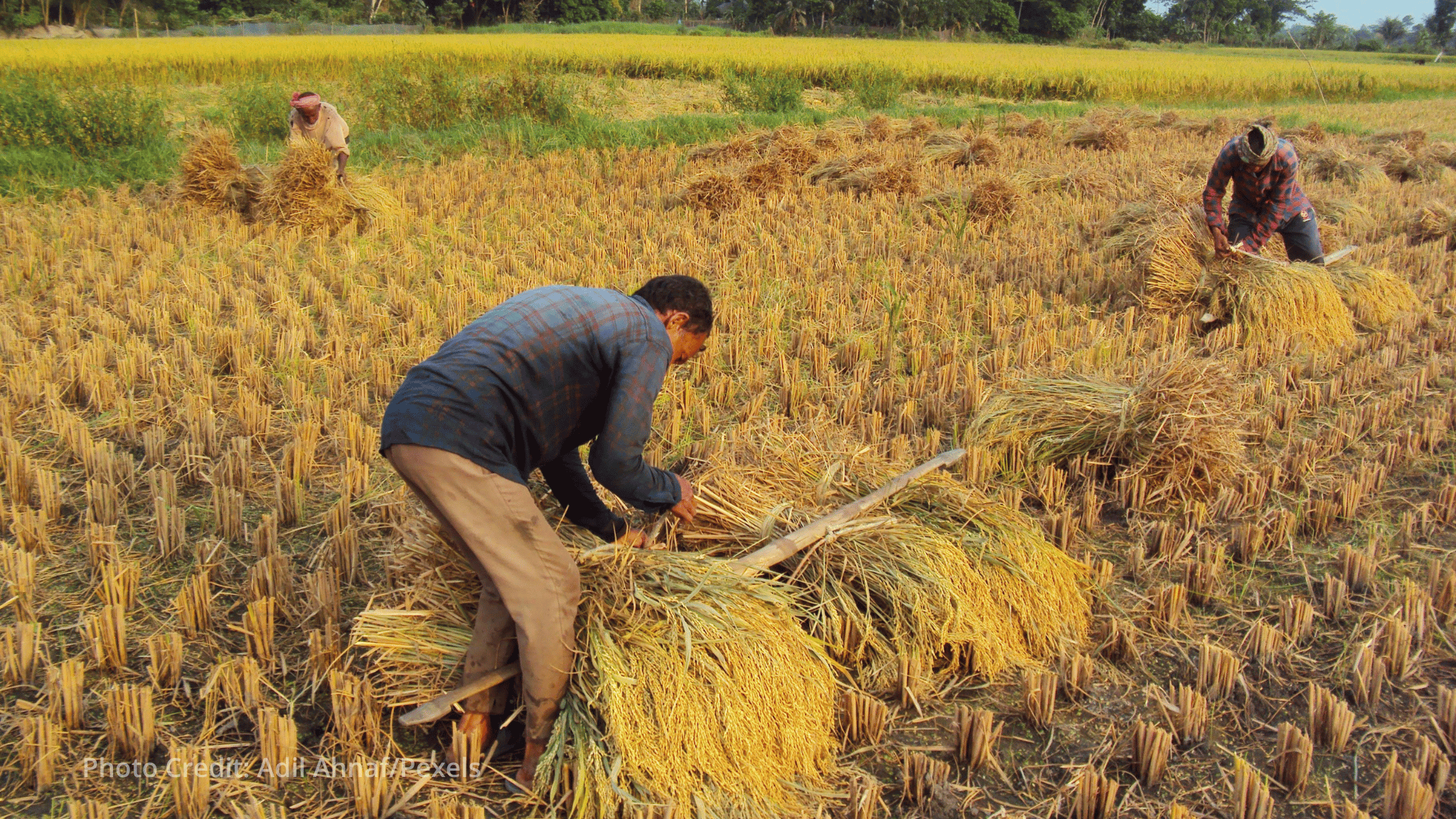
A climate partnership in Thailand’s rice sector that began with EUR 2 million from the German Development Ministry (BMZ) is now valued at EUR 120 million, according to a press release by Deutsche Gesellschaft für Internationale Zusammenarbeit (GIZ). The initiative supports climate-friendly rice cultivation that cuts costs, places certified rice on supermarket shelves and attracts investment from companies, climate funds and Thai partners. In Ubon Ratchathani province in north-eastern Thailand, farmer Thanu Thanhakij now floods his field only periodically rather than for months on end. This practice saves water and money while reducing methane emissions from soil microorganisms. Thanhakij is one of 3.7 million rice farmers in Thailand participating in one of the largest climate partnerships in the sector.
The collaboration with Olam Agri, one of the world’s largest rice traders, began more than 10 years ago. Working with teams of Thai trainers and Olam, GIZ provided training to more than 36,000 farming families. The farmers learned how to use fertilizer and water more efficiently. Emissions fell by 21 percent, while incomes rose by 20 percent. The volume of certified, high-quality rice grew from zero to 400,000 tonnes.
The standard for sustainable rice is set by the Sustainable Rice Platform (SRP), an international consortium founded in 2011 by the International Rice Research Institute (IRRI), the UN Environment Programme and GIZ. Together, they developed the world’s first standard for sustainable rice cultivation, defining how much water, fertilizer and plant protection product should be used and how farmers should be fairly remunerated. Olam Agri purchases rice in guaranteed quantities, with fixed-term purchase contracts and incentives rewarding farmers for sustainable cultivation. Other major food sector companies, including Mars, Ebro and PepsiCo, are also involved and buy the rice. SRP-certified rice is now stocked at Lidl in Germany and Albert Heijn in the Netherlands.
Paul Nicholson, Head of Rice Research and Sustainability at Olam Agri, highlighted the dual benefits of the approach.
“Smallholder farmers have been able to improve their incomes whilst reducing the environmental footprint of rice farming,” he said. “They have significantly reduced water and fertiliser use, as well as their greenhouse gas emissions.”
The framework is provided by develoPPP, the German Development Ministry’s program for cooperation with the private sector, under which companies must cover at least half the costs. Since 2024, the Green Climate Fund (GCF) has also joined the initiative.
Access to capital remains a challenge, as many Thai rice farmers are in debt and fewer than one percent own a harvesting machine. GIZ and its partners are working with the Thai Bank for Agriculture and Agricultural Cooperatives to develop loans for climate-friendly technology. In October 2026, the World Bank and the International Monetary Fund will meet in Bangkok, with the funding shortfall for climate action at the top of the agenda. Poorer countries need around USD 1.3 trillion a year, while industrialized nations have pledged USD 300 billion, leaving an annual gap of one trillion dollars. As Thanhakij put it, “If we reduce our costs, we’ll have more money to improve our financial situation and secure a livelihood for our families.”