

Add us as your preferred source on Google to see more of our content in Search.
 Add to Preferred Sources
Key reasons to read this article
- Despite having an anti-bullying law for a decade, why are Filipino students still among the world’s most bullied?
- What if reporting fewer cases makes schools seem safer than they really are?
- One viral video, one dismissed complaint echo a system leaves students with nowhere to go.
- With thousands of counsellor posts having been vacant for years, who protects the victims?
- The rules have changed, but will anything change for the students who need protection?
The Philippines has had a national law against bullying in place for over a decade. Yet the country is still known as the world’s “capital of bullying”, with Filipino students reporting some of the highest levels of bullying among their international peers.
Findings from the 2025 Programme for International Student Assessment (PISA) indicate that 47.2% of 15-year-old Filipino students reported experiencing at least one form of bullying several times a month. This is more than double the average of 20% across Organization for Economic Co-operation and Development (OECD) countries. The same report also shows that 13.9% of Filipino students have experienced cyberbullying, ranking the country among the worst affected in this respect as well.
What does the law stipulate?
So why has a law designed to provide the mechanisms needed to protect students and make schools safer failed to bring bullying under control? The answer is not that the Philippines lacked the appropriate legislation. It was actually a pioneer in the region.
Republic Act No. 10627, known as the Anti-Bullying Act of 2013, required that all elementary and secondary schools, both public and private, adopted anti-bullying policies, created systems for anonymous reporting, undertook prompt investigations and interventions, provided counseling for victims and rehabilitation for perpetrators, and maintained confidential records. This led to the creation of a Child Protection Committee in every school and school officials being held administratively liable for non-compliance.
Outdated rules left teachers unsure what counts as bullying
On paper, the Act was comprehensive. In practice, protection was uneven. A decade after its introduction, the main issue has arisen as a result of the rules themselves. The Second Congressional Commission on Education (EDCOM 2) found that the Implementing Rules and Regulations (IRR) had not been revised for more than a decade despite massive changes in how children interact.
“The IRR are outdated and not responsive to school-level realities. Teachers have lamented difficulties due to its outdated definition of bullying, the lack or inconsistency of localized anti-bullying policies, and the insufficiency of funding,” EDCOM 2 commented in its Year Two Report.
The IRR, the commission noted, narrowly defined bullying as repeated acts, focusing on traditional physical and verbal forms. It lacked clear provisions for the modern challenges that now dominate hallways and group chats: cyberbullying, social exclusion, gossip and veiled remarks, gender-based harassment, and the non-consensual sharing of images. Teachers have been left making a basic statement that EDCOM 2 Executive Director Karol Mark Yee has said he has heard repeatedly: “Sir, we don’t know if that already counts as bullying.”
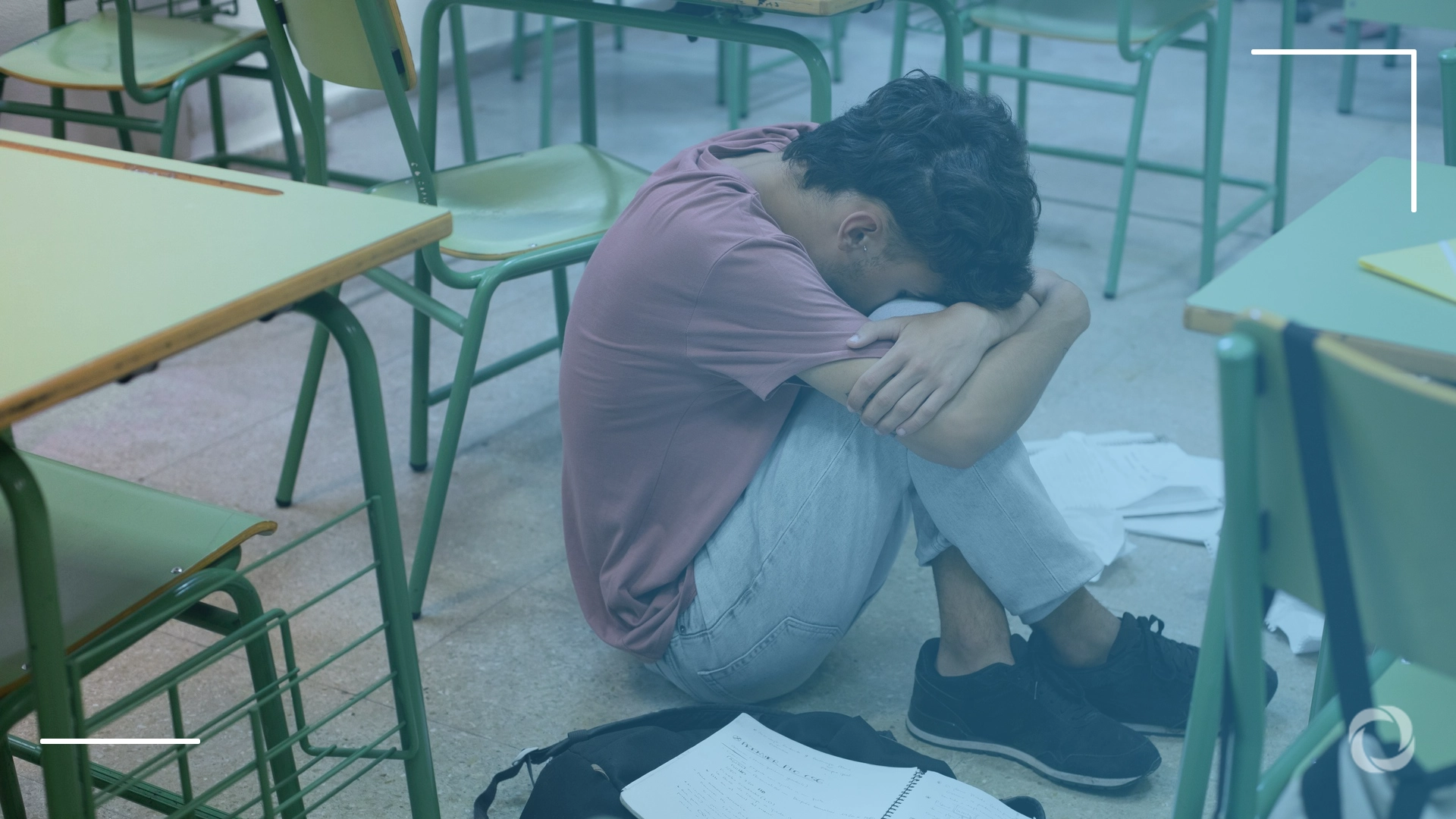
For a 15-year-old like Totoy (not his real name) from a public high school in Quezon City whose story was shared during a Department of Justice awareness seminar in Taguig this September, that lack of definition felt personal. After a video of him being mocked for his stutter was posted in a class group chat, his adviser told him it was “outside school” and therefore not covered by the Anti-Bullying Act.
Understaffed schools
Even when schools do identify bullying, they have almost no one to deal with this. The Philippines has only 5,001 registered guidance counselors and about 3,000 psychologists to meet the needs of over 47,000 schools. DepEd currently has 4,460 vacant guidance counselor posts, and EDCOM 2 has estimated it could take up to 14 years to fill these positions because of the limited number of graduates with the appropriate Master’s degrees.
“Every school needs a learner formation officer in place, a localized anti-bullying policy promulgated, and referral systems in place to help our students. We cannot afford another school year where systems exist on paper, but not in practice,” Yee warned in July 2026.
Underreported numbers
But perhaps the most damaging failure has been invisible: the numbers themselves have never correct. DepEd officially reported between 11,000 and 21,000 bullying cases in the peak years, but PISA and DepEd’s own data shows a different reality: 63% of Grade 5 and 65% of Grade 10 students report being bullied monthly, with its helpline logging over 79,000 cases from 2019 to 2022 alone.
Research by the Philippine Institute for Development Studies (PIDS) and EDCOM 2 has revealed an ill-judged incentive that encouraged schools to underreport the numbers. Under the old system, having zero bullying reports was regarded as a sign of a safe school, while schools that reported incidents made them appear to be troubled. This led to administrators hiding complaints to protect the school’s reputation.
The cost of ignoring bullying
That silence has cost far more than bruises. The OECD found Filipino students who experienced cyberbullying scored 49 points lower in science subjects. PIDS estimates bullying-induced learning gaps will cost the Philippine economy about US$160-320 million annually in terms of future productivity.
Bullying drives absenteeism, anxiety, and dropout, directly undermining Sustainable Development Goal 4 regarding inclusive, equitable and quality education. As Education Secretary Sonny Angara explained when announcing recent reforms: “No student will grow if they are afraid to go to school every day. That’s why this policy is not just for discipline, but also for the quality of education.”
Government rewrites anti-bullying rules amid gaps
In August 2025, Angara signed the revised IRR of the Anti-Bullying Act, followed by the Guidelines on Ensuring a Safe and Motivating Learning Environment. To address the outdated definitions, the new IRR broadens the definition of bullying to include precursor behaviors, repeated intimidation, social exclusion, and cases that cause significant emotional distress even without physical harm, including cyberbullying and identity-based harassment. Schools must now adopt a standardized Anti-Bullying Policy Template that distinguishes minor incidents from major offenses.
To end the zero-reporting trap, the revised rules state that claiming zero cases will no longer be treated as a positive performance indicator. All incidents must be logged in a centralized repository managed by the Learner Rights and Protection Office, with sanctions being imposed on officials who deliberately withhold data.
To address the paralyzed Child Protection Committees, DepEd has created the post of Learner Formation Officer (LFO) – a designated first responder in every school who will receive complaints, protect confidentiality, and facilitate restorative interventions. The new IRR now also extend school authority to a two-kilometer radius around campus, covering internet cafes, convenience stores and sidewalks where much of the bullying occurs.
The shift from purely punitive to restorative actions, tied to the Basic Education Mental Health and Well-Being Promotion Act, means that schools must provide mandatory counseling, psychological first aid for victims, and have values formation integrated into the K-to-10 curriculum, with a US$1.59 million program in place to enlist parents as co-educators.
“We need to have a culture of compassion and respect. To realize these, we are granting clearer powers and roles to teachers, parents, and school heads,” Angara explained.
New rules need staff to work
Yet the unresolved issue remains – whether changing the rules will be sufficient if schools lack the people, space and systems to implement them.
The new LFOs will often still be the same overworked teachers just with an added designation, rather than being a new position to be filled. Guidance counselor vacancies remain, training for the five tranches of the 2026 IRR orientations has yet to reach many of the more remote schools, and many Child Protection Committees still lack access to private counseling rooms or confidential record systems. Until the 5,000 new counselor positions created under the Mental Wellness Act are actually hired and funded, the same staff who pondered “is this bullying?”, will be asked to judge, counsel and document the incident.
For Totoy, who eventually transferred to a new school after his video went viral, the revised regulations would not have mattered without someone trained to listen. The Philippines now has a modern definition of bullying. The challenge is making sure there is eventually an adult in every school equipped and empowered to act on it.