

Add us as your preferred source on Google to see more of our content in Search.
 Add to Preferred Sources
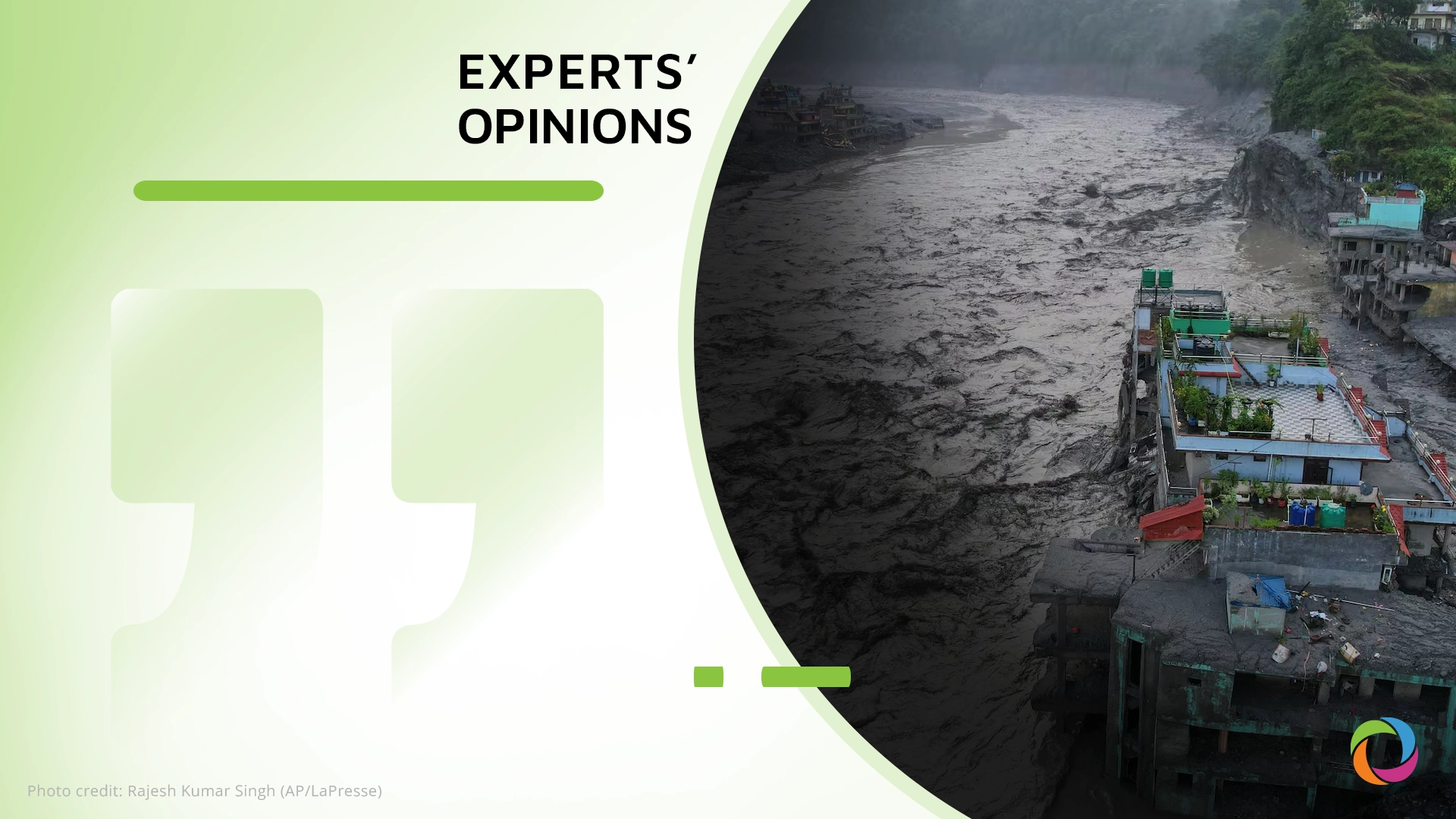
As climate disasters claim more lives, who is accountable for the consequences? More than 1,400 people have died and thousands are still missing following this summer’s flash floods in Nepal. It will take years and around US$4.7 billion to recover and rebuild villages, roads, bridges, energy infrastructure, and many other assets destroyed during the disaster. Scientists say a single extreme weather event did not cause the catastrophe. Instead, it resulted from a “combination of factors,” such as rising temperatures, melting glaciers, and geological instability.
One month after the catastrophe, Nepal’s Prime Minister, Balendra Shah, addressed the UN General Assembly and demanded greater climate justice for poor countries that bear the consequences of climate change caused by richer and more developed nations. He also requested grants instead of loans to support recovery and climate interventions and proposed a climate resilience mechanism with Nepal’s neighbors, India and China. In our latest Experts’ Opinions article, we examine the feasibility of his proposals and their pros and cons.
Key Takeaways:
- At the end of August 2026, a massive flash flood accompanied by a landslide on the border between Nepal and Tibet left thousands of people dead or missing.
- According to one expert, Nepal’s call for grants instead of loans deserves support because disaster recovery should not push vulnerable countries into deeper debt.
- Prime Minister Balendra Shah urges Nepal, India, and China to build a Himalayan mechanism to share satellite data, monitor glacial lakes, strengthen early warning, and coordinate cross-border disaster response.
- An expert asked by DevelopmentAid said that waiting for fairness was not a strategy. Countries must strengthen their own resilience, while international support should make cooperation possible where national capacity is insufficient.
DevelopmentAid: What would be the benefits and potential drawbacks of shifting more international climate finance toward grants?

“A country responsible for less than one-tenth of one percent of global emissions is mourning at least 1,400 people who died because of a climate disaster sourced elsewhere. Recovery needs are as high as 10% of Nepal’s GDP. Should those who contributed least to global climate change borrow to rebuild? Prime Minister Balendra Shah told the recent UN General Assembly the answer is adequate grant-based climate finance architecture, not additional debt. Nepal’s Foreign Minister Shisir Khanal likewise urged that the Loss and Damage Fund (editor’s note: officially the Fund for responding to Loss and Damage, or FRLD, is a UN-backed fund that pays poorer countries for harm caused by climate change: floods, droughts, storms and similar disasters) be capitalized through new grants rather than repackaged commercial debt. In my opinion, the benefits are clear. Grants add no repayment burden, reach survivors faster and reflect fairness. The drawbacks deserve honest weighing. Grants cost donors more, and contributing governments face competing fiscal pressures. Concessional loans stretch public money and can attract private capital. Confidence also needs rebuilding, since the fund agreed in 2025 has yet to begin payments. A workable path is selective grants for adaptation, emergency recovery and loss and damage in the most vulnerable countries, concessional loans for revenue-generating clean energy and debt-pause clauses when disasters strike. Turning pledges into payments would be an act of solidarity the international community is well placed to deliver.”

“The deeper issue is not whether climate finance should rely more heavily on grants or loans, but whether we are building a financing system capable of coping with a future in which severe climate-related disasters become more frequent. A climate shock can push a country into a vicious cycle: disaster increases debt, debt narrows fiscal space for adaptation and development, weaker resilience magnifies the next shock, and further borrowing follows. Grants can ease immediate pressure, but they are only a fraction of the costs. The more durable answer is a predictable financing architecture that links prevention, preparedness, pre-arranged support, rapid response and recovery, with resources built up before crises occur and clear rules for replenishment, allocation and activation. There may never be a perfectly fair distribution of responsibility, cost and capacity. But waiting for fairness is not a strategy. Countries must strengthen their own resilience, while international support should make cooperation possible where national capacity is insufficient. If every disaster forces us to improvise financing again, we are treating consequences rather than reducing the vulnerability that makes the next crisis so damaging.”

“Nepal’s call for grants deserves support because disaster recovery should not push vulnerable countries into deeper debt. Grants would help rebuild homes, schools and livelihoods while protecting government spending on health, education, and preparedness. They are appropriate for emergency recovery, loss and damage, and adaptation measures that save lives but generate little income. This reflects climate justice- countries contributing little to global emissions should receive support that matches their risks. However, grants depend on donor budgets and political commitments. Without additional funding, a larger grant share could reduce the total finance available. Clear spending rules, public reporting and community participation would help ensure that support reaches those most affected. A gradual shift is feasible. The Green Climate Fund (editor’s note: the world’s largest fund dedicated to climate action in developing countries; set up under the U.N. climate framework in 2010) has already approved grant support for reducing Nepal’s glacial flood risks. Developed countries should expand predictable contributions, simplify access and establish faster arrangements for disaster funding. Affordable loans may still suit projects with reliable income, provided repayment does not threaten essential public services. Bangladesh faces similar pressures from repeated disasters, reinforcing the need to protect development budgets from growing recovery debts. For Nepal, grants should support both rebuilding and preventing the next disaster.”

“Nepal’s demand for grant-based support is normatively justified under the principle of common but differentiated responsibilities. Communities affected by glacial melt and flooding contributed minimally to emissions, so financing recovery through loans transfers an undue debt burden onto those least responsible. Grants would enable governments to fund reconstruction and livelihood restoration without exacerbating fiscal vulnerability. They could also support climate-induced internal displacement (CIID) under the Loss and Damage Fund, relocating households from high-risk zones through land allocation, housing, infrastructure, and sustained livelihood programmes, informed by comparative experience. However, relocation must remain voluntary and participatory throughout. Feasibility ultimately depends on donors providing additional, predictable, adequately scaled funding.”

“I strongly support a greater shift toward grant-based climate finance for countries facing climate-induced disasters, particularly least developed and debt-constrained countries. Climate disasters are fundamentally different from conventional development investments: they can destroy infrastructure, livelihoods and public assets through events for which affected countries may have contributed very little. Grants can prevent climate shocks from creating additional debt, protect fiscal space for essential services, and allow governments to invest in recovery, adaptation and disaster preparedness rather than diverting future public revenues toward debt repayment. UN climate-finance discussions are increasingly recognizing the role of grants in avoiding additional debt burdens, particularly for vulnerable economies. However, grants alone cannot meet the full scale of global climate-finance needs. A practical approach would be to prioritize grants for loss and damage, humanitarian recovery, adaptation in highly vulnerable countries and projects with limited financial returns, while using highly concessional loans for investments capable of generating sustainable economic returns. The challenge is political: donors must increase commitments, improve access and simplify procedures. This is feasible, but it requires stronger international burden-sharing and a more needs-based allocation of climate finance.”

“Nepal Prime Minister Balendra Shah is right when calling for greater climate justice and pointing out the evidence of the disproportionate human cost borne by countries that have contributed comparatively little to global climate change. It is possible that the existing climate finance mechanisms are sufficient to help highly vulnerable countries prepare for increasingly severe climate-related disasters. However, when it comes to recovery and rebuilding, grant-based climate support rather than additional loans, I agree and resonate with his demand. Poor countries that are facing such disasters are usually in bad financial shape and they might not be in position to reimburse any additional loan. So let us start with grants. However, if we want grants to be efficient, they need to be used in the framework of clearly identified technical projects. These projects can be of various natures: field management, training of farmers to cultivate plants more adaptable to climatic changes, etc. The projects will have a limited duration and a limited place of operation to be defined by both the receiving country and the donor. Proper international expertise has to be mobilized for that purpose.”
DevelopmentAid: Nepal has proposed a climate resilience mechanism with its neighbors India and China to share satellite data, monitor glacial risks and strengthen cross-border early-warning systems. How feasible is such regional cooperation?
“When a glacier collapsed near the Nepal–Tibet border in August, the resulting flood ignored frontiers. Prime Minister Balendra Shah now urges Nepal, India and China to build a Himalayan mechanism to share satellite data, monitor glacial lakes, strengthen early warning and coordinate cross-border disaster response. Secretary-General António Guterres has assured him that the United Nations stands with Nepal on climate issues. Technically, it is feasible. Shared data could give downstream communities valuable extra hours of warning, and all three governments stand to benefit from fewer losses. Politically, it will require patience. As sovereign neighbours, India and China each have security and water-management considerations, so data-sharing needs carefully agreed safeguards. Nepal, as the smaller partner, would benefit from a framework giving every party an equal voice.
In my view, an effective mechanism would require:
- A formal agreement on real-time data exchange, with common standards.
- Stable pooled funding and a neutral coordinator, such as the International Centre for Integrated Mountain Development.
- Last-mile systems that turn alerts into timely evacuations, in local languages. Starting with glacial-lake monitoring, where interests clearly align, could build trust for broader cooperation. The shared goal is protecting lives.”
“The most striking question is why stronger cross-border early-warning systems are not already standard practice wherever risks themselves cross borders. The technology is increasingly available. The harder task is turning separate national, bilateral and project-based arrangements into durable regional infrastructure that survives individual projects, political cycles and emergencies. That requires interoperable systems, shared data protocols, agreed risk thresholds, clear responsibilities, sustainable joint financing and an operational chain that carries information from observation and forecasting to authorities, communities and timely action. Artificial intelligence can strengthen forecasting, anomaly detection and the interpretation of increasingly complex environmental data, but technology cannot compensate for fragmented institutions, weak coordination or lack of trust. Nepal should therefore be read as a warning far beyond Nepal itself. Climate shocks may begin locally, yet their consequences can travel through shared water systems, food security, displacement, infrastructure and economic disruption, and can amplify existing social and political pressures. National borders must be respected; the risks themselves will not respect them. The sooner countries pool knowledge, technology, financing and preparedness, before crises force that cooperation upon them, the stronger our collective capacity to face what comes next.”
“Nepal’s proposed mechanism with India and China is technically feasible and addresses risks that cross borders. Shared satellite images, river measurements and glacier monitoring can improve warnings for exposed communities. The International Centre for Integrated Mountain Development (ICIMOD )’s earlier regional flood information program provides a precedent involving all three countries. Several challenges would come in the way, including limited trust, data restrictions and unequal national capacity. Each country needs technical contacts, common data standards and clear deadlines for sharing observations and issuing alerts. Agreements should protect information sharing during diplomatic tensions. Satellite data must be supported by ground sensors, local knowledge and backup communications. Monitoring should cover glacier collapses, landslides and sudden floods as well as glacial lake outbursts. Warnings must lead to evacuation plans, safe shelters and timely assistance, especially for remote settlements and poor households. International grants should fund equipment, trained staff, maintenance and community preparedness, ensuring Nepal can participate without taking on further debt. All three countries should have an equal voice, with ICIMOD providing technical coordination where agreed. Joint exercises and public performance reviews would help turn cooperation into reliable protection.”
“Regional cooperation among Nepal, India, and China is feasible but politically sensitive, as satellite data and glacial monitoring intersect with security and territorial concerns. The UNFCCC can serve as a platform to convene high-level dialogue at COP32, supported by technical bodies such as the World Meteorological Organization, and extend participation to other capable states. Since glacial collapse is partly driven by global warming, responsibility should not rest on Nepal alone. Capable states and UN agencies should provide financial, technological, and expert support. Effectiveness requires agreed data-sharing protocols, harmonised monitoring standards, and early-warning systems that reliably reach local communities in time.”
“Regional cooperation among Nepal, India and China is not only feasible but increasingly necessary because climate and glacial risks do not respect national borders. Nepal’s proposed Himalayan Climate Resilience Mechanism—focused on satellite data sharing, glacial-lake monitoring and joint early-warning systems—could significantly strengthen preparedness if it produces timely and usable information for communities and authorities. Nepal’s Prime Minister explicitly proposed such cooperation at the United Nations General Assembly, emphasizing shared satellite data, glacial monitoring and stronger early-warning systems. The greatest challenge is not technology but governance and trust. An effective mechanism would require agreed data-sharing protocols, common technical standards, real-time information exchange, clear responsibilities, sustainable financing and procedures for communicating warnings across borders. It should also connect scientific institutions, disaster-management authorities and local communities rather than remain a government-to-government arrangement. Existing regional institutions and scientific networks, including ICIMOD, demonstrate that cross-border cooperation on Himalayan climate and cryosphere risks is possible. The strongest model would therefore combine political commitment with transparent data governance, independent technical cooperation and community-level early-warning capacity.”
“Nepal has proposed a climate resilience mechanism with India and China to share satellite data, monitor glacial risks and strengthen cross-border early-warning systems. The concept is nice but the diplomatic relationships between Nepal, China and India (and other countries nearby which might be interested) need to be nice enough to facilitate the development of a strong trust feeling among those countries. Technical facilities are required, particularly remote sensing data collection centers with updated equipment. As far as I remember, there is one in the Asian Institute of Technology in Bangkok (Thailand) which is operating on a regional basis. I hope that there are similar organizations in India and China to be identified.”
See also: Disaster-hit Nepal waits for climate justice
For professionals interested in advancing their careers in climate action, sustainability, and international development, DevelopmentAid’s Individual Professional Membership provides access to the largest job board in the field and consultancy opportunities that can be tracked under tenders and grants for individuals. Among other benefits, members can subscribe to a personalized job and tender alerts tailored to professional interests, increase their visibility, and access donor and organization profiles to identify potential employers and partners and many more.