
Add us as your preferred source on Google to see more of our content in Search.
 Add to Preferred Sources
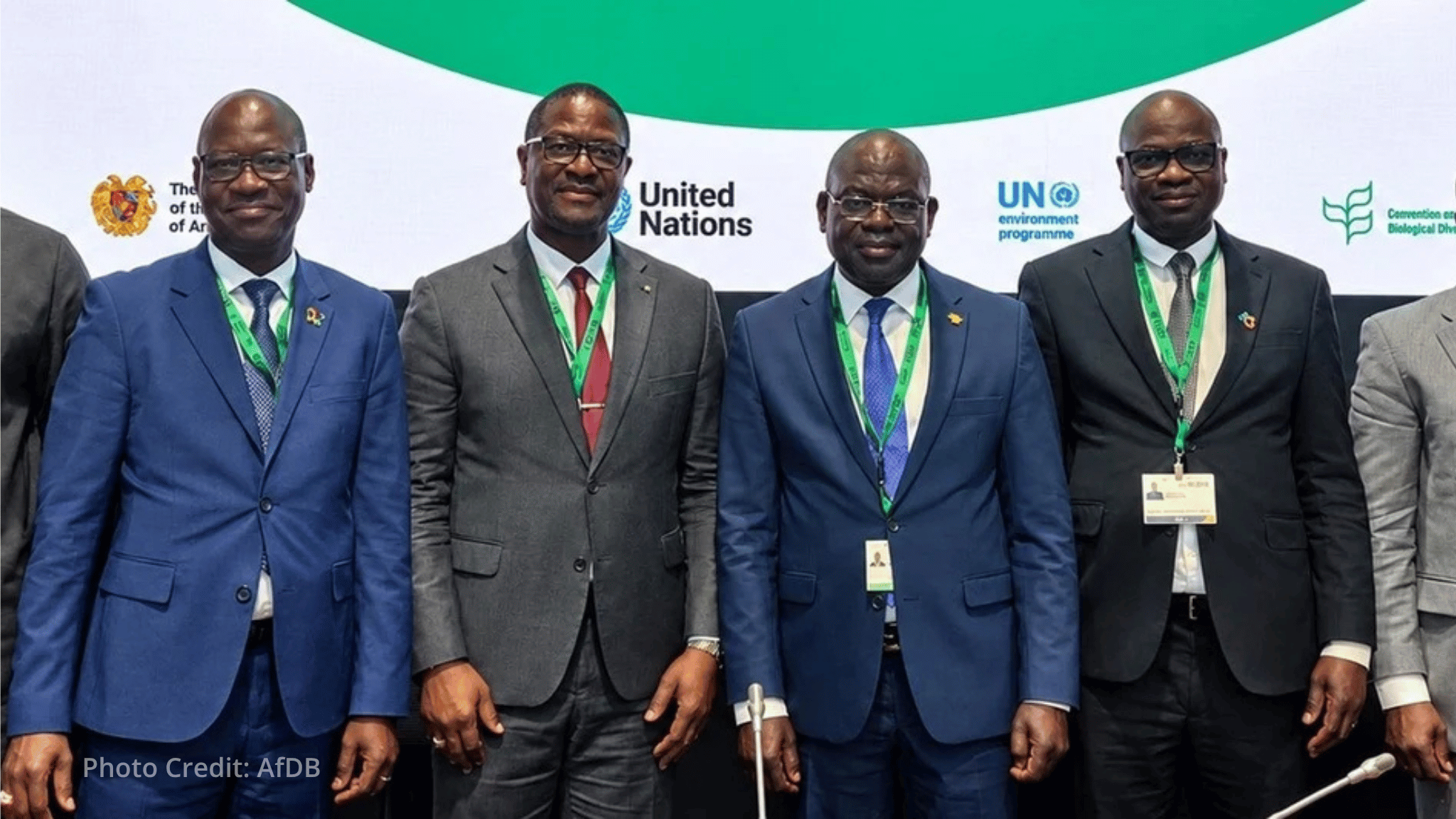
The African Development Bank Group (AfDB), the Foundation for Parks and Reserves of Côte d’Ivoire (FPRCI) and several West African biodiversity conservation trust funds launched a protected-area-indexed bond in Yerevan, Armenia, on 20 October, according to a press release. The launch took place at the 17th session of the Conference of the Parties to the United Nations Convention on Biological Diversity (CBD COP17). The instrument aims to mobilise funding of around 300 million euros from capital markets and other sources, such as carbon markets. The funding is intended to provide sustainable support for biodiversity conservation in West Africa and beyond. The initiative marks a step toward innovative financing for protected areas across the region.
Protected-area-indexed bonds, also known as Park Bonds, are debt instruments created to raise financing for the conservation and management of protected areas such as national parks and wildlife reserves. Inspired by the success of green bonds, Park Bonds aim to channel capital into protected areas whilst ensuring measurable outcomes and transparent management of resources. A feasibility study supported by the Bank Group was carried out in collaboration with the FPRCI, the Banc d’Arguin and Coastal and Marine Biodiversity Trust Fund (BACoMaB), the Bioguinée Foundation and the West African Savannahs Foundation (FSOA). The study concluded that the Park Bonds concept is credible and could become a new tool for financing biodiversity. It noted this is contingent on a financially viable model, verifiable environmental outcomes and sound governance.
Developing further innovative instruments
The initiative forms part of an international drive already underway to implement the Kunming–Montreal Global Biodiversity Framework, in particular Target 19 on mobilising finance from all sources. Al Hamndou Dorsouma, Head of the Bank Group’s Climate and Green Growth Division, highlighted the institution’s commitment to exploring new financing solutions to support African biodiversity.
“Public budgets and donations remain essential as funding tools, but they will not be enough. We must mobilise additional resources and develop innovative instruments capable of attracting long-term private and institutional capital, whilst preserving the integrity of conservation and the interests of communities,” he said.
He also pointed to the $150 million wildlife conservation bond issued by the World Bank in 2022 to support rhino conservation in two South African national parks as a source of inspiration. He added that Park Bonds could contribute to a concrete model for financing protected areas in West Africa and beyond.
Côte d’Ivoire plays a central role in this initiative, with an extensive network of protected areas providing refuge for iconic and endangered species. These include the forest elephant, the West African chimpanzee, the pygmy hippopotamus, the white-breasted guinea fowl, sea turtles and the viviparous toad.
Fanny N’Golo, Executive Director of the Foundation for Parks and Reserves of Côte d’Ivoire, said: “We hope that the experience gained in Côte d’Ivoire will help to inspire other countries and sustainably strengthen funding for the continent’s protected areas.”
Colonel Amon Koutoua Benoît, Technical Director of the Ivorian Office of Parks and Reserves (OIPR), noted that nearly 7 per cent of the national territory is dedicated to protected areas. He described Park Bonds as an opportunity to explore new sources of funding to strengthen the protection of ecosystems and iconic species.
Participants at the launch emphasised the need to transform the biodiversity financing architecture. This involves moving beyond increasingly scarce public resources to rely on blended finance mechanisms. Such mechanisms combine public funds, concessional financing, private capital and philanthropic funding. According to participants, this approach should enable Africa to translate its commitments under the Global Biodiversity Framework into sustainable investments and tangible results. The launch in Yerevan positions Park Bonds as a potential new instrument for conservation finance in West Africa.