
Add us as your preferred source on Google to see more of our content in Search.
 Add to Preferred Sources
The Government of Japan has announced that it will fund a project to provide multi-sectoral skills training for mid- and long-term resilience building in the Syrian Arab Republic. This is one of eight projects implemented by the United Nations Industrial Development Organization (UNIDO) in Ethiopia, Iraq, Jordan, Lebanon, Liberia, Nigeria, Somalia and the Syrian Arab Republic, with Japanese funding totaling US$5.2 million.
The repercussions of the conflict in the Syrian Arab Republic require the joint efforts of United Nations organizations. Therefore, the Government of Japan will fund a project that is part of a joint programme called “Training for All II” with the United Nations Population Fund (UNFPA), the United Nations Human Settlements Programme (UN-HABITAT), the United Nations Food and Agriculture Organization (FAO) and the World Health Organization (WHO). It aims to provide education opportunities targeting essential services (i.e. electricity, health, water, agriculture and others).
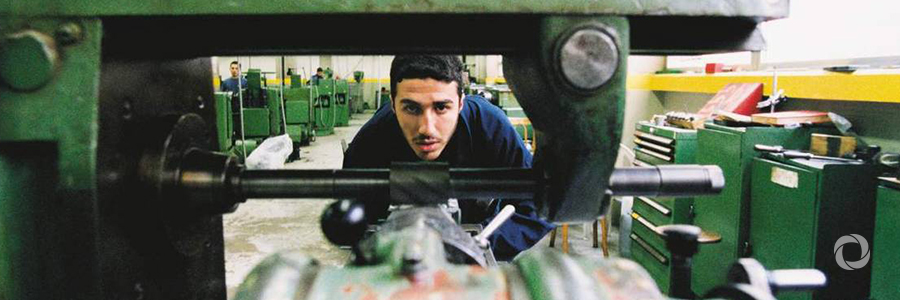
UNIDO will conduct a needs assessment for the clean-up required for early recovery of critical, productive and industrial infrastructure in the Syrian Arab Republic, focusing its work on providing education opportunities in the field of maintenance and operations for earth-moving and heavy equipment.
Futoshi Matsumoto, Special Coordinator for Syria and Chargé d’Affaires at the Embassy of Japan in Syria, said, “Japan remains in solidarity with those who suffer most. We try our best to support those who help themselves. We are together with all the Syrians.”
Speaking at the kick-off event held on 28 March at UNIDO headquarters in Vienna, during which the eight projects and the funding from the Government of Japan were announced, UNIDO Director General, LI Yong, highlighted that the projects aim to strengthen the humanitarian-development nexus and promote inclusive and sustainable industrial development by taking a human security approach.
Ambassador Mitsuru Kitano, the Permanent Representative of Japan to the International Organizations in Vienna, stated that the projects will “help individuals to live under healthy conditions, consolidate their livelihoods and, with all of this, gain optimism for their future.”
Seven years of crisis have devastated Syria, resulting in the deterioration of basic living conditions and services. An estimated 4.8 million refugees fled Syria, 6.3 million people are internally displaced and at least 13.5 million Syrians are in dire need of humanitarian assistance. More than 86% of the population lives in poverty due to the crisis, with an unemployment rate of 57%.
During the course of the crisis, Syrian human capital and institutional capacity have significantly declined. If this issue remains unaddressed, Syria’s capacity to address its people’s immediate needs and deliver essential services (electricity, health, water and others) will be seriously affected. Since the onset of the crisis, training/learning opportunities have been limited, creating a significant deficiency, and therefore pressing needs, in skills development in various segments of the population.
UNIDO will collaborate with industry in Japan to transfer knowledge in this field. The overall aim is to provide access to education and strengthen technical skills that can be applied in the country for its recovery of essential services.
Original source: UNIDO
Published on 23 April 2018