
Add us as your preferred source on Google to see more of our content in Search.
 Add to Preferred Sources
The UN’s global goals are a set of 17 comprehensive global success measures for sustainable development that were adopted in 2015 by almost 200 world leaders after the biggest consultation in the organisation’s history which aim, by 2030, to bring an end to poverty, hunger and inequality and to address climate change.
Yet despite the fact that the sustainable development goals (SDGs) are relevant to almost every conceivable charitable cause, charities in the UK just aren’t using them.
A recent report suggests that almost a third (30%) of charities don’t think the goals are relevant to UK organisations, while fewer than half (47%) of respondents said the goals were relevant to their day-to-day work. Private companies are jumping on the bandwagon, setting up working groups and integrating the goals into their corporate social responsibility strategies, yet only 39% of UK charities said the goals were part of their current strategy.
Charities are missing a trick here. Even from the most cynical financial point of view, it makes sense to talk the same language as our funders. As the director of an environmental charity that works to tackle excessive consumption, it is not a huge surprise to me that charities have responded less than enthusiastically to the SDGs. When I asked colleagues what the SDGs might mean for us as a charity, the response was varied: a marketing manager worried about the complications of running SDG branding alongside our core messaging; a trustee passed it off as “UN mumbo jumbo”; and a project lead would only talk about the SDG most relevant to their work.
It wasn’t until I asked our youth team – coordinators for our programmes with schools and young people – that I felt visions broaden. Kids love mapping out interconnections between issues and they were the first to really get what the goals could mean for our projects.
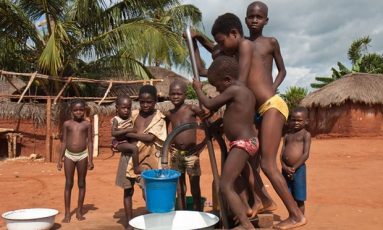
 The top-scoring team in our youth water-saving programme, for example, set up an electrical waste-recycling scheme. While this is not the first activity that would spring to mind when trying to conserve fresh water, they saw that electronics dumping was a big pollutant in their local lake. Another team used the topic of water to integrate new migrants into their class. They explored the relationship of different cultures with water and the impact water access has on education and gender equality. Put simply, if girls have to walk a four-hour round trip to collect water, there isn’t much time for learning.
The 12-year-old beneficiaries could see real value in exploring the links between social, environmental and economic issues, even when we adults seemed to need more convincing. At Global Action Plan, we had never thought to consider gender equality or social integration as part of our water-saving projects because, well, that’s not our mission. But if we are to solve these major social and environmental challenges, we need to broaden our viewpoints and think about interconnectivity. Through very minor tweaks our youth water programme now covers 13 of the SDGs, and we are setting up a digital platform for children to take part in challenges across all 17.
Source: The Guardian. Read full article here.
26 May, 2017