
Add us as your preferred source on Google to see more of our content in Search.
 Add to Preferred Sources
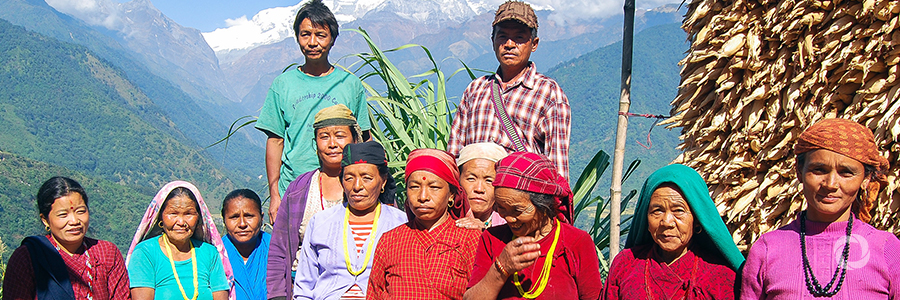
The United Nations World Food Programme (WFP) and the Ministry of Forests and Environment today signed an agreement that will help vulnerable communities in the Karnali region of Nepal to protect their crops and livelihoods from climate variability and extremes.
The United Nations Framework Convention on Climate Change (UNFCCC) – Adaption Fund is contributing US$9.5 million to assist vulnerable people in the Karnali, by diversifying and strengthening the management of livelihoods over a four-year period through supporting income-generation projects and training for farmers.
“Villages in many parts of the Karnali region rely on marginal, unproductive land without irrigation, which cannot produce enough food for its people. Changing weather patterns have further worsened agricultural production for those living in the Karnali,” said Shakti Bahadur Basnet, Minister of Forests and Environment. “This contribution is important in order to increase the adaptive capacity of climate vulnerable and those with very little access to food,” he concluded.
In recent years, Nepal’s food production has been affected by climate-related hazards, including droughts, landslides, floods and hailstorms.
“There’s no question that people living in Nepal’s Himalayas are feeling the impact of climate change. The average temperature globally is now rising at a rate of almost one degree Celsius per decade and weather patterns across Nepal are changing,” said Pippa Bradford, WFP Nepal Representative, and Country Director. “It is imperative to work with farmers and villagers to protect and preserve their environment,” she added.
Original source: WFP
Published on 21 May 2018