
Add us as your preferred source on Google to see more of our content in Search.
 Add to Preferred Sources
“How far can we go in tackling climate change using solutions that we already have?” This question was discussed by representatives of the Lithuanian government, industry and environmental analysts at a presentation of the Nordic “Green to Scale 2” project in Vilnius on 29 May.
When it comes to climate action, this is an interesting time for Lithuania. The country has just set out an ambitious national energy strategy that aims to foster competitive local electricity generation and reduce its dependence on fossil fuels and energy imports.
Now, Lithuania’s goals have been measured against the results of a new Nordic study on climate solutions, “Green to Scale 2”.
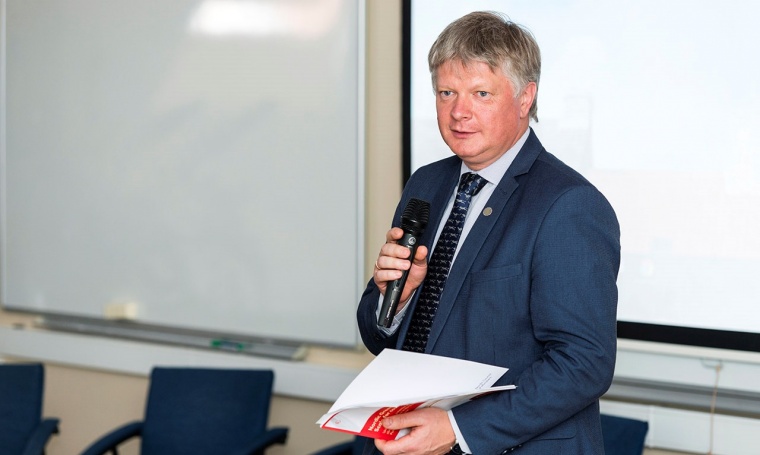
“Lithuania recognises the contribution it can make to tackling climate change, and the Green to Scale project has raised a number of issues that are reflected in our energy strategy”, said Mr. Kęstutis Navickas, Lithuania’s Minister of the Environment, at the presentation of the study’s results on 29 May in Vilnius.
“Green to Scale” is a series of analysis projects that highlight the potential of scaling up already existing climate solutions in order to cut emissions. The latest project in the series focuses on ten climate solutions that could reap tangible benefits in the Baltic countries, Poland and Ukraine.
For Lithuania, the study identified onshore wind and solar energy as the most promising options.
“We are aiming to increase the share of renewable energy to 45% by 2030, and up to 80% or more by 2050. This can only happen if we promote wind and solar power, and invest in energy efficiency – especially in buildings and industry”, agrees Mr. Vidmantas Macevičius, Lithuania’s Vice-Minister of Energy.
According to “Green to Scale”, promoting these solutions has the potential of cutting emissions in Lithuania by around 5.9 million tonnes by 2030. This would be more than twice as much as Iceland produces today.
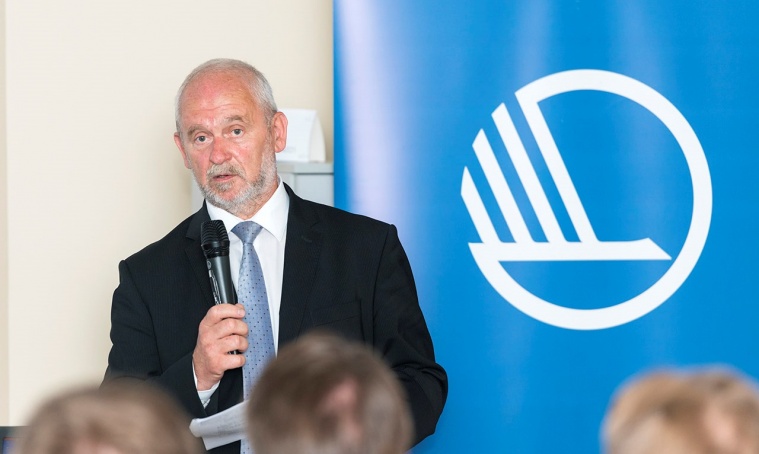
“Lithuania is already investing in a number of projects that contribute to achieving these targets, including renovating building and wind power”, Mr. Macevičius points out. “However, we are still facing challenges, for example in the transport sector. We hope to use the recommendations outlined in the study to achieve our goals in this area as well.”
Deepening Nordic-Baltic cooperation
“Having a study that covers the three Baltic countries as well as Poland and Ukraine allows us to compare different scenarios in our neighborhood, and shows us where we are and where we would like to be”, said Mr. Navickas.
Mr. Oras Tynkkynen, Senior Advisor on carbon-neutral circular economies at the Finnish Innovation Fund Sitra, agrees. “Implementing successful climate technologies is a mutual learning process, in which the Nordic and Baltic countries can benefit from each other’s experiences. Sharing these experiences will support us in making faster progress.”
Despite good intentions, the investment cost of some of the solutions can still pose a barrier.
“Some of the solutions we discuss in the report can be cost-effective, and may even save money in the long run, such as energy efficiency improvements in industry and buildings. Others may require relatively large upfront investments, which can hinder successful implementation”, said Mr. Tynkkynen.
The “Green to Scale” series of projects was initiated by the Finnish Innovation Fund Sitra and SEI Tallinn, who produced the final report. The Nordic Council of Ministers provided financial support. The event in Vilnius was organised by the Nordic council of Ministers Lithuania Office and Sitra, in co-operation with the Nordic Investment Bank.
Original source: NIB
Published on 30 May 2018