
Add us as your preferred source on Google to see more of our content in Search.
 Add to Preferred Sources
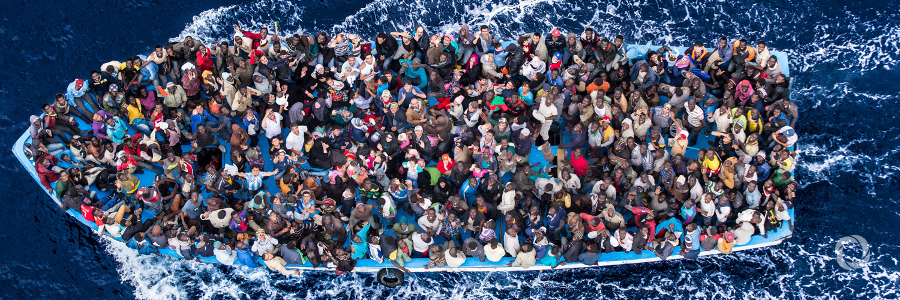
According to the first-ever Global Study on Smuggling of Migrants, released by the UN Office on Drugs and Crime (UNODC) on June,13, at least 2.5 million migrants were smuggled during the course of 2016.
Migrant smuggling occurred in all parts of the world, generated an income of up to $7 billion – equivalent to the amount the United States or the European Union spent on humanitarian aid that year – according to the UN agency that fights drugs and crime.
“This transnational crime preys on the most vulnerable of the vulnerable,” said Jean-Luc Lemahieu, UNODC Director of Policy Analysis and Public Affairs.
“It’s a global crime that requires global action, including improved regional and international cooperation and national criminal justice responses,” he added.
The study describes 30 major smuggling routes worldwide and finds that demand for smuggling services is particularly high among refugees who, for lack of other means, may need to use people-smugglers to reach a safe destination fleeing their countries of origin.
Data suggests that many smuggling routes include unaccompanied or separated children, who might be particularly vulnerable to deception and abuse by smugglers and others.
According to the UN migration agency IOM, smuggling results in thousands of deaths each year.
According to the report, smuggling networks often engage in systematic corruption ranging from the local to the international level and operate a range of schemes, including fake marriages or employment rackets; counterfeiting travel documents and the corruption of senior officials.
Moving forward
When it comes to better strategies for reducing migrant smuggling, the report recommends that a holistic approach must go beyond geographical measures, and include making legal migration opportunities more accessible in origin countries and refugee camps; tackling smuggling networks; and raising awareness in origin communities are just a few ways to combat the scourge.
While data collection, analysis and research on migrant smuggling remain in their infancy, there is a clear need for a solid international body of knowledge to support policy making on migrant smuggling, along with improved data collection systems at the national, regional and international levels, according to the study.
Original source: UN News
Published on 13 June 2018