
Add us as your preferred source on Google to see more of our content in Search.
 Add to Preferred Sources
As the number of refugees grows, so too do the commitments provided for projects relevant to refugees within the framework of Financial Cooperation (FC) with developing countries and emerging economies. Working on behalf of the German Federal Government, KfW is currently supporting 117 such projects in 28 countries with a total volume of over EUR 3 billion.
There are currently some 66 million people around the world who have been forced to flee their homes — the highest figure since the Second World War. The majority of refugees do not stray too far from their home regions. In light of this, developing countries tend to bear most of the brunt of this phenomenon. A total of 86 percent of refugees are internally displaced persons within their home country or refugees in a neighboring country. The majority of refugees are therefore currently located in Africa and the Middle East.
“KfW has been supporting refugees for several decades. During the current refugee crisis, which shows no sign of ending, we have learned that host villages and communities are in need of support, too. Faced with rocketing population growth, their infrastructure does not take long to reach its limits. The support they receive from us not only improves prospects for refugees but for local people, too. This also helps to prevent conflicts between new arrivals and members of host communities. Moreover, many of the projects supported by KfW help to fight the causes of flight and migration over the medium- to long-term, for example, by aiming to reduce poverty and inequality, promote good governance and boost resilience against any form of crisis,” says Dr Joachim Nagel, Member of the Executive Board of KfW Group.
Some 60 percent of the funds provided by the German Federal Government for FC are allocated to the Near and Middle East, where the need for support is currently at its greatest. This includes Syria and its neighboring countries of Lebanon, Jordan, and Iraq. One-fifth of funds are used to support refugees in the crisis regions in the Horn of Africa and East Africa, primarily South Sudan, Ethiopia, Kenya and the Democratic Republic of Congo. KfW is also financing refugee-related projects in West Africa (including the Central African Republic and Liberia), Asia (e.g. Afghanistan and Pakistan), Europe (Ukraine and Turkey) and Latin America (Columbia).
Financing is used primarily to support infrastructure and basic services for refugees and their host communities. KfW also supports the reintegration of refugees. Here are a few examples:
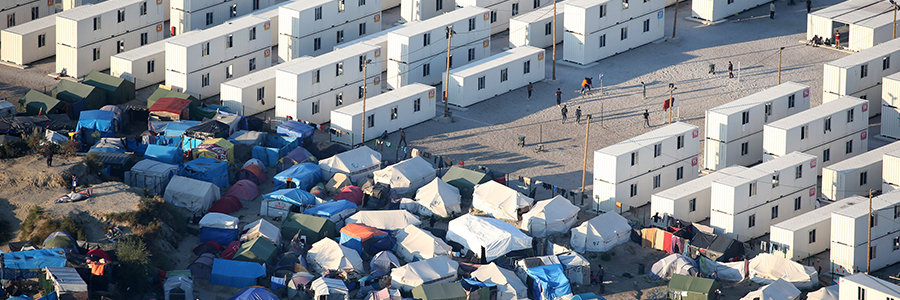
- In the Zaatari camp for Syrian refugees in Jordan, KfW is financing electricity and water supplies, as well as supporting education for Syrian children. Zaatari is currently home to 80,000 Syrians.
- In the Democratic Republic of Congo, KfW is supporting refugees from the civil war in the Central African Republic by financing food, medical services and the rehabilitation of basic social and economic infrastructure.
- In Turkey, KfW is implementing a programme set up by the European Union to support the Turkish government in integrating Syrian children into regular schooling. Turkey has absorbed 3.5 million refugees from Syria, and therefore currently accommodates the largest number of refugees in the world.
- To prepare Afghan refugees in Pakistan to return home and reintegrate into society, KfW is financing legal advice, vocational training, basic healthcare and the construction of homes.
- KfW is very active in the Horn of Africa, working hard to improve resistance in the face of ongoing droughts. Its efforts are geared towards the people living near the north-eastern and southern borders of Ethiopia, many of whom make their living from cattle farming. The aim of this work is to fight one of the main causes driving people here to leave their homes.
Original source: KfW
Published on 19 June 2018