
Health leaders from 10 countries in eastern Europe and central Asia reaffirm commitment to scale up the AIDS response
Add us as your preferred source on Google to see more of our content in Search.
 Add to Preferred Sources
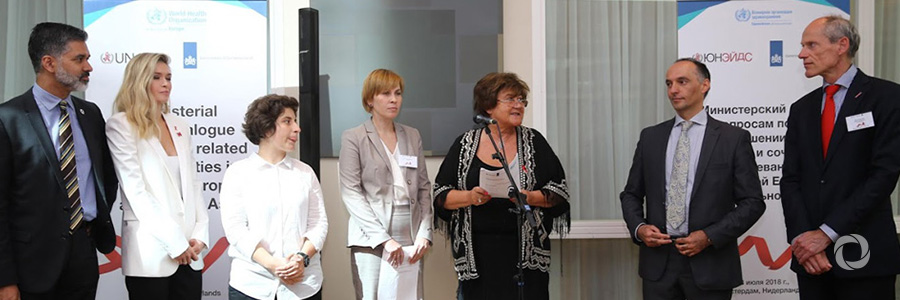
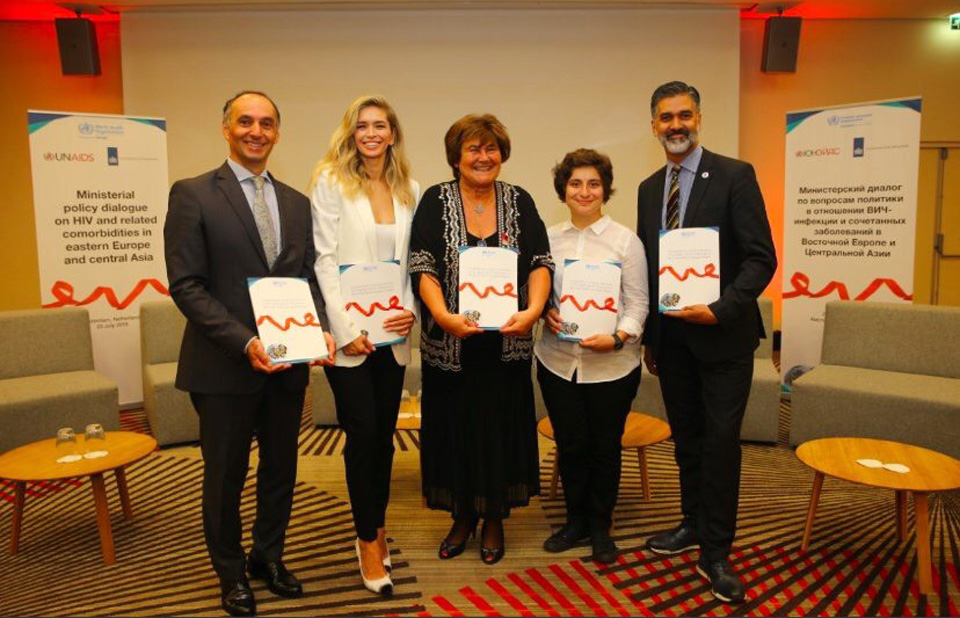
Ministers of health and senior policy-makers from 10 countries in eastern Europe and central Asia reaffirmed their political commitment to scale up national HIV responses during a ministerial policy dialogue on HIV, which was held on the eve of the International AIDS Conference in Amsterdam, Netherlands.
The participants exchanged their experiences and the results of their national AIDS responses with a view to adapting them and scaling them up across the region. They discussed the Fast-Track priorities for achieving the 90–90–90 targets, whereby, by 2020, 90% of people living with HIV will know their HIV status, 90% of people who know their HIV-positive status will be accessing treatment and 90% of people on treatment will have suppressed viral loads. The Fast-Track priorities include the scale-up of domestic funding, the continued focus on key populations, strengthening collaboration across sectors and working in partnership with civil society and people living with HIV.
According to the recent UNAIDS report Miles to go, in eastern Europe and central Asia the annual number of new HIV infections has doubled since 2010—one of the only regions of the world in which HIV continues to increase.
Stigma and discrimination discourages HIV testing and treatment uptake. Harm reduction services remain essential in a region where nearly one-third of new HIV infections are among people who inject drugs. Harm reduction programmes are in place across the region, but often at a limited scale.
At the end of 2017, among the 1.4 million people living with HIV in eastern Europe and central Asia, 73% were aware of their HIV status, an increase from 69% in 2016. A majority of the countries in the region have officially adopted test and treat, but owing to resource constraints and barriers to treatment among key populations, the pace of treatment scale-up is slow and coverage remains among the lowest in the world. About 520 000 people were accessing antiretroviral therapy in 2017, just 36% of all people living with HIV in the region.
During the dialogue, the Compendium of good practices in the health sector response to HIV in the WHO European region, featuring 52 successful examples from 32 countries, was launched.
The dialogue was organized by the World Health Organization Regional Office for Europe and UNAIDS, in cooperation with the Government of the Netherlands.
Original source: UNAIDS
Published on 24 July 2018