
Add us as your preferred source on Google to see more of our content in Search.
 Add to Preferred Sources
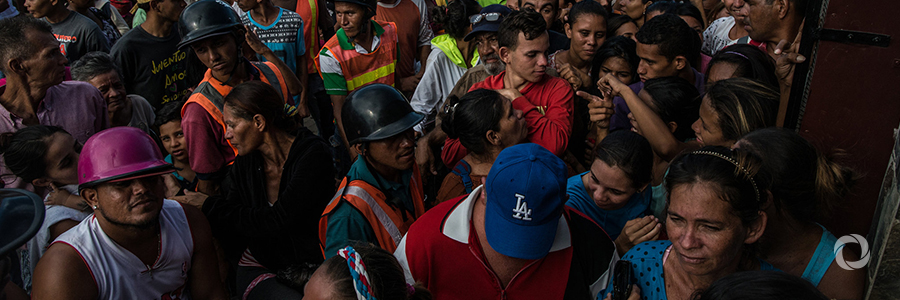
Widespread food and medicine shortages, skyrocketing inflation, political unrest, and violence are causing hundreds of thousands of Venezuelans to abandon their homeland and seek refuge abroad.
As the situation worsens at home, a growing number of indigenous people are trekking across the nation’s borders in need of humanitarian assistance and protection in neighboring Brazil and Colombia.
The Warao, Venezuela’s second largest indigenous group, was already in poor shape at home, where an HIV epidemic has ravaged traditional communities in the Orinoco Delta. Scores of Warao children have also died of measles.
Hundreds of tribal members have trekked south over the border to Brazil in recent months. More than 750 Venezuelan indigenous people now live in hammocks and tents at the Pintolandia shelter in Boa Vista.
The community’s plight is shared by Venezuela’s most numerous indigenous group, the 270,000 strong Wayúu, whose traditional lands straddle the border with Colombia. As conditions worsen in Venezuela, many arrive dehydrated, malnourished and with just the clothes they are wearing, with reports of near starvation conditions. Others describe medical clinics without power in Venezuela, and school bus services impacted by shortages, causing their children to miss out on their education.
In addition to the Warao and Wayúu, UNHCR, the UN Refugee Agency, is aware of at least two other groups, the Barí and Yukpa, who have also sought urgent assistance abroad, where they face additional challenges because some speak no other language than their own.
“Compelled to leave Venezuela, the Wayúu, Warao, Barí and Yukpa, amongst others, have difficulties to access basic services due to lack of documentation,” said Johanna Reina, UNHCR’s senior protection assistant in Colombia.
“They face challenges in loss of identity, including language, and a dramatic deterioration of their organizational structures,” she added.
Most abandoning Venezuela for Brazil and Colombia need urgent assistance with documentation, shelter, food, and healthcare, and UNHCR is working with the respective governments and partner organizations to meet these needs.
Original source: UNHCR
Published on 7 August 2018