
Add us as your preferred source on Google to see more of our content in Search.
 Add to Preferred Sources
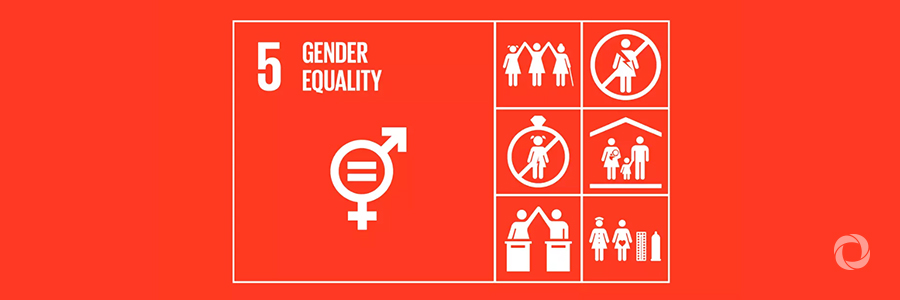
Better gender equality promotes sustainable development and economic growth and helps reduce poverty. This is why the Swiss Agency for Development and Cooperation (SDC) systematically promotes gender equality, women’s rights and the empowerment of women and girls in its partner countries.
As shown in two studies commissioned by the SDC, this is having a positive impact: violence against women in a number of areas has gone down, while their economic and political status has been strengthened.
In Rwanda, Burundi and the Democratic Republic of the Congo, gender-based violence has declined thanks to a support programme involving men and women. In Afghanistan, female farmers have been able to increase their incomes thanks to courses in poultry and goat farming. And in Albania women are now playing a greater role in politics than ever before, thanks to a decentralisation and democratisation programme. These examples show that the SDC’s commitment in the three core areas of combating gender-based violence, economic empowerment and political participation of women is proving effective.
“Gender equality and the empowerment of women are key to development cooperation,” said Thomas Gass, head of the SDC’s South Cooperation Department, during the presentation of the two studies to the media. “Without them, there can be no sustainable development.”
The Status Report on Gender Equality 2017, entitled ‘Closing the Gender Gap’, uses examples of concrete projects to illustrate the progress the SDC has made so far in its efforts to bridge the gender gap. In sum, violence against women has been reduced in a number of areas, while their economic and political status has shown a general improvement. Over CHF 1.38 billion was spent on bilateral cooperation in 2017, of which some two-thirds was spent on projects that had a positive impact on gender equality.
“The fight for gender equality is a slow and difficult process,” according to the report.
Additional targeted efforts are necessary, in particular in the areas of gender-based violence, participation in the labour market and integration in decision-making processes. Lasting change that permanently changes social norms and gender roles can only be achieved if men and boys are also involved in the projects. In addition, new partnerships – including with the private sector – must be envisaged to improve the economic integration of women.
Original source: SDC
Published on 10 August 2018