
Add us as your preferred source on Google to see more of our content in Search.
 Add to Preferred Sources
Almost 100 endangered ground squirrels were relocated, owing to the World Bank’s environmental safeguards during the implementation of the Municipal Infrastructure Development Project in Bulgaria.
People in Panagyurishte – a town of 16,564 inhabitants in Central Bulgaria – have been waiting for a reliable water supply into their homes for years. As construction of the Luda Yana dam began in the fall of 2016, it looked like they would finally get their wish.
The dam, one of three being completed under the World Bank-supported Municipal Infrastructure Development Project, promises to provide a reliable source of water to the residents of the town – a key priority spelled out by the government’s Strategy for Water Supply and Sewerage Management and Development plan.
As it turns out, the residents of Panagyurishte were not the only ones whose lives were about to change as a result of this construction.
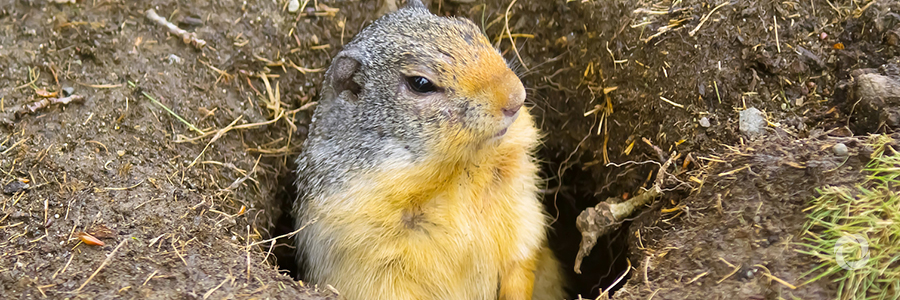
In the spring of 2018, an unexpected twist in project implementation occurred when it was discovered that the project site was also home to a number of European ground squirrels – an animal listed as “Vulnerable” by the International Union for Conservation of Nature (IUCN) in its Red List of Threatened Species.
Following the World Bank’s environmental safeguards, the Bulgarian Ministry of Regional Development and Public Works – the implementing agency for the project – undertook a mission to prove that every life matters. A special team of scientists from the Bulgarian academy of science was hired to figure out how to simultaneously provide Panagyurishte with water without harming the endangered European ground squirrels.
“Involuntary relocation” soon became the answer and from May through July, the scientists worked on a unique resettlement plan.
The new homes were thoughtfully planned to accommodate the habits of the animals. The scientists built two types of homes – “condos” – several halls next to each other to accommodate several sousliks, and single family homes – a single burrow for one animal.
According to Sirma Zidarova, a PhD zoologist and the head of the team of scientists, the relocation of the European souslik was a great success.
“We managed to transfer 96 animals, 68 of which were young. They were all marked and later observations proved that the European ground squirrels adapted nicely,” Sirma explained.
Original source: World Bank
Published on 13 August 2018