

Add us as your preferred source on Google to see more of our content in Search.
 Add to Preferred Sources
With hundreds of millions of people around the globe directly affected by desertification – the degradation of land ecosystems due to unsustainable farming or mining practices, or climate change – United Nations agencies have called for better management of land so that it can provide a place where individuals and communities “can build a future”.
“Population growth means demand for food and water is set to double by 2050 but crop yields are projected to fall precipitously on drought affected, degraded land. More than 1.3 billion people, mostly in the rural areas of developing countries, are in this situation,” Monique Barbut, the Executive Secretary of the UN Convention to Combat Desertification (UNCCD).
According to estimates, nearly 500 million hectares of once fertile land – close to two million square miles – have now been abandoned.
The UNCCD believes that with access to new technologies and to the knowledge, these lands can build resilience to extreme weather-elements like drought and with the right, feed a hungry planet and develop new green sectors of the economy.
“Let us give young people the chance to bring that natural capital back to life and into production [which can then] develop markets for rural products and revitalize communities.” Ms. Barbut, calling for increased and relevant investments in land, rural infrastructure and skills development so that “the future can be bright.”
The role of environment change is also increasingly clear in motivating or compelling people to migrate or become displaced. Desertification is a global phenomenon that threatens everyone UNESCO chief Irina Bokova.
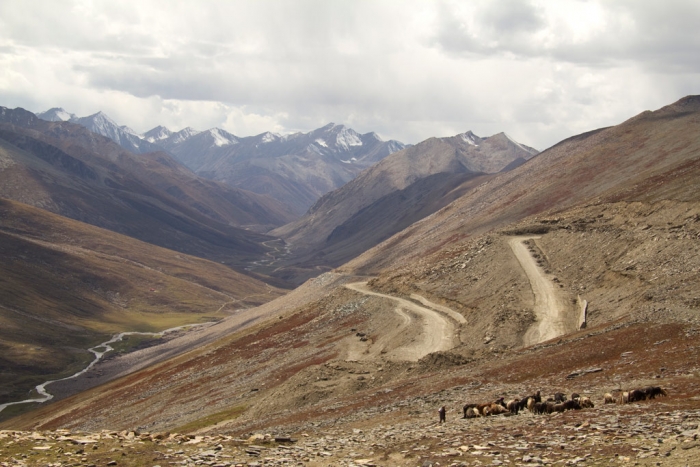
With more land getting lost to desertification, rural populations – relying on pastoral livelihoods, agriculture and natural resources – will face additional vulnerabilities, compounding poverty, poor levels of education, lack of investment and isolation. The UN Environment Programme (UNEP) also highlighted the challenges.
“[Desertification and land degradation] drives human displacement by threatening lives over the short term and making people’s livelihoods untenable over the long term, particularly the poorest and most vulnerable,” Erik Solheim, the Executive Director of UNEP.
Given the significant challenges that loss in arable land and their impact in overall socio-economic conditions of affected populations, the subject also features prominently in the 2030 Agenda‘s 17 Sustainable Development Goals (SDGs). Goal 15, in particular, calls for combatting desertification, and undertaking efforts to halt and reverse land degradation.
In August this year, countries from the Latin American region will be meeting in Bolivia’s in Santa Cruz de la Sierra where they will discuss better drought management and preparedness. The World Meteorological Organization (WMO) – the UN agency that closely monitors global weather and climate patterns and provides member States with climate information to make effective decisions – is one of the organizers of the meeting along with UNCCD.
“Providing state of art climate information [is key] for climate change adaptation in vital sectors such as agriculture, food security and social well-being. Increased frequency of droughts can lead to land degradation and eventually, if unchecked, to increased desertification,” WMO Secretary-General Peter Taalas in his message on the World Day.
Source: UN News Service. Read full article here.
19 June, 2017