
Add us as your preferred source on Google to see more of our content in Search.
 Add to Preferred Sources
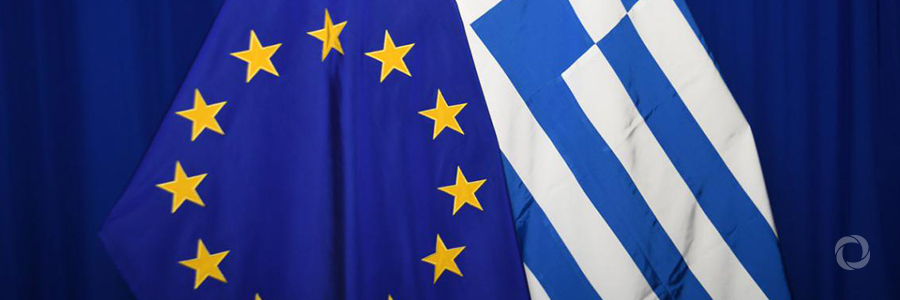
Greece has successfully concluded a three-year European Stability Mechanism (ESM) stability support programme with its place at the heart of the euro area and European Union secured.
The successful conclusion of the programme is a testament to the efforts of the Greek people, the country’s commitment to reform, and the solidarity of its European partners.
European Commission President Jean-Claude Juncker said: “The conclusion of the stability support programme marks an important moment for . While their European partners have demonstrated their solidarity, the Greek people have responded to every challenge with a characteristic courage and determination. I have always fought for Greece to remain at the heart of Europe. As the Greek people begin a new chapter in their storied history, they will always find in me an ally, a partner, and a friend.”
Pierre Moscovici, Commissioner for Economic and Financial Affairs, Taxation and Customs, said: “The conclusion of the stability support programme is good news for both Greece and the euro area. For Greece and its people, it marks the beginning of a new chapter after eight particularly difficult years. For the euro area, it draws a symbolic line under an existential crisis. The extensive reforms Greece has carried out have laid the ground for a sustainable recovery: this must be nurtured and maintained to enable the Greek people to reap the benefits of their efforts and sacrifices. Europe will continue to stand by Greece’s side.”
A total of €61.9 billion in loans have been provided to Greece under this stability support programme on the basis of implementation of a comprehensive and unprecedented reform package. This stability support programme took a coordinated approach to tackle long-standing and deep-rooted structural issues that contributed to Greece experiencing an economic crisis.
Greece has taken measures to ensure its fiscal sustainability, bringing the general government balance from a significant deficit to surplus in 2017, which is projected to be maintained. These reform measures and consolidation efforts will have cumulative effects over time, and will thus continue to positively impact fiscal sustainability well beyond the conclusion of the programme.
The financial sector is now in a much stronger position as a result of successful recapitalisation operations, an overhaul of bank governance, and work to implement a strategy to reduce non-performing loans, which must be sustained.
The efficiency and efficacy of the public administration has been improved including through the introduction of new rules on the appointment, assessment and mobility of public sector employees; the establishment of the Independent Authority for Public Revenue; and measures to make the judicial system more efficient.
Finally, important structural measures have been put in place to improve Greece’s business environment and competitiveness to make Greece an attractive destination for investment and allow businesses already in place to expand, innovate and create jobs; as well as to establish sustainable and universal pensions, health care and social benefit systems, including a guaranteed minimum income scheme.
When taken together, these transformative reforms have laid the foundations for a sustainable recovery, putting in place the fundamental conditions needed for sustained growth, job creation and sound public finances in the years to come.
Improving economic indicators confirm that while work remains to be done, the efforts undertaken are already delivering tangible benefits by restoring order to public finances, reducing unemployment, and securing a return to growth.
The conclusion of the programme marks the end of one chapter and the beginning of another for Greece.
The Commission’s Structural Reform Support Service will continue to assist the Greek authorities, upon their request, in the design and implementation of growth-enhancing reforms.
Original source: European Commission
Published on 20 August 2018