
As climate change reshapes agriculture, international trade will be increasingly important to feeding the world
Add us as your preferred source on Google to see more of our content in Search.
 Add to Preferred Sources
With climate change poised to alter significantly the ability of many world regions to produce food, it is expected that international trade in agricultural products will have an increasingly important contribution to feeding the planet and responding to climate-related hunger flare-ups, says a new report by the UN’s Food and Agriculture Organization (FAO).
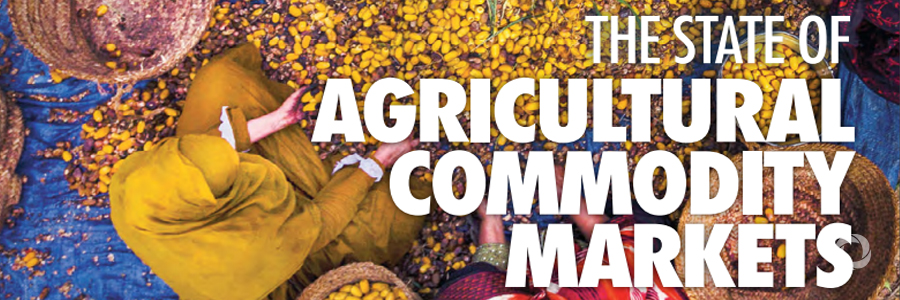
International trade rules established under the auspices of the WTO and newer mechanisms created under the Paris Agreement aimed at responding to climate change can be mutually supportive, argues The State of Agricultural Commodity Markets, 2018. To achieve this, national agricultural and trade policies may need to be readjusted to help transform the global marketplace into a pillar of food security and a tool for climate change adaptation, FAO’s report says.
This is because climate change will affect global agriculture unevenly, improving production conditions in some places while negatively affecting others – creating sets of “winners” and “losers” along the way.
Food production in countries in low latitudes — many already suffering from poverty, food insecurity and malnutrition — will be hardest hit, the report notes. Regions with temperate climates, on the other hand, could see positive impacts as warmer weather lifts agricultural output.
According to FAO Director-General José Graziano da Silva, to prevent economic and food security gaps between developed and developing countries from widening even further, “we must ensure that the evolution and expansion of agricultural trade is equitable and works for the elimination of hunger, food insecurity and malnutrition.”
“The uneven impact of climate change across the world and its implications for agricultural trade, especially for developing countries, underlines the need for a balanced approach to policies, which should enhance the adaptive role of trade while supporting the most vulnerable,” said Graziano da Silva.
For that to happen, however, “wide-ranging policy actions are necessary,” the FAO Director-General added. Trade policies that promote well-functioning global markets, combined with climate-smart domestic measures, investments and social protection schemes are needed.
Many countries already rely on international markets as a source of food to meet their deficit, either due to high costs of agricultural production (as for example in countries with limited land and water resources) or when climate or other natural disasters undercut national food production.
In general, FAO’s report says that open, predictable and fair international food markets are important for trade to help support food security and climate adaptation.
The report also provides an overview of the performance of the international agriculture trading system in recent years and the direction in which it is headed.
Read and download the report The State of Agricultural Commodity Markets, 2018.
Original source: FAO
Published on 17 September 2018