
Add us as your preferred source on Google to see more of our content in Search.
 Add to Preferred Sources
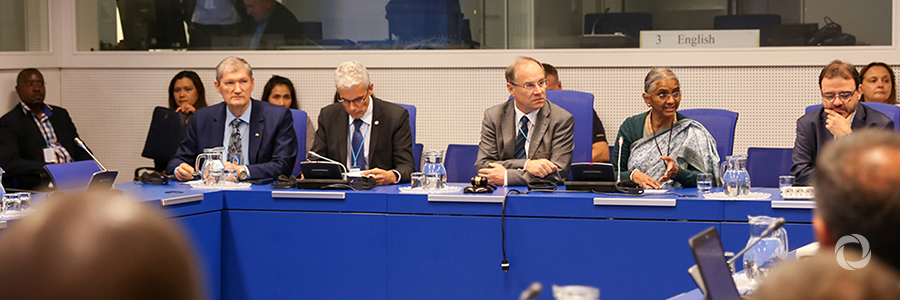
The use of radiation techniques in non-destructive testing (NDT) during the construction of public buildings, bridges and utility pipelines can significantly minimize the damage caused by natural disasters and save lives, concluded panelists at a side event during the 62nd IAEA General Conference.
Participants discussed key nuclear techniques for NDT and how the IAEA has assisted governments to use this technology for evaluating the integrity of structures in Nepal, Ecuador and Mexico, following earthquakes.
Industrial radiography, the most common NDT technique, uses shortwave X-rays, gamma rays and neutrons to test the integrity of civil structures without causing any damage to them. It relies on the unique absorption characteristics of various materials. Checking the quality of buildings regularly with NDT throughout their entire lifespan, including the building phase, can help avoid unexpected collapses, experts said.
“Better national NDT capability and regional collaboration can improve the resilience of civil structures affected by an earthquake or other destructive natural phenomena. It can help to address the consequences and support reparation in the aftermath,” said Mykola Kurylchyk, Programme Management Officer with the IAEA. “Nuclear techniques can also play a crucial role in disaster prevention and management.”
Radiotracers are another useful nuclear technique that can be applied following natural disasters. This technology is used to assess the structural integrity of buried water distribution networks for underground leakages.
Original source: IAEA
Published on 20 September 2018