
Add us as your preferred source on Google to see more of our content in Search.
 Add to Preferred Sources
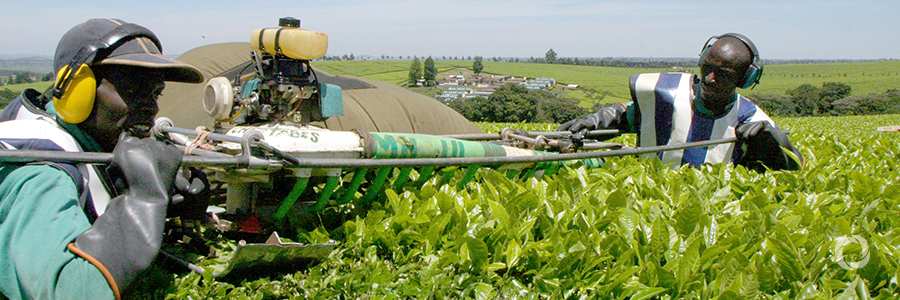
FAO and the African Union today launched a new framework document that aims to increase agricultural efficiency and reduce drudgery by helping countries in Africa to develop strategies for sustainable farm mechanization.
The Sustainable Agricultural Mechanization: A Framework for Africa (SAMA) is the result of discussions with policy makers from AU member states, the AU Commission, FAO and key partners. It offers a detailed look at the history of machinery in Africa, and points the way towards addressing challenges and creating new opportunities to assure the successful adoption of mechanization.
“Doubling agricultural productivity and eliminating hunger and malnutrition in Africa by 2025 will be no more than a mirage unless mechanization is accorded utmost importance,” AU Commissioner for Rural Economy and Agriculture, Josefa Sacko, said at the launch of the framework at FAO.
Remarkably more than three-fourths of farmers in sub-Saharan Africa prepare their lands using only hand tools, a practice that entails poor productivity, repels youth and is incompatible with the continent’s Zero Hunger goal.
The new framework identifies 10 priorities for AU member states to include in their national plans, ranging from the need for a stable supply of machine spare parts and innovative financing mechanisms, and the importance of regional collaborations that allow for cross-border hiring services.
The framework notes that successful national mechanization strategies will address key sustainability issues including gender, youth, environmental protection and the overarching principle that farming must be profitable. It also emphasizes that these strategies should cover the entire agrifood value chain, including harvesting, handling, processing and food safety aspects, with an eye to reducing food losses, boosting rural employment and bolstering the links between farmers and consumers.
Original source: FAO
Published on 5 October 2018