
Add us as your preferred source on Google to see more of our content in Search.
 Add to Preferred Sources
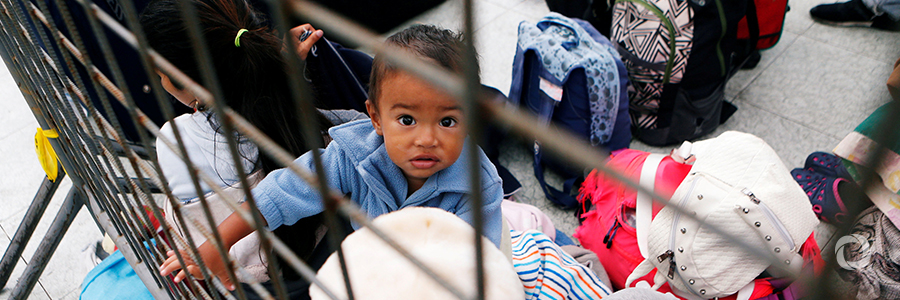
Over 4,000 Venezuelans enter Colombia every day looking to stay or continue their journey southwards. Thousands do it on foot, crossing Simón Bolívar International Bridge. Beneath an unforgiving sun, they drag worn-down suitcases, carry giant sacks on their shoulders or cradle young children in their arms.
With their country facing a deteriorating situation, many are in need of international protection.
“The constant flow of Venezuelans entering Colombia generates monumental challenges to address their humanitarian needs,” said UN High Commissioner for Refugees Filippo Grandi while visiting Villa del Rosario on Sunday. “UNHCR is committed to intensifying our presence and help.”
Nearly two million Venezuelans have left their country since 2015. About one million are now in Colombia, where the government is seeking to ensure they can work legally and access social services, through the issuance of a special permit. Nearly 400,000 Venezuelans have obtained permits to legally work and access social services in the country, according to the Colombian government.
“Venezuelans without access to a legal status are particularly vulnerable to exploitation, trafficking and discrimination,” Grandi said.
Venezuelans say they are compelled to leave for multiple reasons. They include insecurity and violence, lack of access to food, medicine and essential services, as well as a loss of income as a result of the current political and a socio-economic situation.
The North of Santander region is the busiest border crossing in Colombia, accounting for 75 percent of all entries by land. National and local authorities are working with UNHCR, the UN Refugee Agency, the International Organization for Migration and other entities in the area to better address the most basic and immediate needs of those arriving, including Venezuelan refugees and migrants and 300,000 Colombian returnees.
The growing number of Venezuelans has strained the region’s health care services. To boost capacity, the UN Refugee Agency supported the creation of a new health centre in Villa del Rosario. It aims to provide first aid care and family planning services to some 300 people per day, including refugees, migrants and the local community.
Original source: UNHCR
Published on 8 October 2018