
Add us as your preferred source on Google to see more of our content in Search.
 Add to Preferred Sources
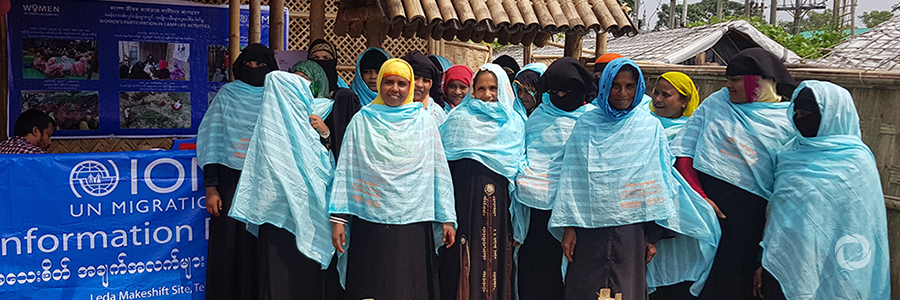
Over 100 Rohingya women have formed a first-of-its-kind committee to ensure women and girls have a direct pathway and communication channel to UN project managers without having to go through male leaders in Bangladesh’s Cox’s Bazar refugee camps.
The committee, supported by IOM, the UN Migration Agency, follows months of on-the-ground research and informal discussions with Rohingya women in the camps about what kind of platform would enable them to raise concerns with senior UN staff, without breaching cultural gender norms.
“We feel better now,” said committee chairwoman Muriom, after the official opening of an IOM-funded women-run community centre in Leda in the south of Cox’s Bazar, which the committee will oversee. “Before we did not get this kind of opportunity. Now we have this [committee and centre] and we know how to use them to change the camp life,” she added.
Education levels and religious conservatism vary significantly between individuals, families and communities, but most Rohingya women do not read or write and many are discouraged from leaving family shelters. Few have much experience of speaking out in public, and most rely on male family members or community leaders to raise concerns on their behalf.
For organisations like IOM, a lead agency in the Rohingya response, finding a way to ensure women’s opinions, concerns and needs reach those charged with managing and developing the refugee settlements, can be a major challenge.
“There’s a lot of talk about women’s participation, but it has to be meaningful participation,” said project founder Consuelo Tangara, who is IOM’s Site Management Area Coordinator in Teknaf sub-district, where the committee is based.
According to Tangara, the idea of creating an “informal committee” outside the male-dominated official camp management system, was to provide an effective pathway that women feel comfortable with and that meets their needs, rather than trying to force them into systems established by men for men.
According to Tangara, the system will provide a stronger advocacy and reporting mechanism leading to faster responses from sector managers and will encourage sustainable participation.
“When you are representing your own community, you want to make sure something happens. The committee members are also learning the skills of reaching out to sector heads and becoming comfortable with that,” she said.
Following a trial period with the Leda committee, IOM hopes to roll out similar committee projects across all the camps for which it is responsible.
IOM is on track to have 50 percent women’s participation in its Cash for Work programmes in the camps by year end, but the committee women also have their own livelihood plans to make soaps and handicrafts at the community centre to sell.
Original source: IOM
Published on 9 October 2018