
Add us as your preferred source on Google to see more of our content in Search.
 Add to Preferred Sources
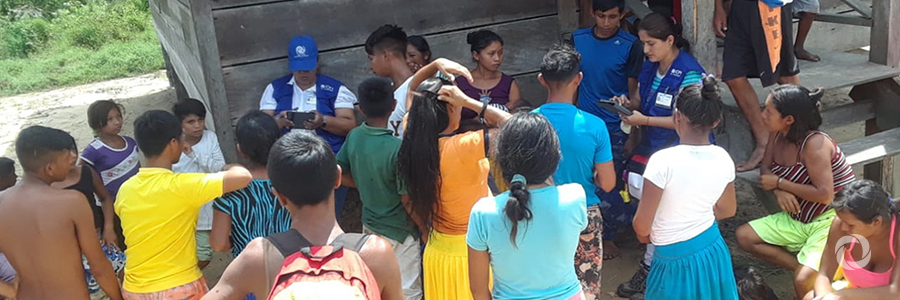
IOM, the UN Migration Agency, is providing essential non-food items (NFI) such as personal hygiene products (insect repellent, soap, toothpaste), cleaning products (buckets, detergents, chlorine), along with mosquito nets, hammocks, and blankets to highly vulnerable Venezuelan migrants in Guyana.
The initiative, carried out as part of IOM Regional Action Plan (RAP), has reached over 793 Venezuelan migrants, particularly members of the indigenous Warao tribe arriving in the regions of Barima Waini and Pomerron Supanaam.
IOM has distributed lifesaving information, including guides on how to access documentation and the regularization process in Region 4 (Demerara-Mahaica) and Region 2. Thanks to a Memorandum of Understanding (MOU) signed with the Venezuelan Support Group (VSG) and the help of the Civil Defense Commission, IOM has been able to distribute this information in borderline areas that are difficult to access.
IOM Displacement Tracking Matrix (DTM) has also been deployed to understand the needs and identify vulnerabilities in the migrant population, particularly in those with a higher risk of becoming victims of human trafficking, smuggling, and irregular migrants. In a first phase, DTM was implemented in Regions 1 and 4, as well as in Georgetown. This initial stage of the study concluded on September 5 and will be made available later during the year.
In parallel, IOM Guyana has organized workshops to train first-line response officers from the Ministry of the Presidency, Guyana Defence Forces, Ministry of Indigenous Affairs, Ministry of Foreign Affairs, Guyana Public Force, Ministry of Communities, Department of Migration, and the Ministry of Public Health on issues such as human trafficking, smuggling and other vulnerabilities; direct assistance and referral systems.
Original source: IOM
Published on 12 October 2018