
Add us as your preferred source on Google to see more of our content in Search.
 Add to Preferred Sources
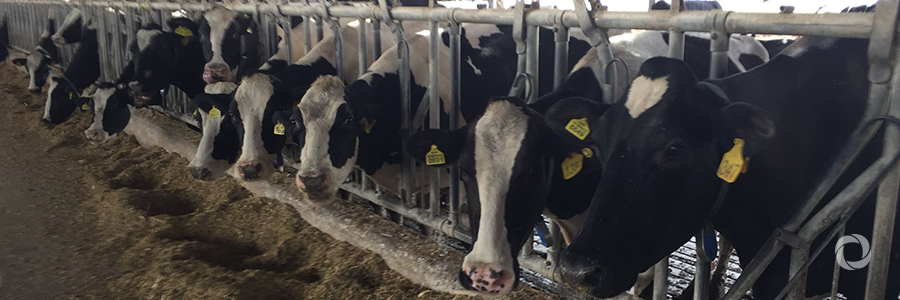
1500 cows is a lot of cows. But if you want to produce fresh milk in Morocco – a hot country which grows little feed – you need scale. Otherwise, local fresh milk cannot compete with imported milk powder. For that same reason, you also need a resource-efficient operation.
Ali Zoubir, a third generation dairy farmer in Had Soualem, 40 miles from Casablanca, knows a lot about efficiency. He inherited 500 cows and some old-fashioned barns from his father. The cows needed to be fed and cleaned by hand; the stuffy, dark barns had to be lit and ventilated to make them bearable for the animals, guzzling up expensive energy.
“But we are not far from the sea – there is enough breeze,” he says. “We simply needed modern, open barns, where the herd is kept together, and the air is allowed in”.
The farm took a loan from Banque Populaire, under the MorSEFF Programme led by the EBRD, which included an investment grant from the European Union, and underwent a complete re-haul. It is one of 220 businesses which have benefitted from a MorSEFF loan.
New solar panels now provide all the electricity needed during the day, including pumping water from wells; the sun also powers water heaters providing hot water for cleaning. The new tractors are best in class. The farm’s electricity consumption has dropped 80 percent, even as the cattle population increased threefold.
The French Montbéliarde cows look relaxed, wandering over to greet visitors. All of their milk is sold to Danone and local restaurants. But Ali Zoubir dreams of someday making his own comté and brie, cheeses which can also be an investment opportunity under future EBRD programmes.
Morocco relies heavily on imported fossil fuels, which depresses the country’s trade balance and burdens businesses with high energy costs. The government is working to increase the share of local renewables in its energy mix with a focus on large-scale projects reducing both pollution and imports. But here, as elsewhere, they know that to achieve this, you also need local involvement and projects such as the ones on Albane Sahel farm.
This is why a group of international financiers and donors came together to create a credit line for energy efficiency and small renewable energy projects in Morocco. In 2015, EBRD specialists developed the Morocco Sustainable Energy Financing Facility (MorSEFF), a programme which would provide funds to local banks and technical support to companies looking for sustainable energy upgrades.
The funds themselves came from several international sources: investment and technical cooperation (TC) grants from the European Union, financing from the EBRD as the lead financial institution, from France’s AFD, the European Investment Bank, and Germany’s KFW. TC funding was also topped up from the EBRD-managed SEMED Multi-Donor Account.
If a project qualifies – if it results in enough energy savings, reductions of greenhouse gas emissions or renewable energy capacity and uses best-in-class technologies – it can receive a loan from a local participating financial institution, an investment grant from the EU of typically 10%, and technical assistance helping to develop a bankable project.
This model – with different partners and local variations – is the EBRD’s know-how. In 25 countries, the Bank and its partners, of which the largest is the European Union, enable local financial institutions to support energy security improvements by local businesses and even households and in specific cases also by public sector.
If every company could receive an affordable loan to replace old machines and technologies with more efficient physical capital, Morocco could kill two birds with one stone: reduce fossil fuel imports and move towards its goal under the Paris Climate Agreement.
Dr. Mernissi, one of the engineers evaluating potential projects applying for funding under the MorSEFF programme, explains: “To achieve this, the government believes US$ 50 billion in climate financing would need to be invested between 2010 and 2030. This level would only be possible if international financing is available. In that case, Morocco can reduce greenhouse gas emissions by 42 percent by 2030. The country can reduce emissions by only about 17 percent relying on domestic sources.”
“This programme achieves consistent results because technical assistance is tied to financing. Businesses may have good intentions to save energy, but often they will go for equipment which is cheap today, even if it is more costly to run in the future. Getting an affordable loan for a longer tenor is a great incentive to go for the best-in-class, which will save costs and emissions in the long run”.
Original source: EBRD
Published on 22 October 2018