
Add us as your preferred source on Google to see more of our content in Search.
 Add to Preferred Sources
It is essential that parliaments around the world act without delay to adapt and improve legal, political and institutional frameworks to end hunger and ensure nutritious and healthy diets for all, FAO Director-General José Graziano da Silva said.
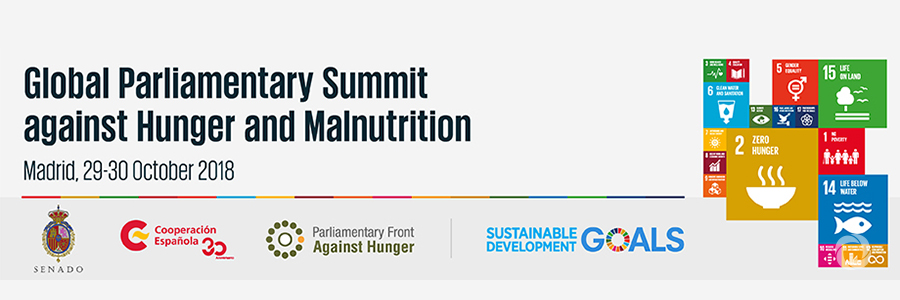
“You can guarantee that food and nutrition security is at the top of the political and legislative agenda,” Graziano da Silva stressed before nearly 200 parliamentarians gathered at the Global Parliamentary Summit against Hunger and Malnutrition taking place in Madrid. “Being responsible for passing laws and reviewing budgets, you can play a key role in promoting food security and improving nutrition in your respective countries,” he added.
“This summit represents an opportunity to face this truly global challenge from a multilateral perspective, the only effective prism from which to identify solutions and put in place the measures and the necessary legislation in your respective countries to achieve the Zero Hunger goal by 2030,” Spanish Prime Minister Pedro Sánchez said. “It is also an opportunity to place the Sustainable Development Goals at the center of all public policies and priorities, to place this debate in a central position and to respond to the needs of society taking as reference the universal values that unite us all,” he added.
When world leaders adopted the 2030 Agenda three years ago they defined the goal of Zero Hunger as an essential condition for a fairer and more peaceful world.
According to FAO’s latest figures, 821 million people – 11 percent of the world’s population – go hungry every day. Simultaneously, other forms of malnutrition have also increased and there are already 2 billion overweight adults, of whom 672 are obese.
Encouraging parliaments to transform food systems
The FAO Director-General stressed that there are “excellent recent examples” of parliamentary action for food security and nutrition. Canada, for example, has banned the use of some types of artificial fats in food production and Argentina is on the same path. Chile also passed a law to ensure more comprehensive and comprehensible labelling for the consumer, especially for children.
Graziano da Silva presented “The Nutrition Challenge” publication, in which FAO and the World Health Organization set out a series of measures that parliamentarians can take to transform food systems, from production to final consumption.
It is essential, for example, to promote policies to diversify production and facilitate the consumption of fresh food locally produced by family farming. It is also important to introduce nutrition education in academic programs and to regulate advertising aimed at children.
“Despite the recent setbacks, a world without hunger and malnutrition is still within reach, but we must act quickly and decisively. It is our common responsibility to promote the political will that will allow us to guarantee that everyone can feed themselves with dignity. Zero Hunger by 2030 is still possible if we all work together,” Graziano da Silva concluded.
Original source: FAO
Published on 29 October 2018