
Add us as your preferred source on Google to see more of our content in Search.
 Add to Preferred Sources
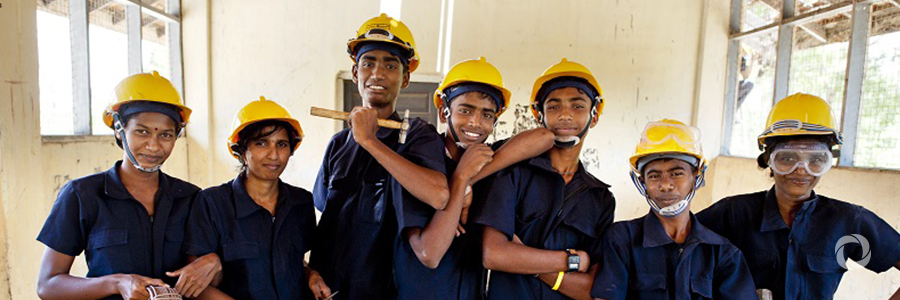
Hands-on vocational training is improving the employment prospects of many young people in the country. At the same time, it promotes dialogue and reconciliation between those on opposing sides in the former civil war.
From an economic perspective, Sri Lanka is developing rapidly. Since the end of the civil war in 2009, the country as a whole – including the Northern and Eastern provinces, which suffered particularly during the conflict between Tamil separatists and the majority Sinhalese government – has experienced consistently high rates of growth.
However, one of the obstacles to economic development in this region is a lack of targeted vocational training services. At present, the system of technical and vocational education and training (TVET) does not cater adequately for the needs of the growing economy and the types of work available. Teaching staff lacks the skills to deliver practically based training.
The Deutsche Gesellschaft für Internationale Zusammenarbeit (GIZ) GmbH has been commissioned by the German Federal Ministry for Economic Cooperation and Development (BMZ) to support a network of 16 TVET centres. The goal of this project is to prepare young people, many from impoverished families in the north and east of Sri Lanka, for the labor market.
The TVET centres work closely with local businesses to ensure that students receive hands-on training and therefore acquire the skills required by potential employers. To date, 84 initial and further training courses have been introduced or updated and now follow syllabuses in English with a focus on practical learning in areas such as automotive engineering, information and communications technology (ICT) and the hotel trade.
Since 2016, GIZ has arranged in-service training for 184 vocational college teachers and 34 administrative workers.
Original source: GIZ
Published on 31 October 2018