
Add us as your preferred source on Google to see more of our content in Search.
 Add to Preferred Sources
Four specialized agencies of the United Nations warned of a colossal human loss to Asia and the Pacific and its economies if countries in the region do not recommit themselves to ending all forms of malnutrition and achieving zero hunger by 2030.
The warning came during the launch of a new regional report revealing that the reduction in the number of hungry and malnourished people – including children – has come to a virtual standstill in many parts of Asia and the Pacific.
The Asia and Pacific region accounts for well over half of the world’s undernourished – nearly half a billion people (486 million). While recently released global figures indicate an overall rise in the prevalence of hunger worldwide, returning to levels from a decade ago, this regional report points out that stagnation in combating hunger and malnutrition in Asia and the Pacific is also a major concern due to the large numbers of people involved.
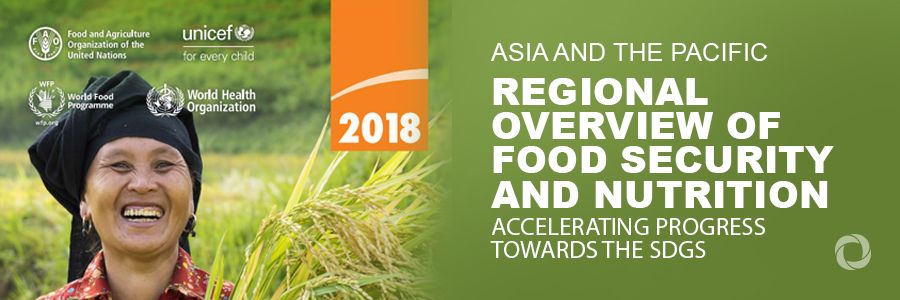
The report, Asia and the Pacific Regional Overview of Food Security and Nutrition, published by the Food and Agriculture Organization of the United Nations (FAO), the United Nations Children’s Fund (UNICEF), World Food Programme (WFP) and the World Health Organization (WHO), highlights a number of converging challenges that threaten to undermine the Sustainable Development Goal to end all forms of malnutrition by 2030 (SDG 2).
“Progress in reducing undernourishment has slowed tremendously. The report’s estimates show that the number of hungry people has barely changed during the past two years, making it increasingly difficult to achieve the Zero Hunger target of SDG 2,” the regional heads of the four UN agencies wrote in their joint foreword.
Incidences of climate-related disasters have been rising in the region. Natural disasters impact food security and nutrition through reduced food production, which can then cascade down to the entire food value chain, affecting livelihoods and causing economic and agricultural loss. Beyond the short term, disasters can impact the agriculture sector through loss of assets and rural infrastructure, and through increased disease outbreaks. According to recent FAO estimates, Asia suffered a staggering loss of USD 48 billion during 2005-2015. Countries need to adapt agriculture to become more resilient to climate-related events and to mitigate the damage they can cause.
The report also highlights the almost paradoxical reality of an increase in obesity of both children and adults in the region. It reveals that the region is now home to the fastest growing prevalence of childhood obesity in the world.
FAO, UNICEF, WFP, WHO: “sense of urgency cannot be overstated”
This is the first time that the four UN agencies responsible for helping countries in Asia and the Pacific achieve food security, improve maternal and child health and welfare, have jointly published such a report. Their joint efforts underline the urgency of the present situation and represent a united front and call to action in urging governments to show greater resolve in meeting previous commitments to end hunger and improve food security and nutrition across the region.
The four UN agencies summarize the report’s findings: “What is becoming increasingly clear is that the world cannot meet the 2030 target of zero hunger if Asia and the Pacific – the world’s most populous region – is not leading the way. It is a hard reality but one that must be faced with a united determination to turn things around.”
The report concludes with a cautious note of optimism. “Together, we hope that the findings of this report will contribute to a more informed dialogue. Without doubt, all stakeholders must make much greater efforts to accelerate progress toward the goals of a healthy and hunger-free Asia and the Pacific but their action is needed now. The sense of urgency cannot be overstated.”
Read and download the report Asia and the Pacific Regional Overview of Food Security and Nutrition.
Original source: WFP
Published on 2 November 2018