
Add us as your preferred source on Google to see more of our content in Search.
 Add to Preferred Sources
To date, around three million refugees and migrants have left Venezuela, where multifaceted challenges include severe economic hardship and shortages, combined with complex human rights and political environment.
More than one million Venezuelans have settled in neighboring Colombia, of whom more than 415,000 have so far been granted special permission to stay by the government. However, many remain undocumented making them particularly vulnerable.
“The most durable solution for children and their parents will be the integration into their host communities, and part of that is getting them access to education,” said Jozef Merkx, UNHCR’s representative in Colombia.
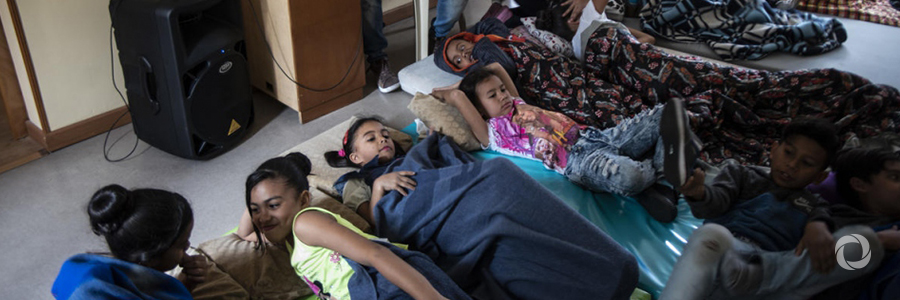
At a children’s daycare center called Hearts Without Borders, in the Colombian capital, Bogotá, volunteers help newly arrived Venezuelan children to process the sudden change in their lives.
A key part of that programme is a colorful workbook developed by UNHCR called “My Journey, A New Place” which uses drawings, stickers and writing exercises to guide the children to describe how they left their homes, things they might have experienced along the way, and their current living conditions.
The center also provides free checkups with a doctor and a dentist, who detect cases of malnutrition often caused by a lack of access to basic foods back home.
Hearts Without Borders also aims to help the children whose families are planning to stay in Colombia to get up to speed with the local school system to which, thanks to a recent government directive, all children have a right “regardless of their nationality or migratory status”.
However, obstacles for Venezuelan children to access education in Colombia remain said Merkx. Many school districts require the child’s parents to obtain legal status within three months of enrolling the child or insist on official papers certifying the child’s school level, documents that are extremely difficult if not impossible to obtain.
Original source: UNHCR
Published on 20 November 2018