
Add us as your preferred source on Google to see more of our content in Search.
 Add to Preferred Sources
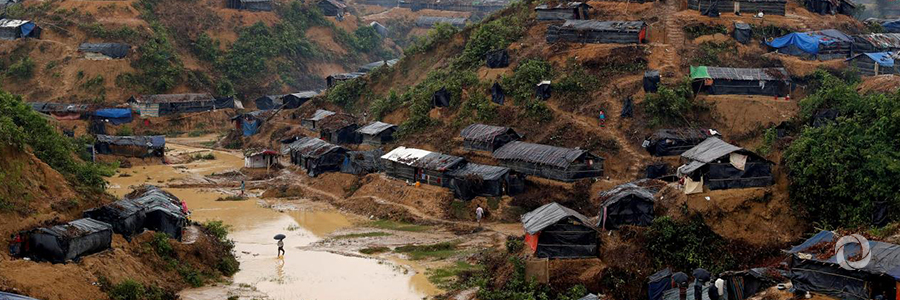
Dozens of community buildings in Bangladesh’s Rohingya refugee camps have been upgraded by shelter teams from IOM, the UN Migration Agency, to provide temporary accommodation for refugees in emergency situations.
Seventy buildings have now been completed under the first phase of the project, supported by the European Union (EU), offering temporary shelter space for over 4,500 people.
The upgraded structures will allow IOM shelter and site management teams to provide better protection for refugees if they are affected by landslides, floods, bad weather or other unexpected events that force them to leave their own shelters.
In the second phase of community shelter upgrade work, to be funded by the United Kingdom, a further 100 buildings will undergo improvements. Once completed, the 170 strengthened structures will be able to accommodate 10,000 people with urgent shelter needs.
The facilities will also serve as a temporary accommodation for families whose shelters need to be repaired or completely rebuilt in the coming months, as the dry season offers a window of opportunity to tackle damage inflicted during the monsoon season.
The EU funding was provided by the European Civil Protection and Humanitarian Aid Operations (ECHO) under a consortium project implemented by IOM, the German Red Cross, and the UN Development Programme (UNDP). The Disaster Risk Reduction consortium was established to mitigate against disasters among refugee and local communities affected by the Rohingya refugee crisis.
Almost a million Rohingya are currently living in Cox’s Bazar, Bangladesh, after escaping violence in Myanmar, which surged in late August 2017 sending over 500,000 people fleeing across the border in just a few weeks. The region is prone to some of the worst monsoon conditions on earth and undergoes two cyclone seasons each year.
Original source: IOM
Published on 20 November 2018