
Add us as your preferred source on Google to see more of our content in Search.
 Add to Preferred Sources
Climate change impacts in Eastern Europe and Central Asia currently cost billions of dollars in lost productivity and could keep mounting over the next few years, according to a new report released at the climate summit.
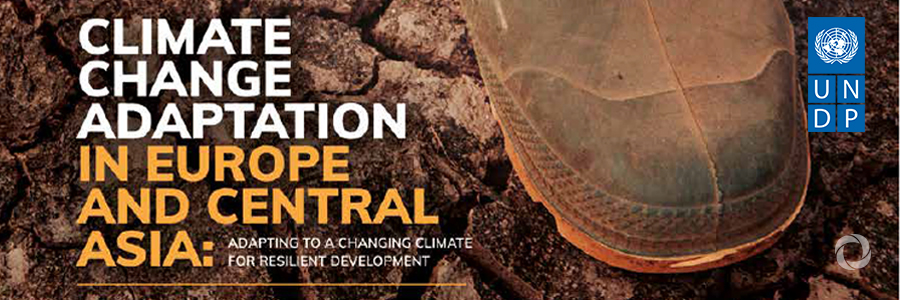
“New risks from climate change threaten to derail (…) advances and challenge national efforts to reach targets outlined in the 2030 Agenda for Sustainable Development, Paris Agreement, Sendai Framework and other international accords,” according to the foreword of Climate Change Adaptation in Europe and Central Asia”, produced by the United Nations Development Programme (UNDP).
The report shows climate change is already being felt heavily across the region, including floods and droughts in the Western Balkans and South Caucasus and rising Black Sea levels. In the last fifty years, glaciers in Central Asia are estimated to have receded by 25 percent, and an equal amount is expected to disappear in the next 20 years.
In the Russian Arctic, the permafrost has been receding, and seasonal thaw depths are projected to increase 30 to 50 centimetres, increasing the risk to biodiversity, as well as putting infrastructure and buildings at risk of collapse.
Together, these changes will result in adverse socio-economic impacts and will affect people’s health, well-being, livelihoods, and quality of life. For example, Turkmenistan estimates losses in agricultural crop production at over US$ 20 billion over 15 years if the critical adaptation measures in the water and agriculture sectors are not implemented.
The economics of adaptation
There remains a large gap in funding for climate change adaptation across sectors and countries. The cost of climate change adaptation globally far outstrips current funding, with recent UN reports indicating the global costs of adaptation ranging from US$140 billion to US$300 billion by 2030, and between US$280 billion and US$500 billion by 2050.
For instance, without proper adaptation measures, climate hazards could cost the people of Georgia between US$10 and $12 billion from 2021 to 2030. The estimated cost of adapting to climate change in Georgia over the same time-period is estimated between US$1.5 billion and $2 billion.
The report also shows successful adaptation is within reach. “Low-carbon, climate-resilient development is going to look very different in Europe and Central Asia than it does in other parts of the world,” the report states.
The report offers a broad range of successful adaptation measures and initiatives.
Read and download the report Climate Change Adaptation in Europe and Central Asia.
Original source: UNDP
Published on 3 December 2018