
Add us as your preferred source on Google to see more of our content in Search.
 Add to Preferred Sources
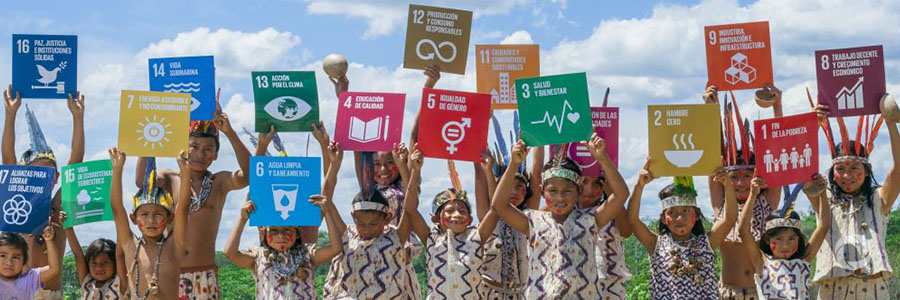
The Sustainable Development Goals were designed to transform our world. When they were designed three years ago, we had no particular reason for optimism. While the Millennium Development Goals had seen significant progress, 700 million people still lived in extreme poverty; climate change seemed to be accelerating, and several conflicts remained entrenched.
Yet the world leaned into determination, not resignation. Along with the 2030 Agenda, further historic global agreements on development financing, disaster risk reduction, humanitarianism and climate change, all agreed within a 12-month period, were celebrated as new common commitments to interdependence, cooperation and fairer sustainable progress.
What then is the prognosis for the 2030 Agenda? Rather than giving up or seeing it co-opted for political ends, we need to double down and see it as an unapologetic reminder of our shared commitments. Only the 2030 Agenda has the breadth to provide a common language – a keystone – to prove the value of a multilateral world and bridge our diverse challenges. It is the only common framework that governments, international organizations, civil society and local authorities have to coordinate planning, financing and on-the-ground development, peace and humanitarian work, linking village budgets to regional and global visions for generations to come.
Against the backdrop of the institutional transformation happening across the UN, UNDP is emerging refreshed, anchored in the 2030 Agenda and committed to the principles of universality, equality and leaving no one behind. It is building on and amplifying its initial years of SDG support.
UNDP’s own cross-cutting expertise in areas like poverty reduction, resilience, energy, governance, health and gender are helping support the UN’s vast networks of experience and expertise, using approaches such as scenario modelling, people’s engagement, and participatory SDG monitoring.
Of course, the 2030 Agenda won’t suddenly click into gear because the UN starts collaborating better. But this collaboration is the connective tissue that binds together the needed network of governments, academia, businesses, community groups and others needed to implement the SDGs.
Original source: UNDP
Published on 6 December 2019