
Add us as your preferred source on Google to see more of our content in Search.
 Add to Preferred Sources
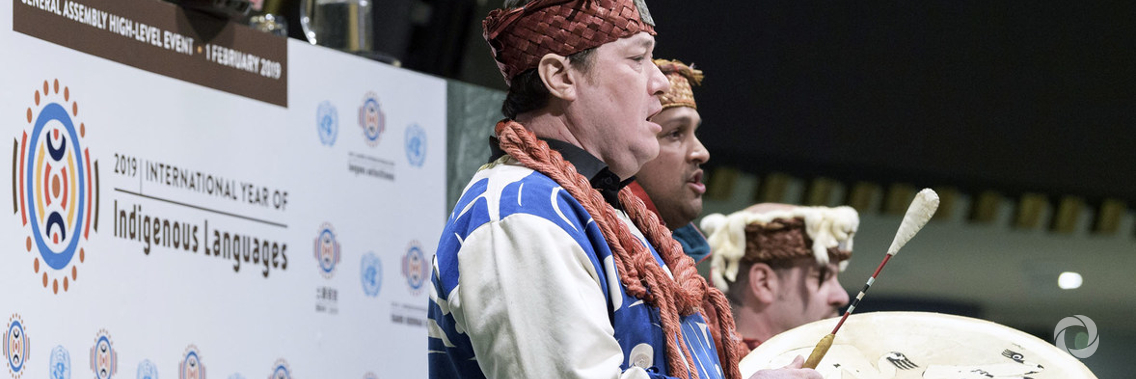
Hundreds of ancestral languages have gone silent in recent generations, taking with them the culture, knowledge and traditions of the people who spoke them. To preserve and revitalize those that remain, the United Nations officially launched the International Year of Indigenous Languages, at UN Headquarters in New York.
UN General Assembly President María Fernanda Espinosa Garcés underscored the close connection between indigenous languages and ancestral culture and knowledge, saying that “they are much more than tools for communication, they are channels for human legacies to be handed down”.
“Each indigenous language has incalculable value for humankind”, she said, calling each “a treasure-laden with history, values, literature, spirituality, perspectives, and knowledge, developed and garnered over millennium”.
“When a language dies,” she spelled out “it takes with it all of the memory bound up inside it”.
Indigenous languages also open the door to ancestral practices and knowledge, such as in agriculture, biology, astronomy, medicine and meteorology. Although there are still 4,000 in existence across the globe, many are on the brink of extinction.
“This International Year must serve as a platform from which we can reverse the alarming trend of the extinction of indigenous languages”, to recover and preserve them, including by implementing education systems that favor the use of a Mother tongue, Ms. Espinosa stated.
There are 770 million Indigenous people across 90 countries, constituting six percent of the global population, living in many biodiverse regions, and yet “capitalist greed” has left them among the poorest 15 percent of the population.
Original source: UN News
Published on 01 February 2019