
Add us as your preferred source on Google to see more of our content in Search.
 Add to Preferred Sources
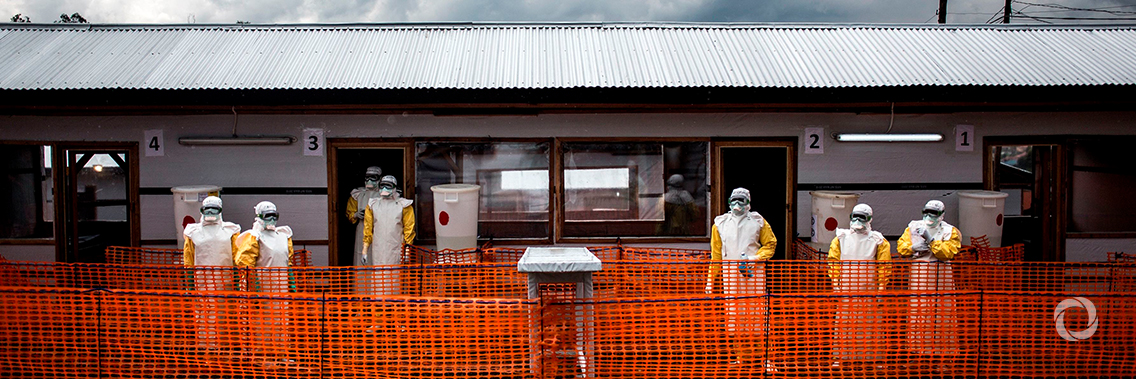
The tenth Ebola outbreak in the Democratic Republic of the Congo has taken the lives of more than 500 people and resulted in more than 760 confirmed cases since it was declared more than six months ago. The current outbreak is the second largest in history, developing in the east of the country where long-standing insecurity, armed conflicts and instability challenge the humanitarian and public health response.
The International Organization for Migration (IOM) is calling on the international community to support its USD 12 million appeal to assist government and humanitarian partners to contain the disease before it claims more lives and spreads across borders.
Since the start of the deadly outbreak, the Organization has supported the government to screen more than 32 million travelers and to operate 80 screening points in areas of high population mobility, such as markets, parking areas and along major key transport routes.
In partnership with the Congolese Ministry of Health, particularly the National Programme of Hygiene at Borders (PNHF), and the World Health Organization (WHO), IOM implements surveillance and prevention activities, utilizing mobility trends to minimize disease transmission to new areas and across borders. IOM also trains frontline workers to detect illness among travellers, provides essential equipment and supplies to screening points and strengthens the capacity of PNHF to oversee screening activities.
Currently, the outbreak is just a day’s drive from Goma, the capital of North Kivu inhabited by over one million people, as well as neighbouring countries: Rwanda, Uganda and South Sudan. In areas with such high mobility, screening sites can be the last bastion.
“Fighting Ebola is a race against the clock. It is a battle that we cannot lose,” said Fabien Sambussy, Head of IOM Mission in the Democratic Republic of the Congo.
With funding exhausted in January 2019, IOM’s critical activities are now at risk. The third Ebola Strategic Response Plan (SRP 3), officially launched by Dr. Oly Ilunga Kalenga, Minister of Public Health, on 13 February 2019, presents a strengthened plan to contain the disease within the next six months. IOM remains committed to supporting the government in its efforts to save lives and end the epidemic.
Original source: IOM
Published on 15 February 2019