
Add us as your preferred source on Google to see more of our content in Search.
 Add to Preferred Sources
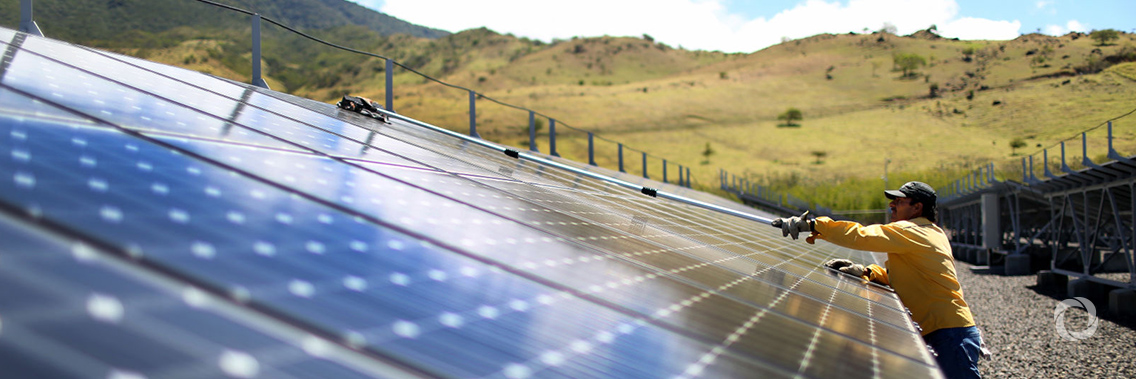
With a 95% share of renewables in its electricity matrix and solid achievements to prevent deforestation – 52 % of the national territory is covered by forests – the Central American nation of Costa Rica is already a world leader in terms of environmental sustainability. However, Costa Rica wants to go further and be an international example of climate action and ambition.
Costa Rica has adopted a plan to achieve a zero net emissions economy by 2050, in line with the objectives of the Paris Climate Change Agreement.
“Decarbonization is the great challenge of our generation and Costa Rica must be among the first countries to achieve it, if not the first,” said Costa Rican President, Carlos Alvarado Quesada on February 24 during the presentation of the 2018-2050 National Decarbonization Plan in the capital, San José.
With the goal of reducing greenhouse gas emissions, the plan includes significant measures in basic infrastructure and economic sectors such as the public and private transport, energy, industry, agriculture, waste management and soil and forest management.
In addition, the plan establishes a roadmap for modernizing the economy, generating jobs and boosting sustainable growth.
Costa Rica’s plan includes concrete goals in strategic sectors such as transport, which is currently one of the country’s major sources of greenhouse gas emissions. By 2035, 70% of all buses and taxis are expected to be electric, with the goal of full electrification by 2050. As for private transportation, measures will be taken so that users gradually abandon fossil-fueled cars and opt for zero-emission vehicles and car-sharing.
As for electricity production, which currently comes to 95% from renewable sources (mainly hydroelectric power), the country wants that percentage to reach 100% by 2030. In addition, measures will be taken to ensure that, by 2050, electricity will be a primary energy source for the transport sector, residential, commercial and industrial usages.
The President of Costa Rica said that this transformation would only be possible with the involvement of all citizens. For this, education measures will be taken to promote behavioral change.
Original source: UNFCCC
Published on 04 March 2019