
Add us as your preferred source on Google to see more of our content in Search.
 Add to Preferred Sources
Incorporating food and improved nutrition as important components of urban planning is key to achieving sustainable development, including Zero Hunger and healthy diets for all, FAO Director-General José Graziano da Silva said.
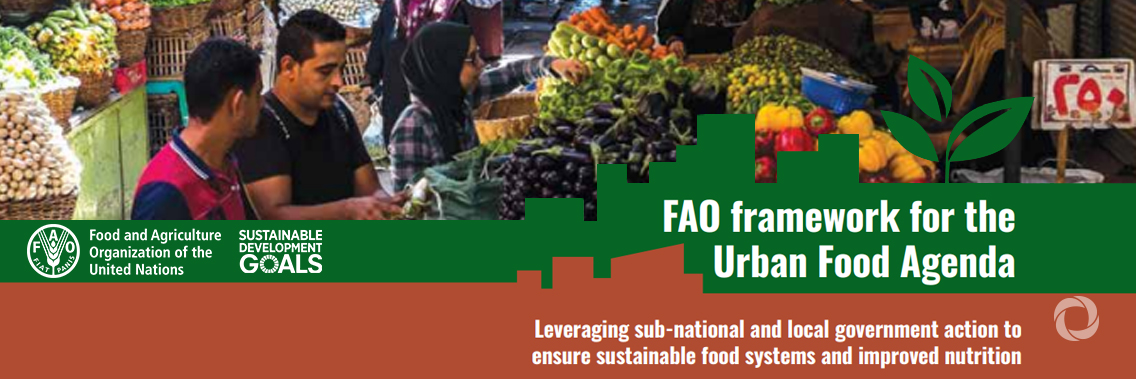
“We need to engage with cities because it is in cities where more and more people live, eat and work, and where we need to locally implement global commitments,” Graziano da Silva said at the launch of FAO’s Framework for the Urban Food Agenda: A holistic approach to ensuring sustainable development.
The FAO Director-General noted how urban areas are also the setting where the laws and regulations are produced.
“That is where the regulation of food systems is set and that is why FAO is working with cities more and more,” he added.
At least 55 percent of the world’s population already lives in urban areas – a proportion expected to increase to at least 65 percent by 2050- and with nearly 80 percent of all food produced globally now consumed in urban areas. Urbanization is creating unprecedented challenges to ensuring that everyone has accessible, affordable food while keeping a healthy diet and preserving natural resources and biodiversity.
Referring to a recent high-level UN meeting with mayors and urban food policy representatives in New York, the FAO Director-General stressed that urban development can no longer be addressed separately from rural development.
“The two processes must be mutually reinforcing,” he said. “Rather than considering urbanization and rural transformation as separate processes, we must take this opportunity to break the rural-urban divide.”
The Framework
Aimed at supporting decision makers at different levels, the Framework presents ideas on how cities around the world can implement actions to generate employment, strengthen local food value chains; and reduce and manage the worrisome levels of food waste found in many cities.
It also provides guidance on how FAO, with its partners, can assist governments to improve policy environments through coordinated laws, regulations, governance and institutional empowerment, and execute actions according to context-specific realities, such as shorter supply chains, inclusive public food procurement, innovative agro-food business, healthier food and green environments, and optimized supply chains and sustainable bio-economy.
The Framework also aims at escalating good practices through the exchange of information on food systems governance.
FAO is supporting cities around the world to achieve better nutrition and healthier diets. In particular, it is supporting the establishment of the World Sustainable Food Centre of Valencia (Spain), aimed at promoting healthy and sustainable food systems among cities, to be launched on 1 April 2019 with Queen Letizia of Spain participating as FAO’s Special Ambassador for Nutrition.
Read and download FAO’s Framework for the Urban Food Agenda: A holistic approach to ensuring sustainable development.
Original source: FAO
Published on 07 March 2019