
Add us as your preferred source on Google to see more of our content in Search.
 Add to Preferred Sources
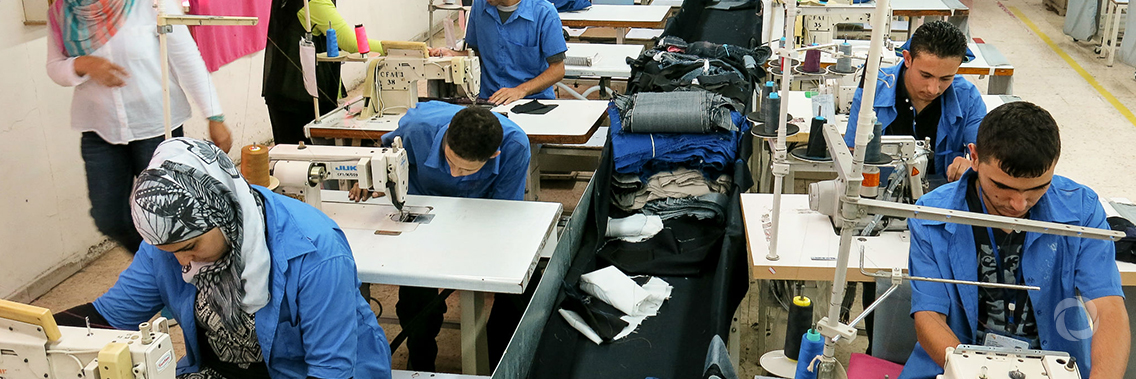
The ILO’s Director-General Guy Ryder and Germany’s Federal Minister for Economic Cooperation and Development Gerd Müller have signed a memorandum of understanding (MOU) to further support job creation for Syrian refugees displaced in the Arab States and Turkey.
The agreement, signed in Berlin on March 12, reinforces the ongoing partnership between the Government of Germany and the ILO. It aims to enhance resilience, reduce tensions, and support sustainable development in countries affected by the Syrian refugee crisis. The central objective of joint activities is to advance access to decent employment opportunities in host communities through improvements in infrastructure, community assets, public services and the environment.
In order to expand decent work opportunities, the ILO and BMZ develop programmes in line with the national priorities of host countries. Programmes aim to reduce tensions through increased social cohesion, increase decent work opportunities through public investment, and foster social dialogue amongst the ILO’s tripartite constituents. In tandem, programmes adopt a market-driven approach to skills development and recognition, as well as advocate for Syrian refugees’ access to formal labor markets.
The Memorandum of Understanding builds on the “Joint Declaration of Intent” between the ILO and BMZ and falls within the framework of the Regional Refugee Response and Resilience Plan (3RP).
The conflict in Syria has caused 5.6 million Syrians to seek refuge in neighboring countries such as Lebanon, Jordan, Turkey, Iraq, and Egypt. Since 2016, Germany has funded ILO programmes worth over $90 million to improve the lives of Syrian refugees and host community members through policy dialogue and advocacy for creation of decent jobs for all, skills development interventions, as well as support to the construction of roads, schools, hospitals, community centers and agricultural lands through Employment Intensive Infrastructure Programmes (EIIP).
Original source: ILO
Published on 13 March 2019