
Add us as your preferred source on Google to see more of our content in Search.
 Add to Preferred Sources
Since 2014, the Lake Chad Basin crisis has affected some of the world’s poorest and most vulnerable people in Nigeria, Cameroon, Niger and Chad. The violence started in Nigeria in 2009 and escalated in North-eastern Nigeria and the region in 2014-2015.
The crisis, caused by non-state armed groups, the onset of violent communal clashes and climate change, has led to the forced displacement of nearly 4.5 million people, including internally displaced persons, returnees and refugees.
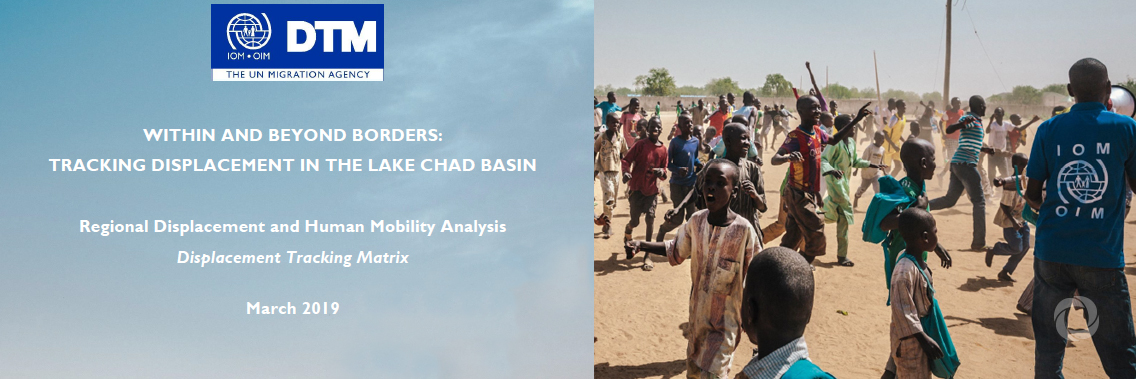
Five years after its first displacement tracking exercise in West Africa, IOM recently released its 2019 report on regional displacement and human mobility in the Lake Chad Basin. The report provides humanitarian and development actors with data on the profiles and locations of the population affected by the protracted crisis to help them ensure a more targeted humanitarian response.
The 2019 report reveals that around 4.2 million displaced individuals were identified by IOM’s Displacement Tracking Matrix (DTM) in Nigeria, Chad and Cameroon. An additional 250,000 people are displaced in Niger’s Diffa region and were tracked by the government of Niger.
A 77 per cent increase (800,000 individuals) in the number of returnees compared to 2016 also noted. This illustrates the growing trend towards return movements in the Lake Chad Basin and calls for more attention to the situation of returnee populations in the regions and communities of origin.
The 2019 report also reveals that 81 percent of the displaced population resides in Nigeria. Additionally, people displaced within their own country make up 56 percent of the total displaced population, returnees account for 40 percent and out-of-camp refugees (in Cameroon and Niger) represent 4 percent of individuals displaced by the crisis. The main driver of forced displacement in the region is conflict, which has displaced 94 percent of the total displacement affected population.
Read and download the report: Regional Displacement and Human Mobility Analysis
Original source: IOM
Published on 22 March 2019