
Add us as your preferred source on Google to see more of our content in Search.
 Add to Preferred Sources
At the end of a two-day visit to Mozambique, the Executive Director of the United Nations World Food Programme, David Beasley, said the international community must step up support to victims of the recent cyclone and flooding that have devastated large areas of the country.
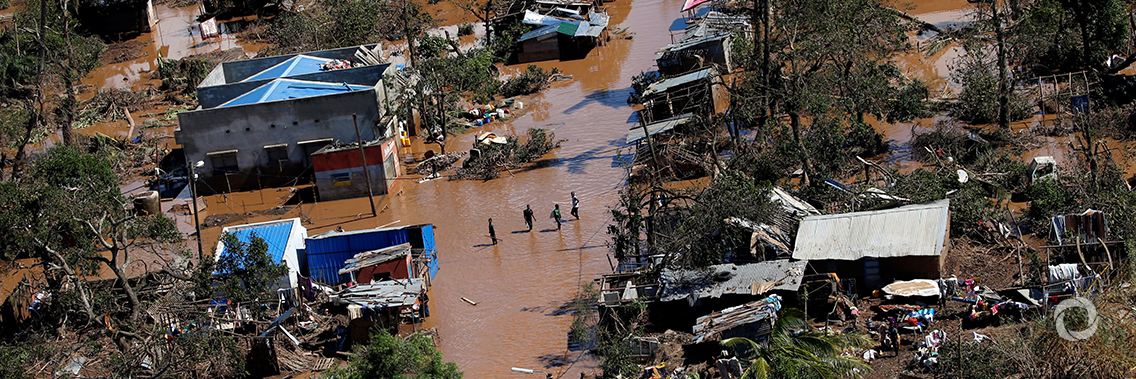
After arriving in Beira, which was struck by Cyclone Idai on March 14, hitting the port city of half a million people, Beasley overflew the nearby town of Buzi – which had been all but submerged by raging floodwaters – and met survivors receiving airlifted WFP assistance in the isolated village of Guara Guara.
“These people’s lives have been devastated, they have no livelihoods now, they’ve lost their homes, they’ve lost their farms, they’ve lost their crops, they’ve lost loved ones. And they’re going to need help at least for the next six to 12 months to get back on their feet,” Beasley said. “We need the international community to rally behind the victims of this storm with major financial support, so WFP can help the survivors of Cyclone Idai.”
An estimated 400,000 hectares of crops – primarily maize – were washed away just weeks ahead of the main April–May harvest. Other key sources of income, like livestock and fisheries, have also been badly affected.
Victims will need sustained support until they can get back on their feet – in the case of subsistence farmers until the next main harvest in mid-2020.
“We need to work together with the Government of Mozambique and the communities to ensure rehabilitation is done in a way that will prevent this devastation happening again, build better everything: houses, schools and health centres to stand the shocks,” added Beasley.
The disaster has demonstrated how vulnerable communities are to climate shocks and will inevitably push up already high malnutrition rates.
Since the cyclone hit, WFP has provided food assistance to more than 150,000 people, intends to reach half a million in the coming weeks, and, as soon as possible, all 1.7 million people urgently in need of food.
With 86,000 metric tons of commodities needed in the next three months, WFP is procuring large quantities of cereals, vegetable oil and fortified blended foods elsewhere in southern Africa, and shipping and trucking them into Mozambique. As conditions permit, WFP will increase local procurement.
Almost 60 additional WFP staff have been deployed to Mozambique, and 45 more are on the way: emergency coordinators, air operations managers and programming, logistics and telecommunications experts.
WFP requires US$140 million for the next three months.
Original source: WFP
Published on 27 March 2019